

This post may contain affiliate links. Read my full disclosure policy.
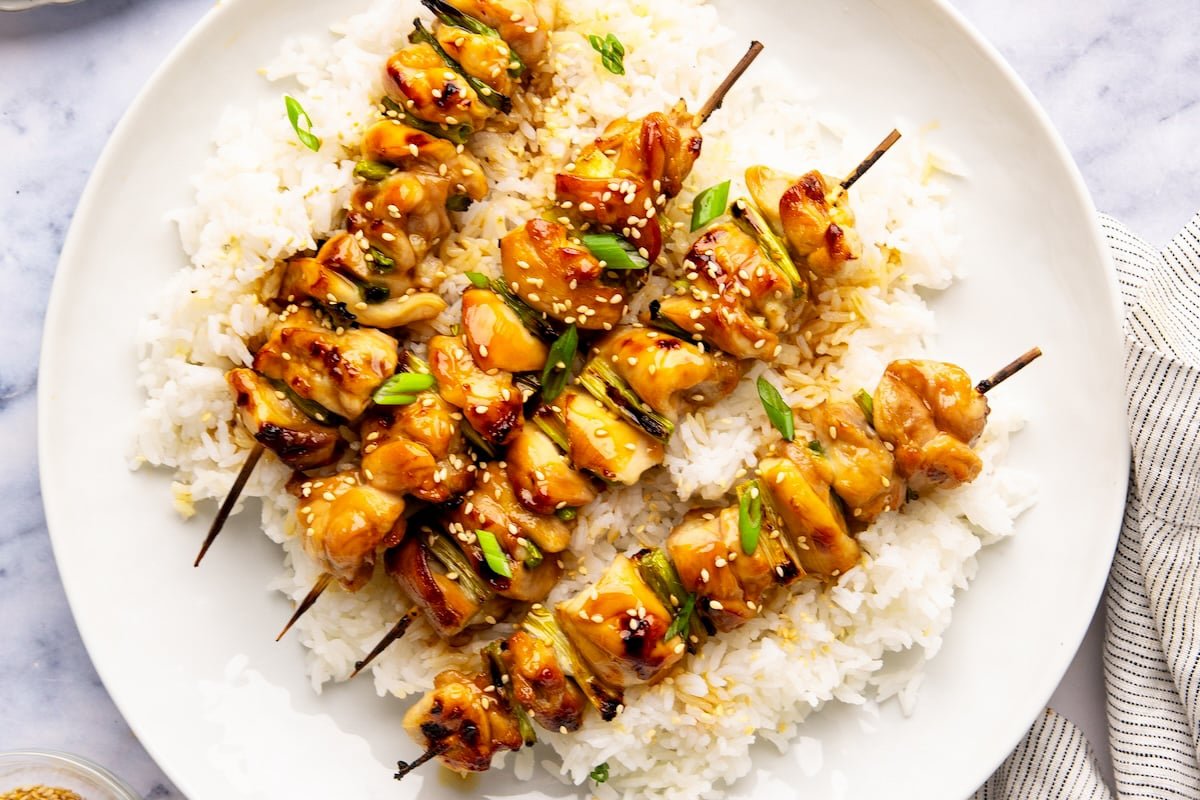
Juicy, charred chicken lacquered with a savory-sweet sauce—this yakitori delivers big flavor with minimal effort, whether you grill it or slide it under the broiler.
Yakitori is a classic Japanese dish of bite-size pieces of chicken threaded onto skewers and cooked over high heat. In Japan, it’s the kind of food you’ll find at neighborhood yakitori shops, yatai (street food stalls), or izakayas (bars). The chicken is juicy, the edges are lightly charred, and everything is brushed with tare, a simple glaze made from soy sauce, mirin, sake, and sugar that caramelizes as it cooks.
While yakitori is traditionally grilled over charcoal, it’s very easy to make at home under the broiler or on a regular grill. This version uses chicken thighs and scallions, basted with a homemade tare that’s rich, savory, and just sweet enough. It’s deeply flavorful and best enjoyed hot off the skewers—served on its own as an appetizer, or paired with rice and a simple vegetable to make it a satisfying main dish.
What You’ll Need To Make Yakitori
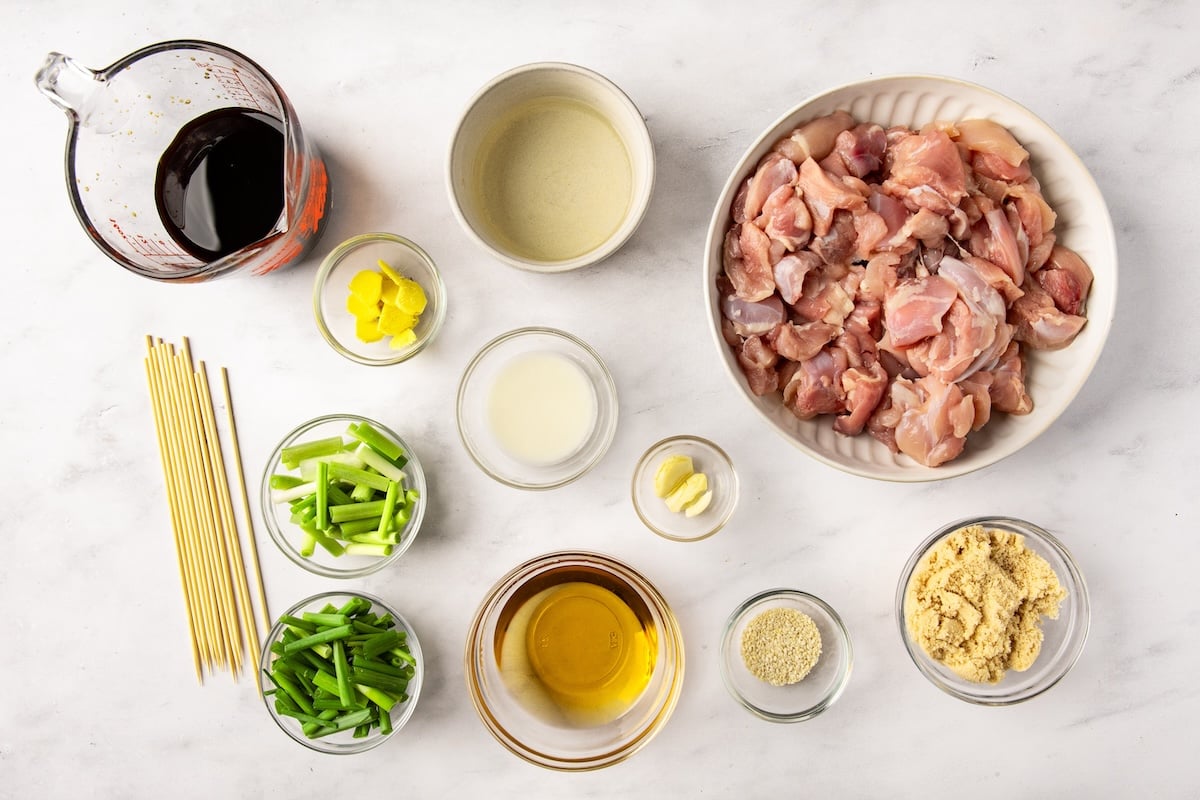
Chicken thighs: Juicy and forgiving, they stay tender and flavorful over high heat. Chicken breasts or tenderloins may be substituted, but they won’t be as tender or flavorful.
Scallions: Add sweetness and char; the whites cook with the chicken while the greens flavor the sauce.
Soy sauce: The salty, savory backbone of the tare.
Mirin & Sake: Japanese rice wines that add depth and balance to the sauce; mirin is only used for cooking and is usually found in the international foods aisle, while sake is typically in the wine section or at liquor stores (both are also available at Asian markets).
Brown sugar: Rounds out the sauce and helps it caramelize.
Ginger and garlic: Add warmth and aroma to the tare.
Cornstarch: Thickens the sauce so it coats and glazes the chicken.
Sesame seeds (optional): A simple finishing touch with a bit of nuttiness.
Jump to the printable recipe for precise measurements
Step-By-Step Instructions
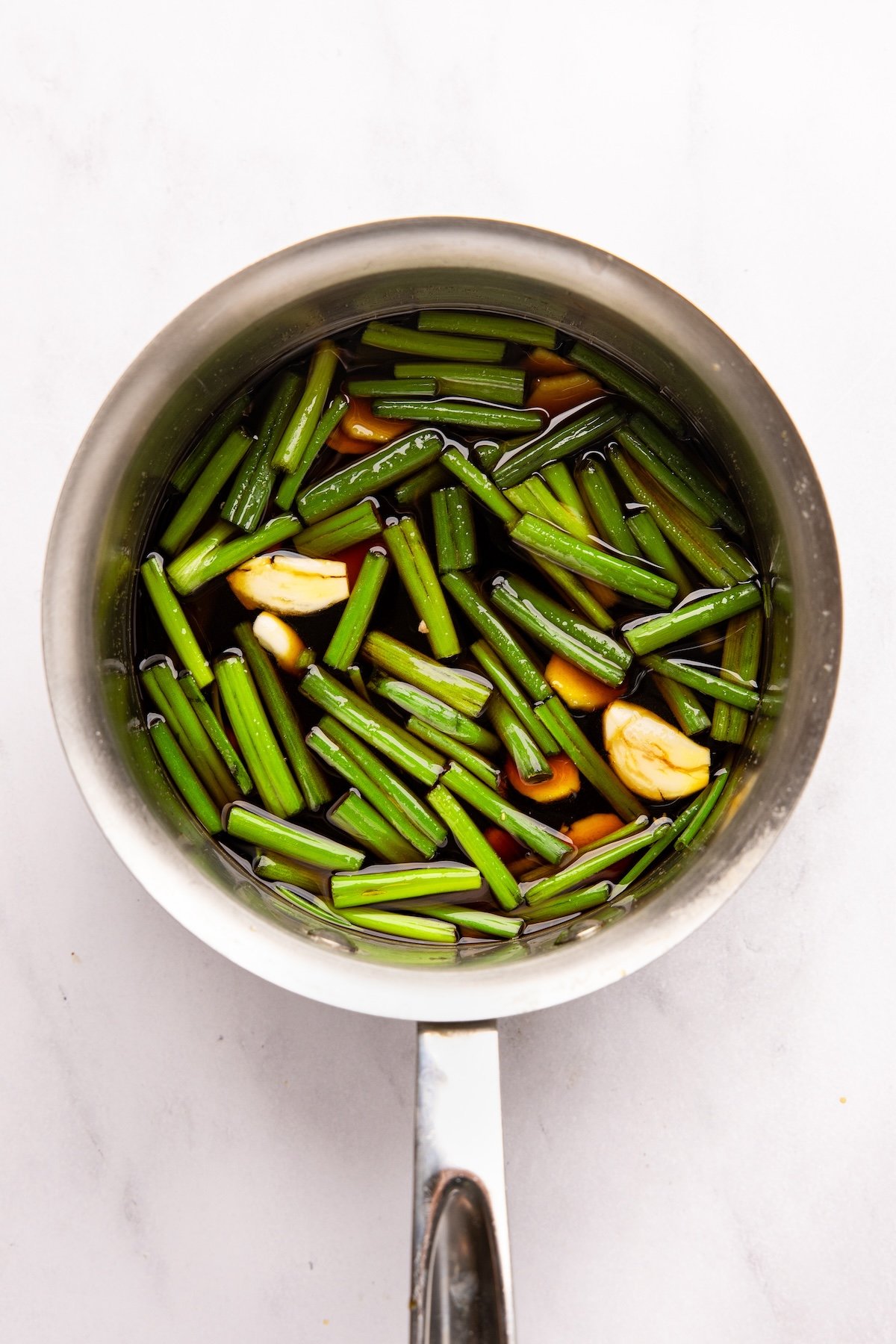
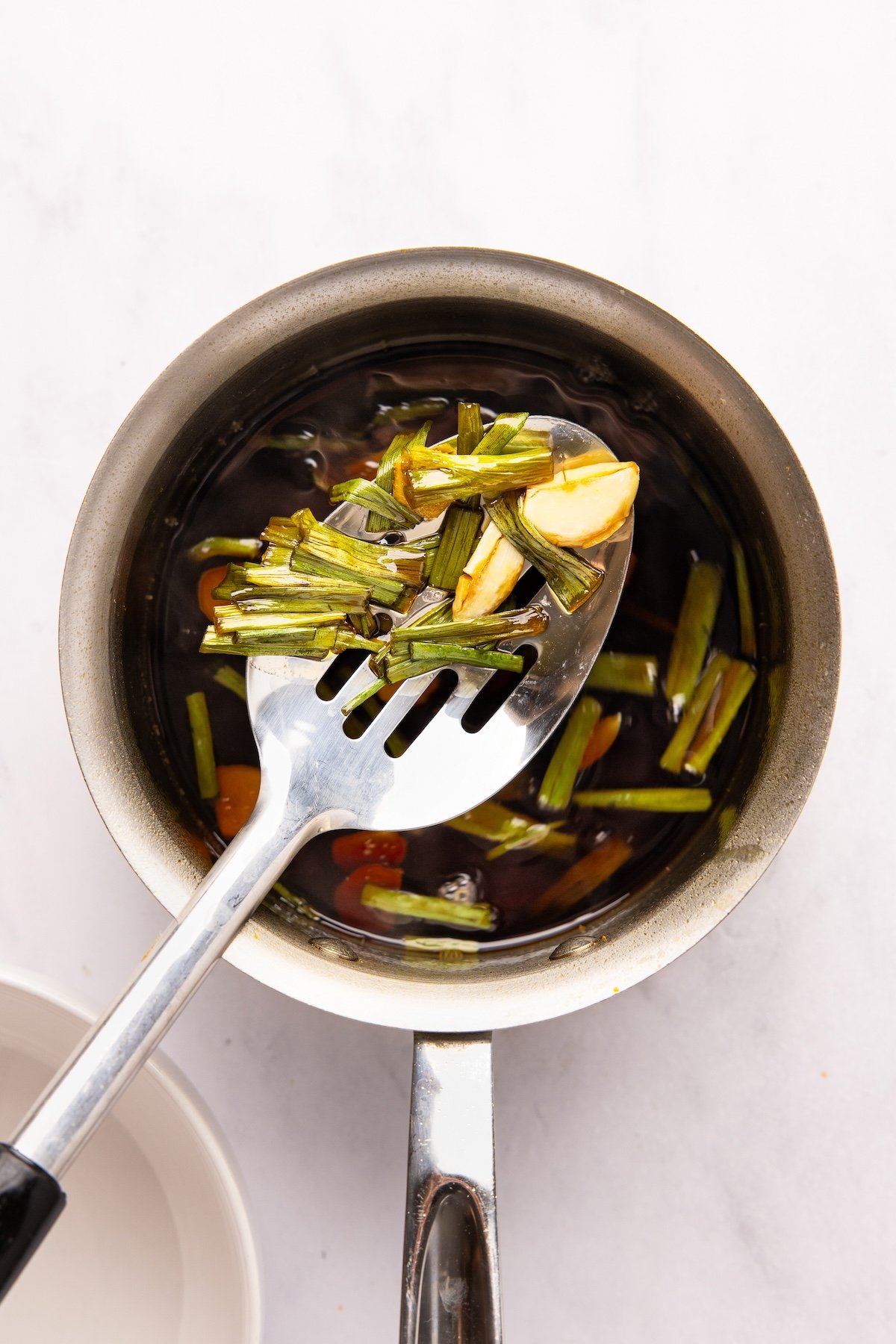
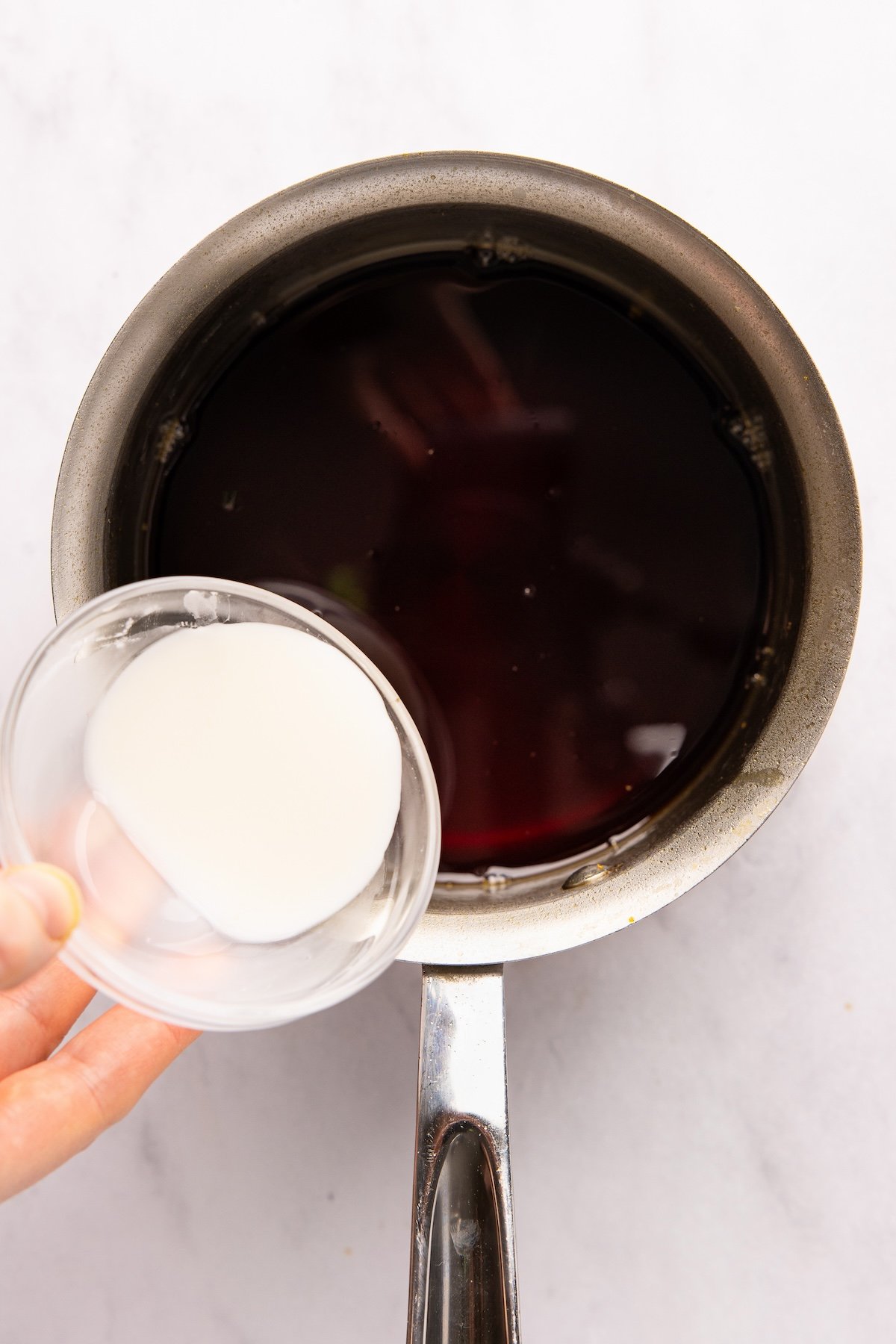
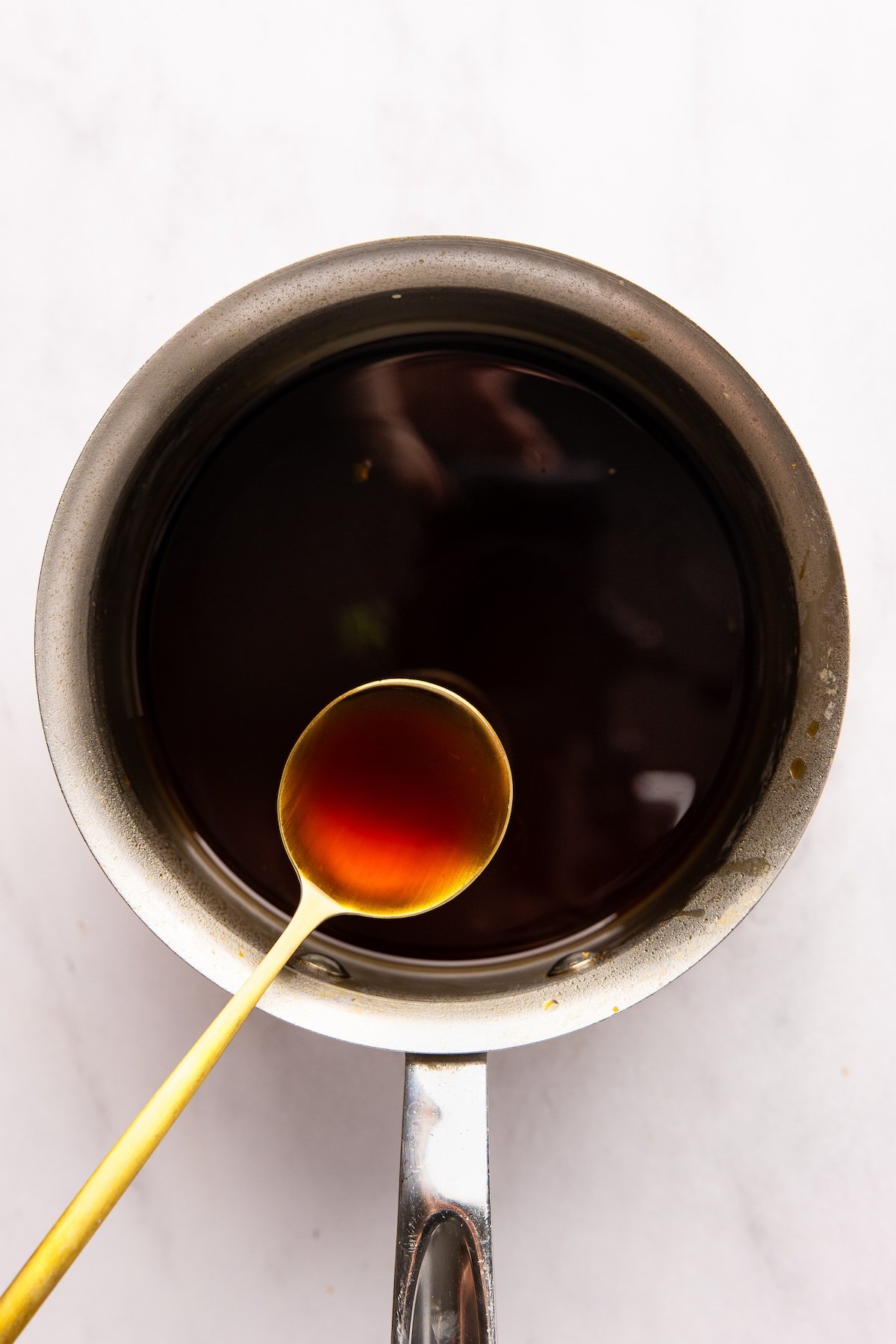
Step 1. Make the tare (sauce). In a small saucepan, combine the soy sauce, mirin, sake, brown sugar, ginger, garlic, and dark green scallions. Bring to a gentle boil, reduce the heat, and simmer uncovered for 5 minutes. Remove and discard the ginger, garlic, and scallions, then stir in the cornstarch slurry and cook 1 to 2 minutes more, until thick enough to coat the back of a spoon. Set aside.
Pro Tip: Making the tare first gives it time to cool slightly, which helps it cling better to the chicken when it’s brushed on.
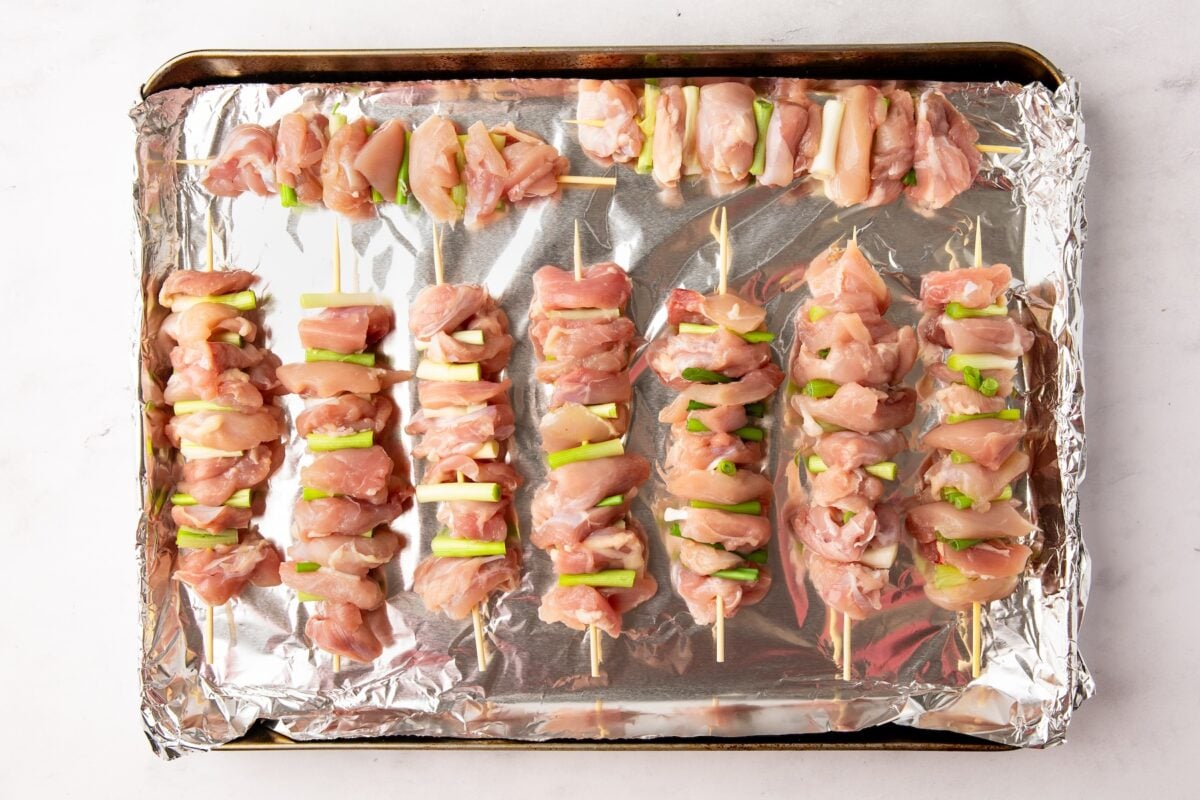
Step 2. Skewer the chicken. Thread the chicken pieces and light green scallion sections onto the skewers, alternating chicken and scallion, threading the scallions widthwise so they stay put.
Pro Tip: To save time, you can skip the skewers and cook the chicken thighs and scallions whole. Broil or grill them directly, brushing with the tare during the last few minutes so it caramelizes. Slice the chicken after cooking and serve with the sauce spooned over the top—the flavor is the same, with much less prep.
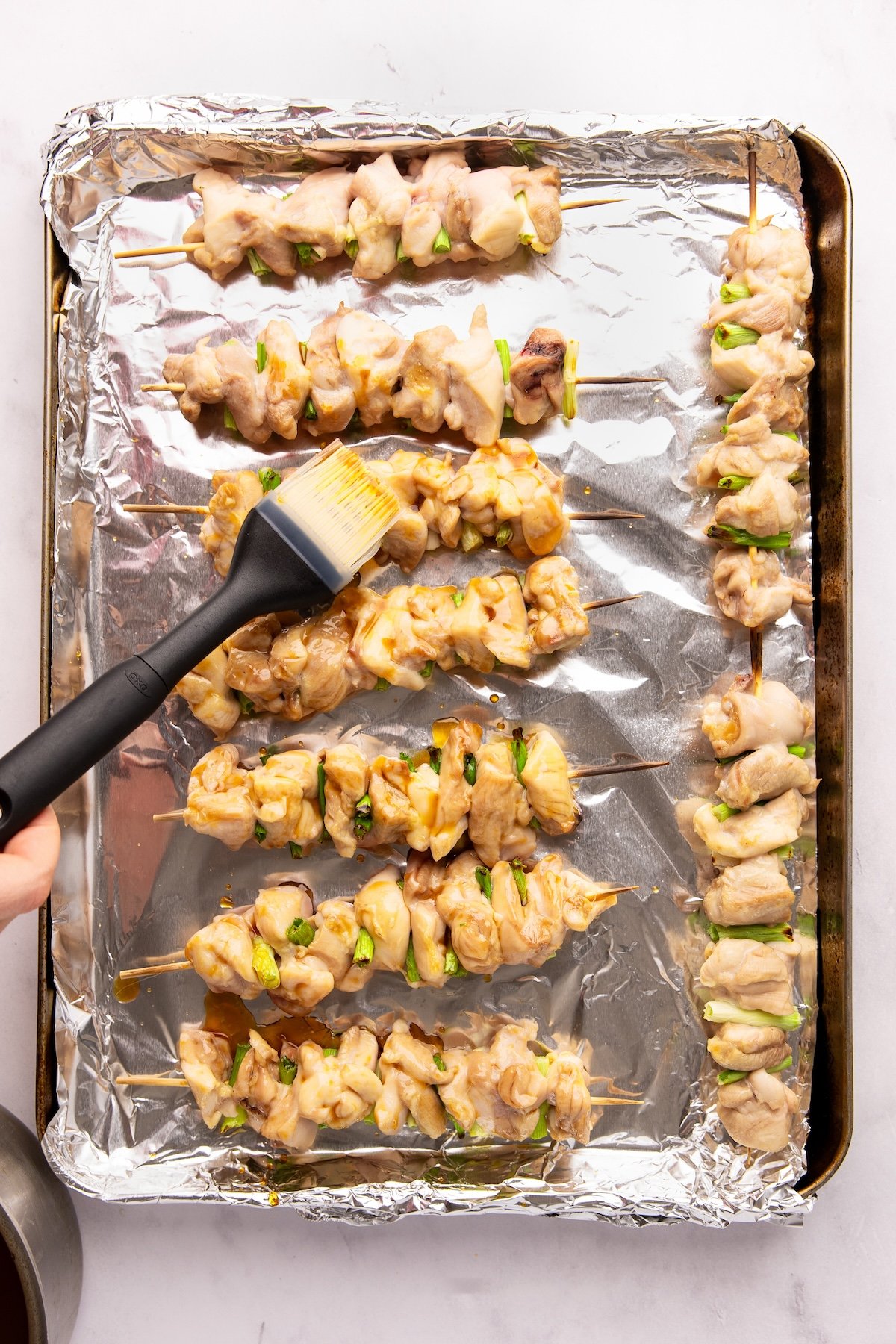
Step 3. Cook the skewers (broil or grill). To broil, line a baking sheet with heavy-duty foil and arrange the skewers in a single layer. Broil 4 to 6 inches from the heat for 5 minutes per side. Brush the top with sauce, broil 1 to 2 minutes until caramelized in spots, then flip, brush again, and broil another 1 to 2 minutes until glazed and cooked through. To grill, preheat to medium-high and lightly oil the grates. Grill for 4 to 5 minutes per side, then baste with sauce and continue cooking a few minutes more, basting once or twice, until cooked through and nicely caramelized.
Pro Tip: Go easy on the sauce when glazing—because the sauce contains sugar, if it pools too much on the baking sheet, it can burn under the high heat and create a lot of smoke. A light brush is enough to get that glossy finish without scorching.
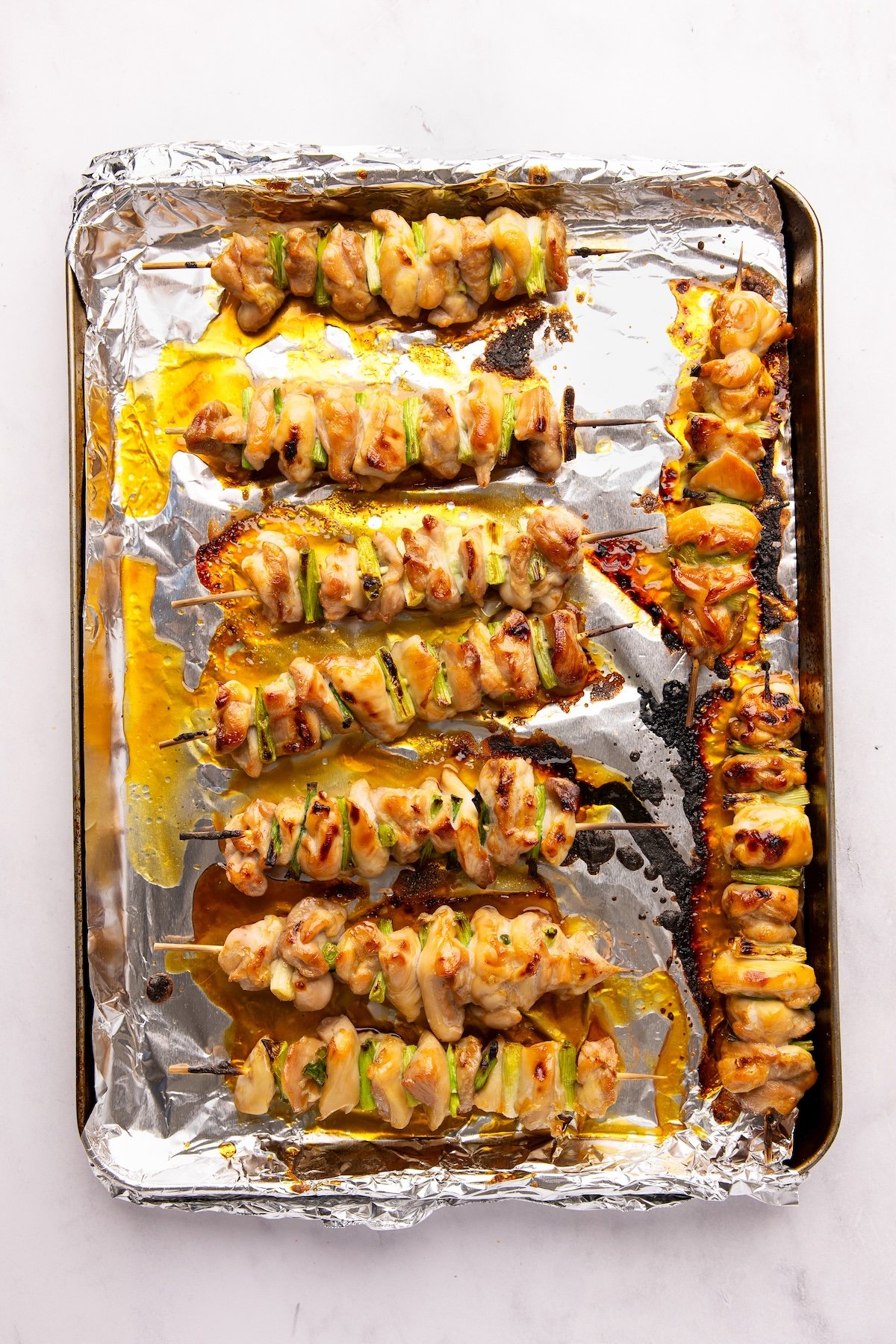
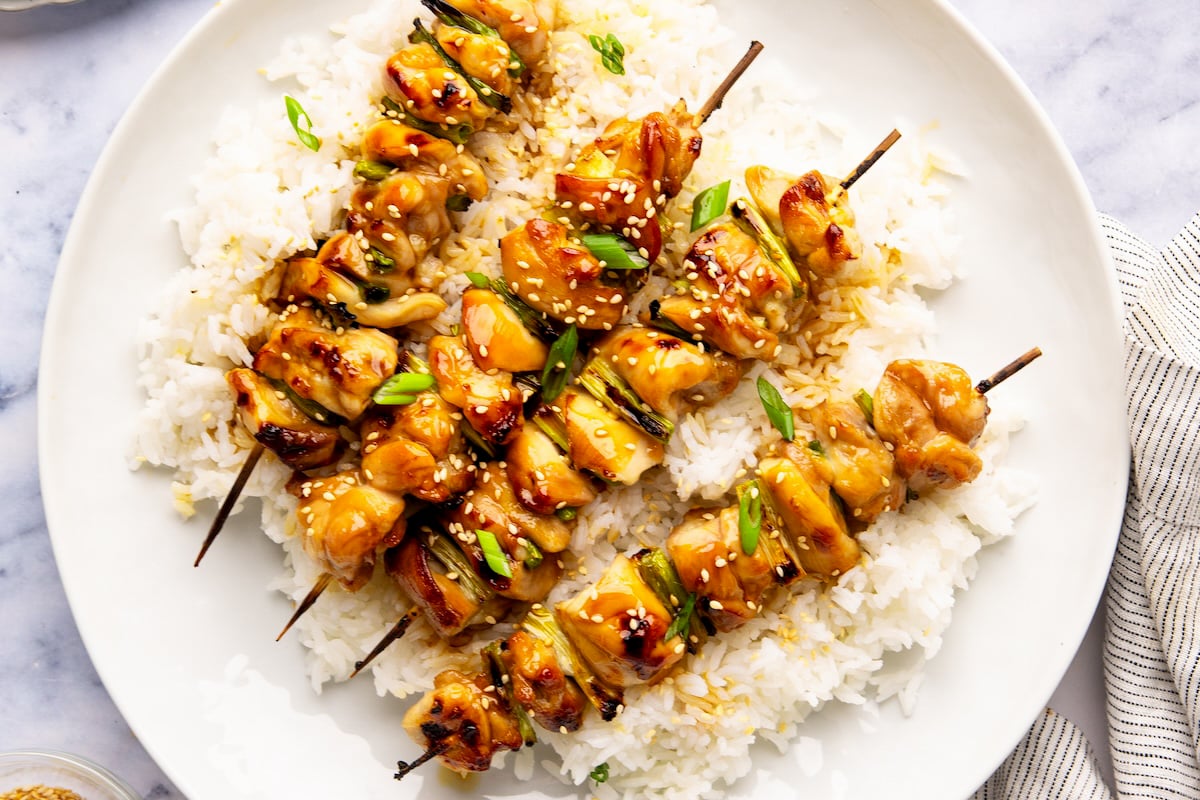
Step 4. Serve. Transfer the skewers to a platter, drizzle with a little extra sauce, and sprinkle with sesame seeds, if using. Serve hot with any remaining sauce for dipping.
More Japanese Recipes You’ll Love
Yakitori
Make classic Japanese yakitori at home with this easy recipe.
Ingredients
US CustomaryMetric
Instructions
Make the tare (sauce): In a small saucepan, combine the soy sauce, mirin, sake, brown sugar, ginger, garlic, and dark green scallions. Bring to a gentle boil, then reduce the heat and simmer, uncovered, for 5 minutes. Using a slotted spoon, remove and discard the ginger, garlic, and scallions. Stir in the cornstarch slurry and cook for 1 to 2 minutes more, until the sauce thickens enough to coat the back of a spoon. Reserve 1 cup of the sauce for serving and set the rest aside for basting.
Prepare the skewers: Thread the chicken pieces and the light green scallion sections (widthwise) onto the skewers, alternating chicken and scallion pieces.
Serve: Transfer the skewers to a platter, drizzle with a little of the reserved serving sauce, and sprinkle with sesame seeds, if using. Serve hot with any remaining serving sauce for dipping. (If you’d like to repurpose the basting sauce for serving, be sure to bring it to a full boil for 1 minute first.)
Notes
How to toast sesame seeds: Place the sesame seeds in a dry skillet over medium heat. Cook, shaking the pan or stirring often, until golden and fragrant, 2 to 3 minutes. Immediately transfer to a plate to cool (they can burn quickly if left in the hot pan).
Make-Ahead Instructions: The tare (sauce) can be prepared up to 3 days ahead and stored in the refrigerator. The chicken and scallions can be threaded onto skewers several hours ahead; cover tightly with plastic wrap and refrigerate until ready to cook. For the best texture, wait to baste and grill/broil just before serving.
Nutrition Information
Per serving (6 servings)Calories: 288kcalCarbohydrates: 15gProtein: 33gFat: 7gSaturated Fat: 2gCholesterol: 142mgSodium: 1900mgFiber: 1gSugar: 9g
This website is written and produced for informational purposes only. I am not a certified nutritionist and the nutritional data on this site has not been evaluated or approved by a nutritionist or the Food and Drug Administration. Nutritional information is offered as a courtesy and should not be construed as a guarantee. The data is calculated through an online nutritional calculator, Edamam.com. Although I do my best to provide accurate nutritional information, these figures should be considered estimates only. Varying factors such as product types or brands purchased, natural fluctuations in fresh produce, and the way ingredients are processed change the effective nutritional information in any given recipe. Furthermore, different online calculators provide different results depending on their own nutrition fact sources and algorithms. To obtain the most accurate nutritional information in a given recipe, you should calculate the nutritional information with the actual ingredients used in your recipe, using your preferred nutrition calculator.