
Social media continues to shape how we discover restaurants, explore new cuisines, and talk about food more broadly, but international cuisines perform differently across platforms. Instagram, once dominated by beautiful but static food photography, has become increasingly reel-driven, rewarding movement, process, and personality. TikTok remains the epicenter of short-form food trends and rapid cultural spread, while Facebook, which has also leaned heavily into video, continues to play a major role in food-focused communities, groups, and longer-form engagement.
Taken together, these platforms offer a broader and more nuanced picture of culinary visibility than any single network could on its own.
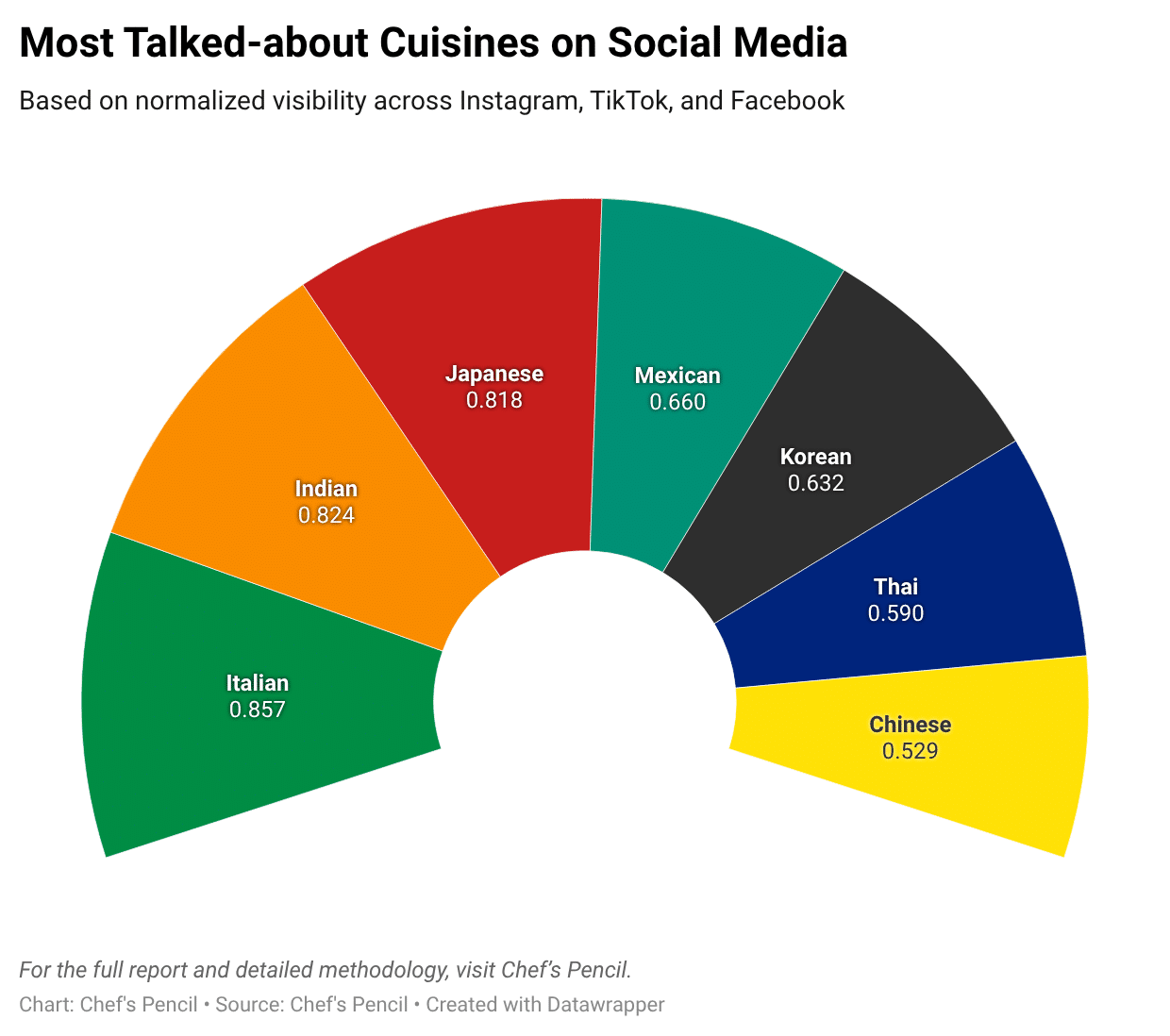
At the beginning of 2026, Chef’s Pencil analyzed social media data to rank the most popular—defined here as the most visible—international cuisines online. To better reflect today’s social media landscape, the analysis draws on cuisine-related hashtag data from Instagram, TikTok, and Facebook, giving each platform equal weight. Rather than allowing Instagram’s much larger historical volumes to dominate the rankings, this approach highlights cuisines that perform consistently well across platforms, not just within a single social media ecosystem.
Italian, Indian and Japanese Cuisines Top the Charts
Italian cuisine leads the ranking not only because it translates well on social media, but because it is deeply embedded in everyday eating habits across much of the world. From home kitchens to casual restaurants and fine dining alike, Italian food has long held a unique global appeal. Its most recognizable dishes like pizza, pasta or tiramisu adapt effortlessly to every format—quick-fire cooking videos, polished restaurant visuals, and nostalgic home-cooking content shared within communities. This widespread familiarity and affection make Italian cuisine not just highly visible online, but genuinely beloved across cultures, helping explain its consistent dominance across platforms.
Indian cuisine ranks second overall, and its position is particularly notable in light of longer-term trends. Over the past three years, Indian food has been the single most dominant cuisine on Instagram, generating nearly twice as many new tags as Italian cuisine during that period. This sustained growth reflects far more than momentary interest; it signals deep, ongoing engagement across platforms.
Indian food performs strongly on Instagram, TikTok, and Facebook alike, combining high visual appeal with a powerful community-driven presence. Its reach spans everyday home cooking and street food culture, while increasingly extending into refined restaurant experiences and fine dining narratives.

That evolution is not accidental. As Sumant Sharma, Executive Pastry Chef at Musaafer in Houston and New York, recently noted in a Chef’s Pencil interview, Indian cuisine is now being understood not just through flavor, but through emotion, memory, and cultural storytelling. For decades, global perceptions of Indian food were shaped by a narrow set of familiar dishes. Today, chefs are highlighting the depth of India’s regional diversity, pairing modern techniques with deeply rooted traditions without sacrificing authenticity.
For a long time, Indian cuisine was seen through a narrow lens — limited to a few popular dishes. But now, chefs across the world are telling stories of their regions, communities, and memories through refined techniques and modern presentations, without losing authenticity. Sumant Sharma, Executive Pastry Chef at Musaafer Houston & NYC
This shift is also visible at the highest levels of dining. A growing number of Michelin-starred and Michelin-recognised restaurants now place Indian cuisine at the center of their identity, helping reposition it both online and offline. Indian cuisine is no longer simply consumed; it is being explored, interpreted, and appreciated as a sophisticated culinary language, where every spice has intent and every dish carries history.
Taken together, the data and the broader culinary conversation point to the same conclusion: Indian cuisine has moved decisively beyond trend status and into a phase of lasting global recognition.
Japanese cuisine follows closely behind. Sushi, ramen, and bento-style dishes continue to perform incredibly well visually, while Japanese food content benefits from a strong crossover between home cooking, restaurant culture, and pop culture aesthetics.
Mexican and Korean Cuisines Top TikTok Rankings

One of the clearest shifts appears just below the top three. Mexican and Korean cuisines are the most popular international cuisines on TikTok.
Tacos, street food, and regional Mexican dishes are especially well suited to TikTok’s fast-paced, young, and high-energy audience. This confirms what earlier Chef’s Pencil trend pieces hinted at: Mexican cuisine has become one of the most adaptable and loved food cultures, both online and offline.
Korean cuisine ranks fifth overall, continuing a trend first observed in earlier TikTok-focused reports, but its momentum now extends well beyond short-form video virality. While Korean food does not yet match Italian or Japanese cuisine in total Instagram volume, it consistently overperforms on TikTok, driven by highly visual dishes, strong creator communities, and the global reach of contemporary Korean culture.
That cultural context matters. As Chef Daeik Kim of Jungsik in New York recently noted in a Chef’s Pencil interview, the worldwide rise of Korean culture—from K-pop and cinema to fashion and beauty—has fundamentally changed how diners abroad approach Korean food. Guests are arriving with greater curiosity and openness, increasingly viewing Korean cuisine not just as comfort food or street food, but as a sophisticated culinary language worthy of fine dining interpretation.
The global rise of Korean culture is unmistakable. Whether it’s K-pop, cinema, or skincare, Korean trends have gained tremendous international recognition, and we’ve certainly felt the impact in the culinary world. Chef Daeik Kim, Jungsik, New York
This shift is especially visible at the higher end of the market, where Korean fine dining has emerged as a powerful entry point for global audiences. Rather than diluting tradition, chefs are using refined techniques to elevate Korean flavors and narratives, helping the cuisine gain broader recognition and respect on the international stage.
Together, the data and chef perspectives point to the same conclusion: Korean cuisine’s social media strength is closely tied to a wider cultural movement. As global audiences continue to engage with Korean music, film, and design, their appetite for Korean food—particularly in elevated, storytelling-driven settings—continues to grow.
Thai and Chinese cuisines round out the top seven, maintaining steady visibility across platforms. Thai food’s balance of color, freshness, and recognizable dishes keeps it highly shareable, while Chinese cuisine benefits from both scale and diversity, even if its content is more fragmented across substyles and regional labels.
The Quiet Strength of Community-Driven Cuisines
One of the most interesting findings emerges further down the ranking. Filipino, Indonesian, Nigerian, Vietnamese, Greek, and Turkish cuisines outperform what Instagram-only rankings would suggest.
Filipino food, in particular, shows strong cross-platform consistency. While its Instagram presence is comparatively modest, high engagement on Facebook and TikTok points to tight-knit communities and strong cultural storytelling rather than purely aesthetic appeal. Cuisines tied closely to diaspora communities often thrive in comment-driven, share-heavy environments.
Nigerian, Vietnamese, and Indonesian cuisines also benefit from this dynamic. These cuisines may not generate the largest volumes of highly styled content, but they excel in formats centered on heritage, home cooking, and cultural pride—especially on TikTok and Facebook.
Mediterranean Roots, Modern Momentum: Greek and Turkish Cuisines
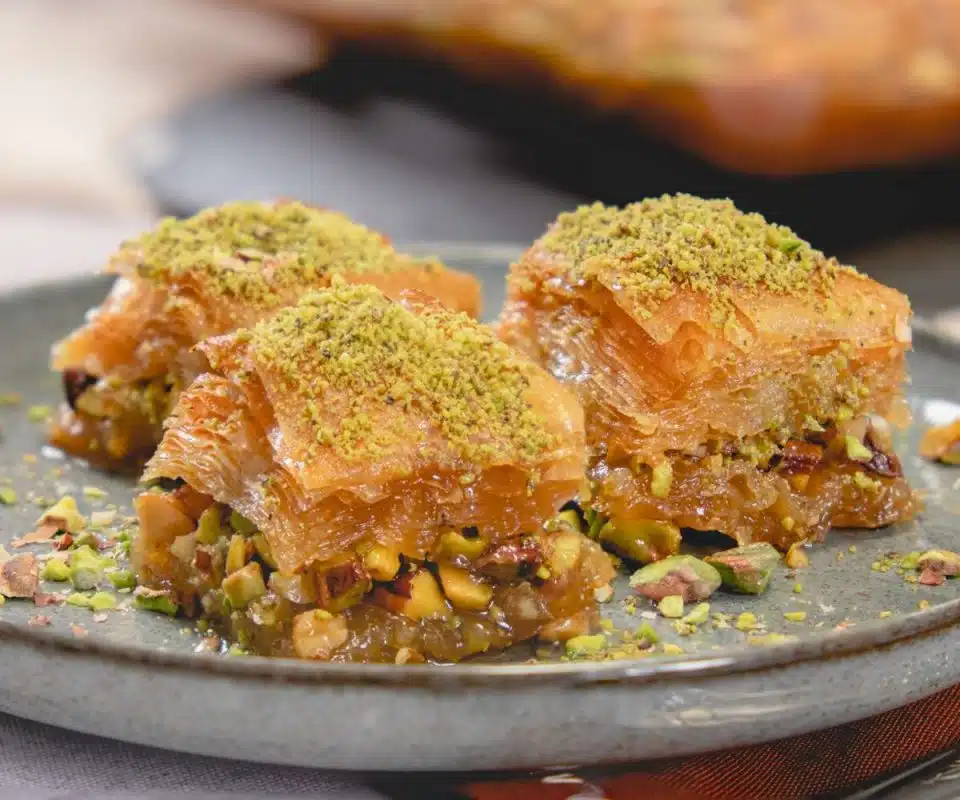
Among European cuisines, Greek and Turkish food stand out for their strong cross-platform performance, ranking 11th and 13th globally in 2026. Both cuisines outperform several European food traditions that have historically enjoyed greater fine-dining prestige.
Greek cuisine continues to benefit from its close association with the Mediterranean diet, while also reflecting a rich regional tradition shaped by island, coastal, and mainland cooking. Its range spans everyday home dishes, seafood, grilled meats, and a deep repertoire of baked goods and desserts, all of which translate well across social media formats.
Turkish cuisine, meanwhile, draws on an equally layered culinary landscape, encompassing street food, home cooking, and highly regionalized traditions, with dishes and techniques that lend themselves naturally to video-first and community-driven platforms.
Why Some “Prestige” Cuisines Fall Lower
French cuisine’s position may surprise some readers. Despite its global culinary prestige, it ranks substantially lower than Italian, Japanese, or Chinese cuisines in terms of overall social media visibility.
This aligns with patterns seen in previous Chef’s Pencil reports: French food remains highly influential in professional kitchens, particularly in fine dining, but is less prominent in everyday food culture and far less mainstream among restaurants than many other global cuisines.
Similarly, Spanish, Portuguese, and American cuisines perform steadily but without breakout momentum. Their presence is consistent rather than viral, suggesting maturity rather than decline.
What This Ranking Really Tells Us
This study does not measure what people eat most, nor which cuisines are “best.” Instead, it reflects which cuisines are most visible, shareable, and culturally active across today’s major social platforms.
Several clear themes emerge:
Cuisines that are deeply embedded in everyday eating around the world still lead the rankings (Italian, Indian, Japanese)
TikTok continues to reshape global food visibility, and TikTok food trends differ from those on other social media platforms
Community- and diaspora-driven cuisines are gaining ground
Visual perfection matters less than storytelling and identity
As social platforms continue to evolve, the cuisines that thrive are those that adapt not just to algorithms, but to how people actually engage with food online—through memory, culture, and everyday cooking. At the same time, social media visibility does not exist in a vacuum: what happens offline, in home kitchens, restaurants, and real-world food culture, matters just as much as what trends online.
Methodology
Chef’s Pencil analyzed cuisine-related hashtag volumes on Instagram, TikTok, and Facebook in early 2026 (January–February 2026). Each platform was given equal weight by normalizing data per platform and calculating a composite score for each cuisine. This approach prioritizes cross-platform visibility rather than dominance on a single network.