
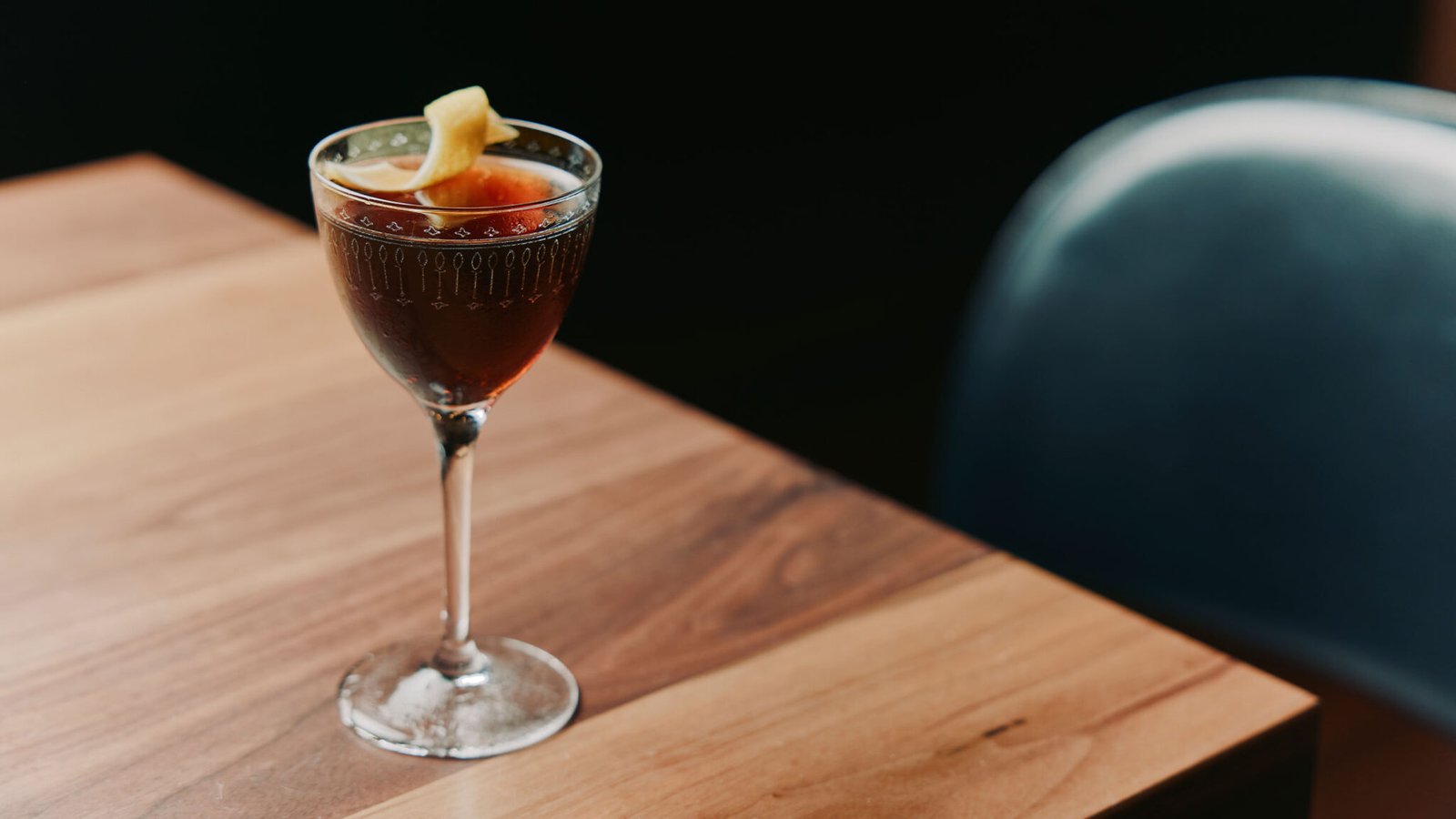

At Madeira Park in Atlanta, bar manager Philip Weltner’s list of cocktails is built on the classics: a Negroni, a Manhattan, a Tuxedo. The through line is that almost every drink on the menu showcases fortified wine. Among this group is a lesser-known cocktail from the late 19th century called the Metropolitan.
The earliest known reference to the Metropolitan is from O.H. Byron’s Modern Bartenders’ Guide, which was published in New York in 1884 and is the same source that also gives us some of the earliest full recipes for the Manhattan. Byron’s Metropolitan calls for two parts French vermouth to one part brandy, with a few dashes each of gum syrup and Angostura bitters. A decade later, George Kappeler turned it into an equal-parts drink and added a lemon twist; he also introduced a variation called the Metropole that swaps out Angostura for Peychaud’s and the garnish to a cherry. Another 20 years brought Hugo Ensslin’s take on the Metropolitan, which featured Italian (i.e. “sweet”) vermouth rather than dry or blanc, giving it a closer family resemblance to brandy Manhattans like the Harvard. This is how it’s remembered today.
At Madeira Park, Weltner’s spec uses the 1880s ratio of two parts fortified wine to one part brandy. Instead of Cognac, though, he reaches for Calvados, specifically Chauffe Coeur’s VSOP, for its delicate white floral notes as well as its concentration of barrel age. He also appreciates that “the fruit still comes through” with this bottling, which was important in a drink that layers three fortified wines alongside it: Punt e Mes, which brings a bitter wormwood “edge;” Bordiga Rosso, a lighter vermouth that acts like a bridge between the brandy and wines; and the star of the show, a sherry-based “vermut rojo” co-produced by Equipo Navazos and importer Nicolas Palazzi. The latter, which is built on an oloroso base layered with coriander, juniper, savory, elderflower and orange peels, delivers “a ton of bright herbal notes that hit really well with the fruit character of Calvados,” says Weltner.
Though early recipes for the drink specify Angostura, Weltner’s spec opts for one of his favorite aromatic bitters: Bogart’s. He also adds lemon bitters, which he likens to a “zipper,” both a way to brighten the drink up and add cohesion within the cocktail. Finally, a touch of saline solution “seasons” the drink, effectively bringing out all the other flavors, and, like Kappeler’s early spec, the drink gets a lemon peel garnish.
The Metropolitan was on Madeira Park’s opening menu last winter and has made its triumphant return this fall, when guests gravitate toward apple brandy and Manhattan-style drinks. When pitching them on the Metropolitan, Weltner leans on that familiarity and the unique appeal of each of the products. “If you’re in the mood for something familiar but a little adventurous and you’ve never tried these things,” he says, “they’re absolutely delicious.”