
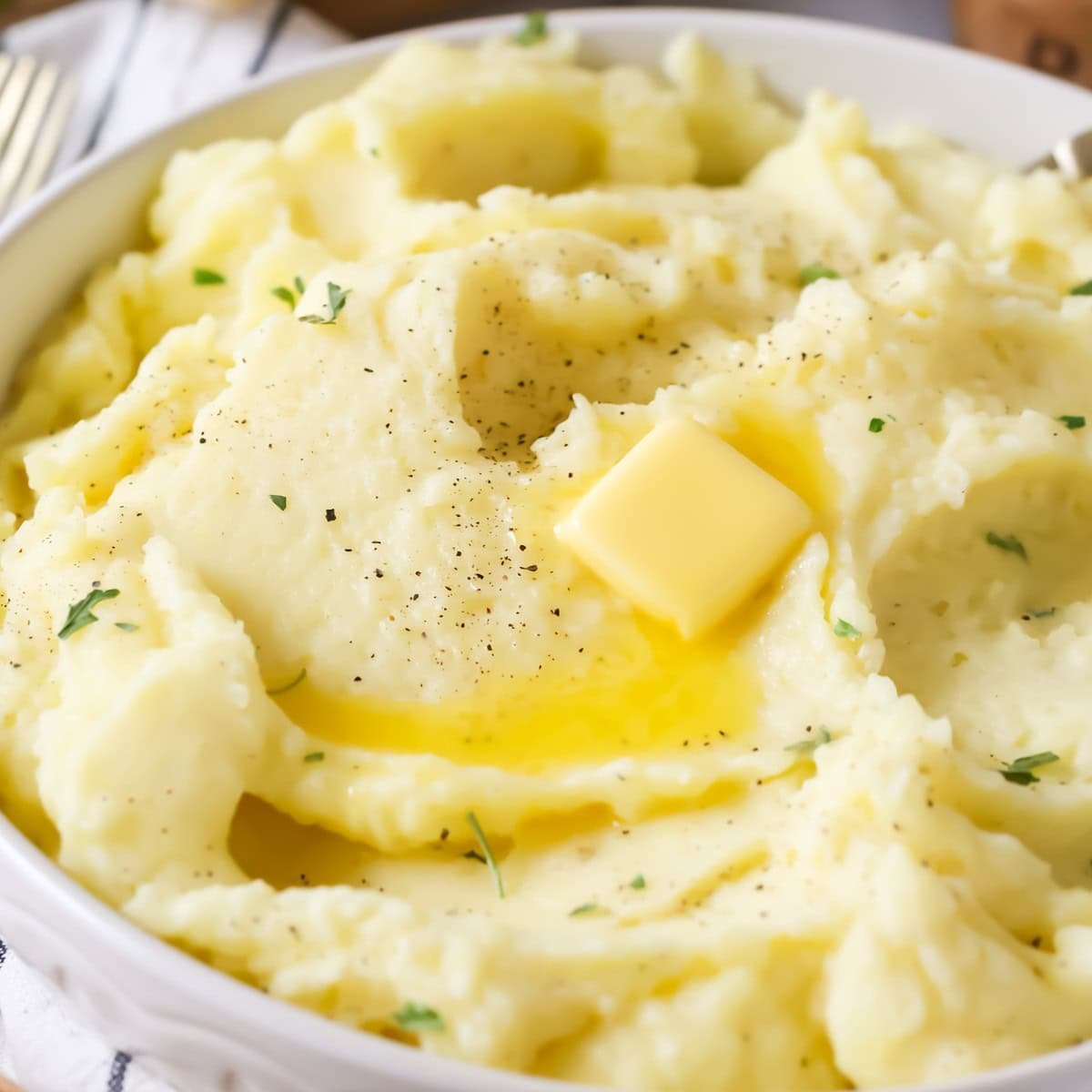

If you’re searching for a mashed potatoes recipe that’s creamy, buttery, and perfectly smooth, you’ve found it! My recipe is simple, but shares a few key (and easy!) techniques that most people accidentally skip, and they make all the difference. Just 5 ingredients, easy to make, and the recipe includes a how-to video.
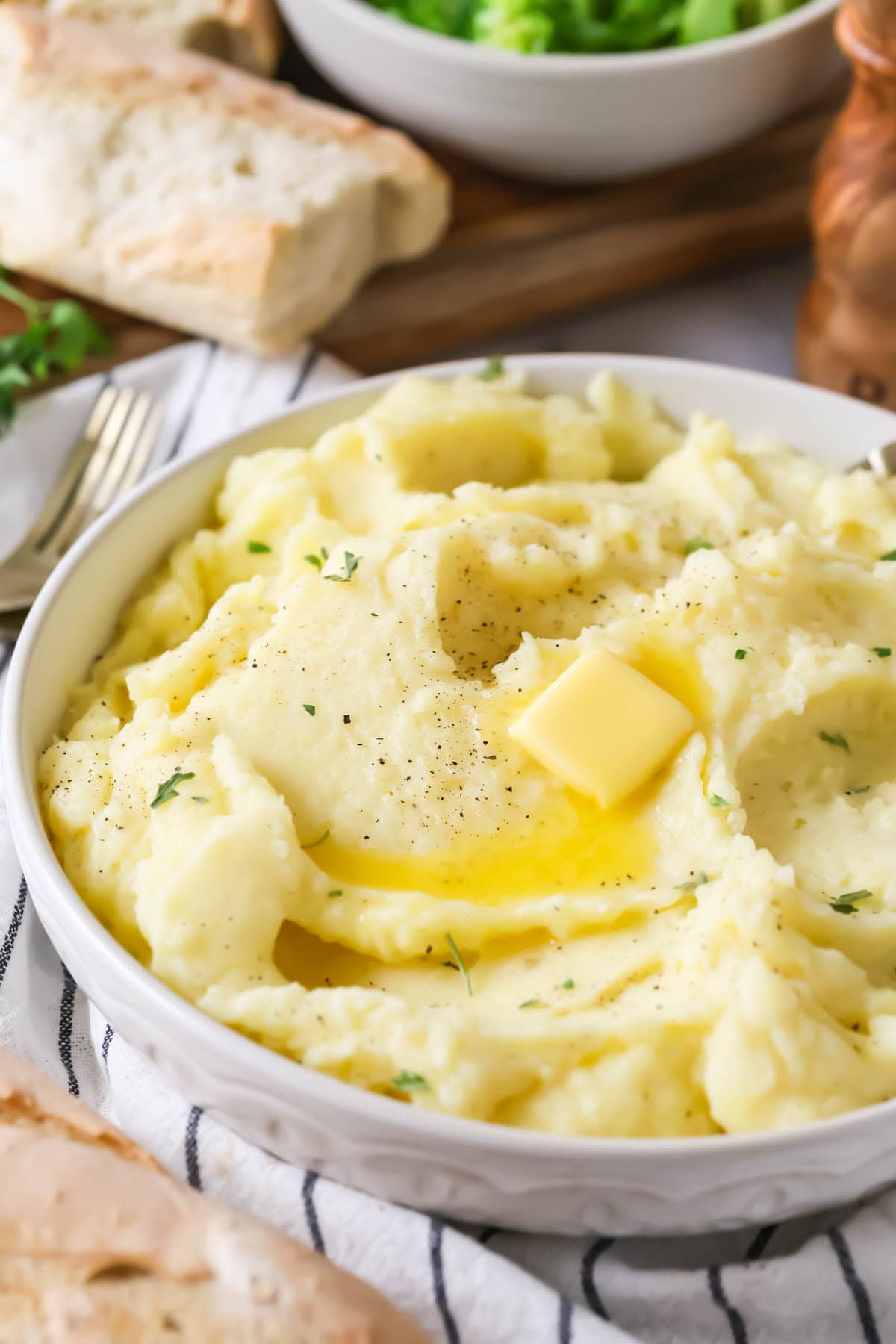
A Deep Dive on How to Make The Best Mashed Potatoes
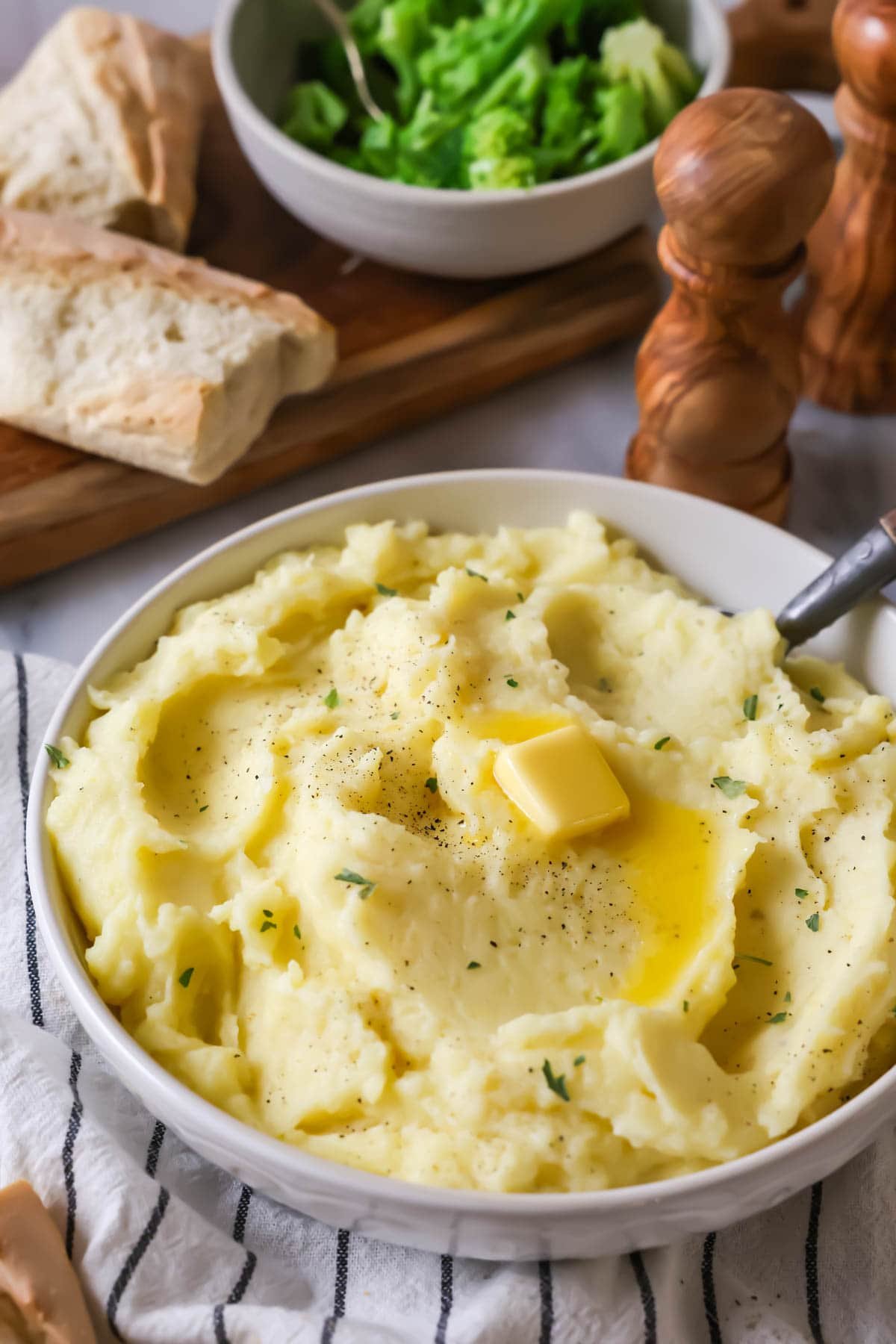
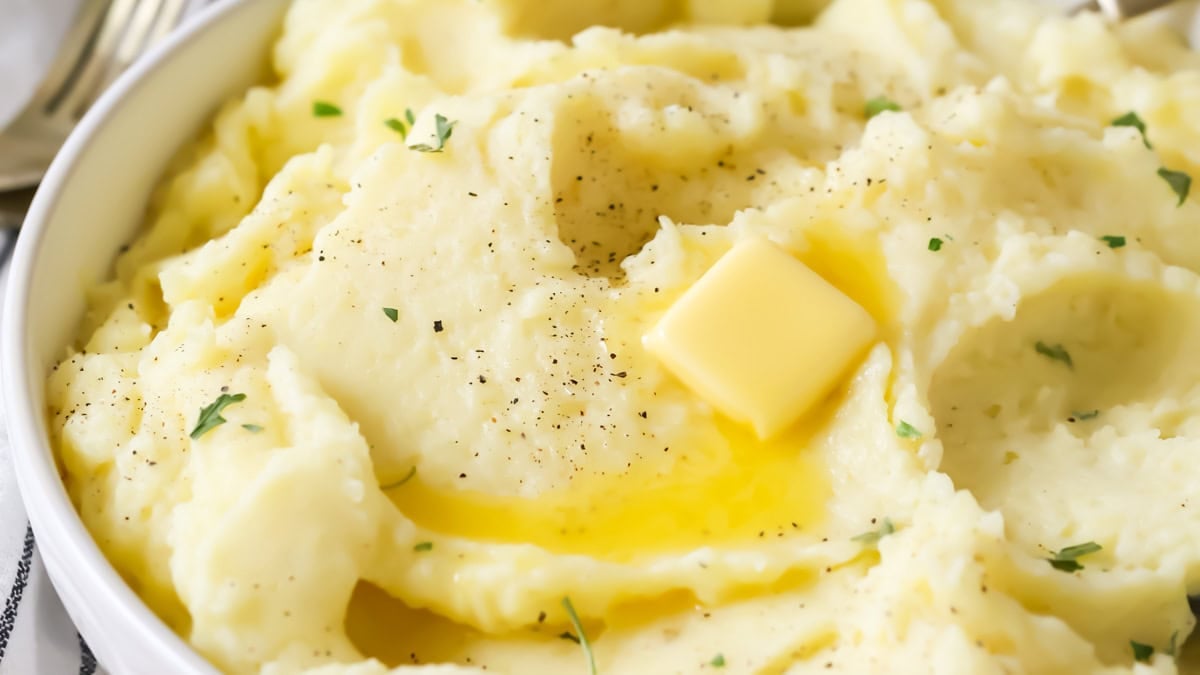
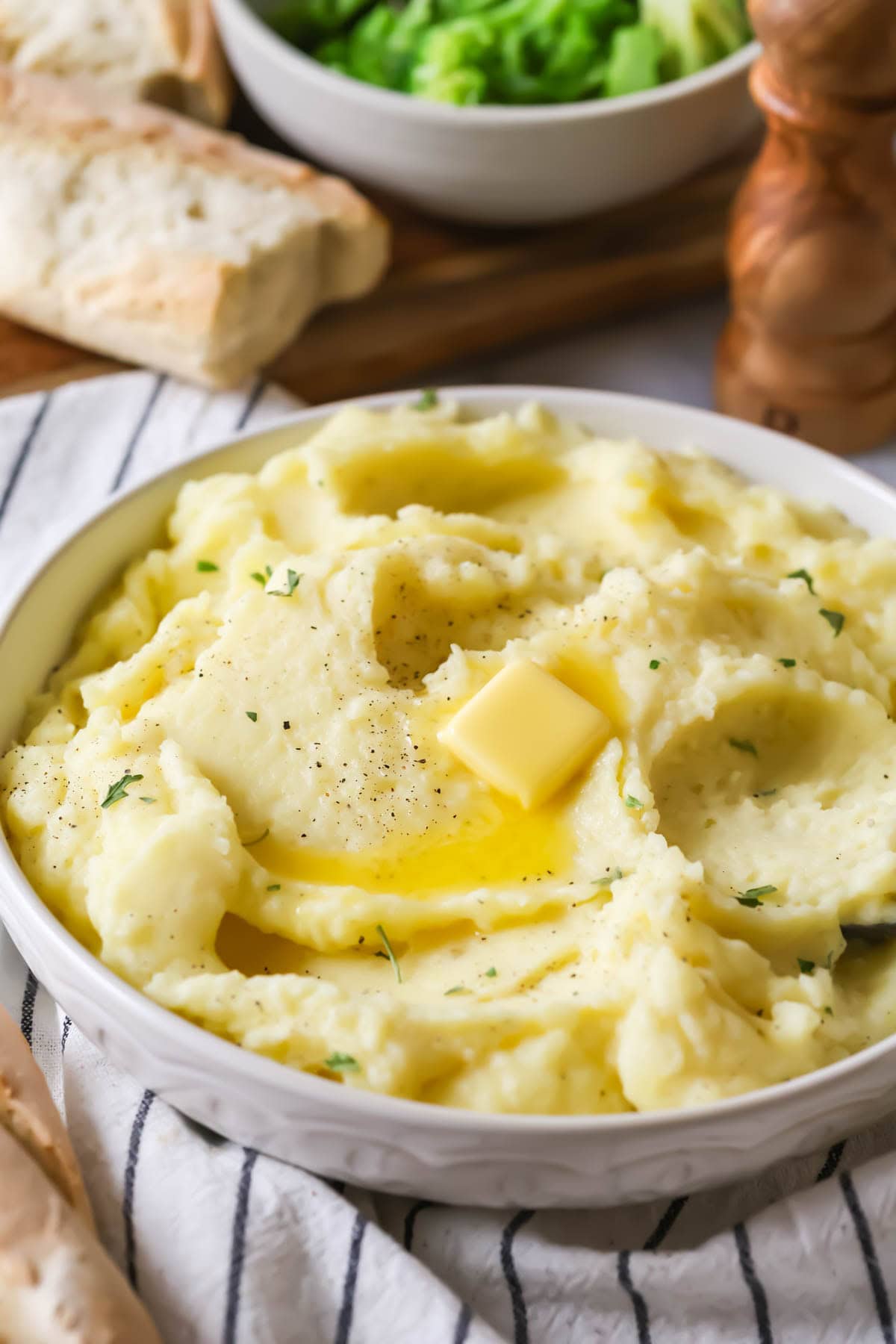
My mashed potatoes recipe delivers buttery, velvety-smooth potatoes every time. It strikes the right balance between creamy and fluffy for the *perfect* texture.
Personally, I don’t like my mashed potatoes too soft/runny (and never gluey), and I don’t ever want them so dry that you could sculpt them. Today’s recipe is soft, yet sturdy enough that you can add a pool of gravy, if that’s your thing.
Why You’ll Love This Recipe
It’s all in the technique. Rinsing the potatoes, letting them steam off excess moisture, adding butter first, and warming the milk. Simple, quick techniques that most people skip all stack together to deliver truly amazing results.
Simple enough for a weeknight, indulgent enough for a special occasion. Serve yours as a hearty base for my weeknight pot roast recipe, or serve them as your Thanksgiving mashed potatoes, where they’ll pair nicely with turkey and green bean casserole.
Includes optional flavorful add-ins; you can add none, one, or all of them depending on your meal.
What You Need
No funny business or unexpected ingredients. We’re sticking with the basics: simple ingredients for a classic mashed potatoes recipe that tastes steakhouse worthy.

Potatoes. I recommend Yukons and think they yield the best texture, but russets also work well for something a bit lighter and fluffier. Honestly, nearly any potato you have on hand will work, but see my FAQ for more details about this.
Milk. Whole milk is my preference, but 2% milk or even a plant-based milk would work, just note the exact amount you need may vary.
Butter. Feel free to use salted or unsalted butter, whichever you have on hand. Lately I’ve been reaching for salted butter for this recipe. If you want to turn it up a notch, splurge on the European butter in your grocery store!
Salt and pepper. Add both to taste. If ever a recipe tastes bland, it usually just needs a pinch more salt!
Add-ins. These are optional, but I sometimes like to add some sour cream, freshly grated parmesan, or pressed garlic.
If I’m serving my mine with something like salisbury steak recipe, I typically won’t include the add-ins (enough flavor from the rich gravy), but if the potatoes need to shine on their own without gravy (like as a side to roast chicken) I like to add all three.
SAM’S TIP: Peel your potatoes, or don’t–whatever your preference is usually fine! With Yukon Golds, I sometimes won’t peel because the skins are thin, but with russets I always peel their coarser, tougher skin (especially since, no matter how well I scrub them, I swear I can always taste the dirt).
Remember, this is just an overview of the ingredients I used and why. For the full recipe please scroll down to the bottom of the post!
How to Make Mashed Potatoes
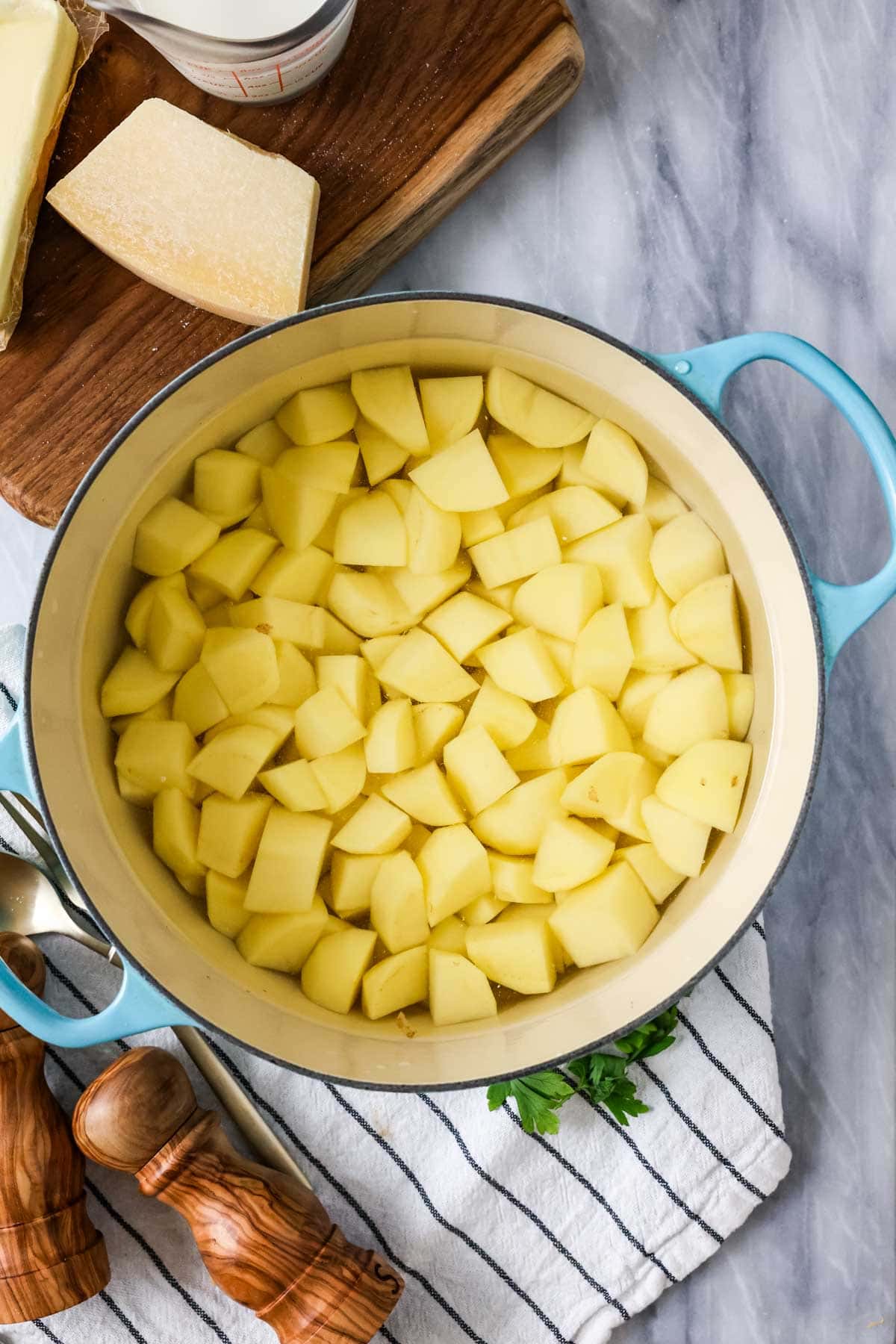
Step 1: Prep your potatoes. Wash, peel, and chop your potatoes (not too small or they’ll cook too fast, not too large or they’ll cook unevenly and your texture will suffer), then rinse them in a colander under cold water for about a minute. Boil in salted water until fork tender, then drain and return to the hot pot.
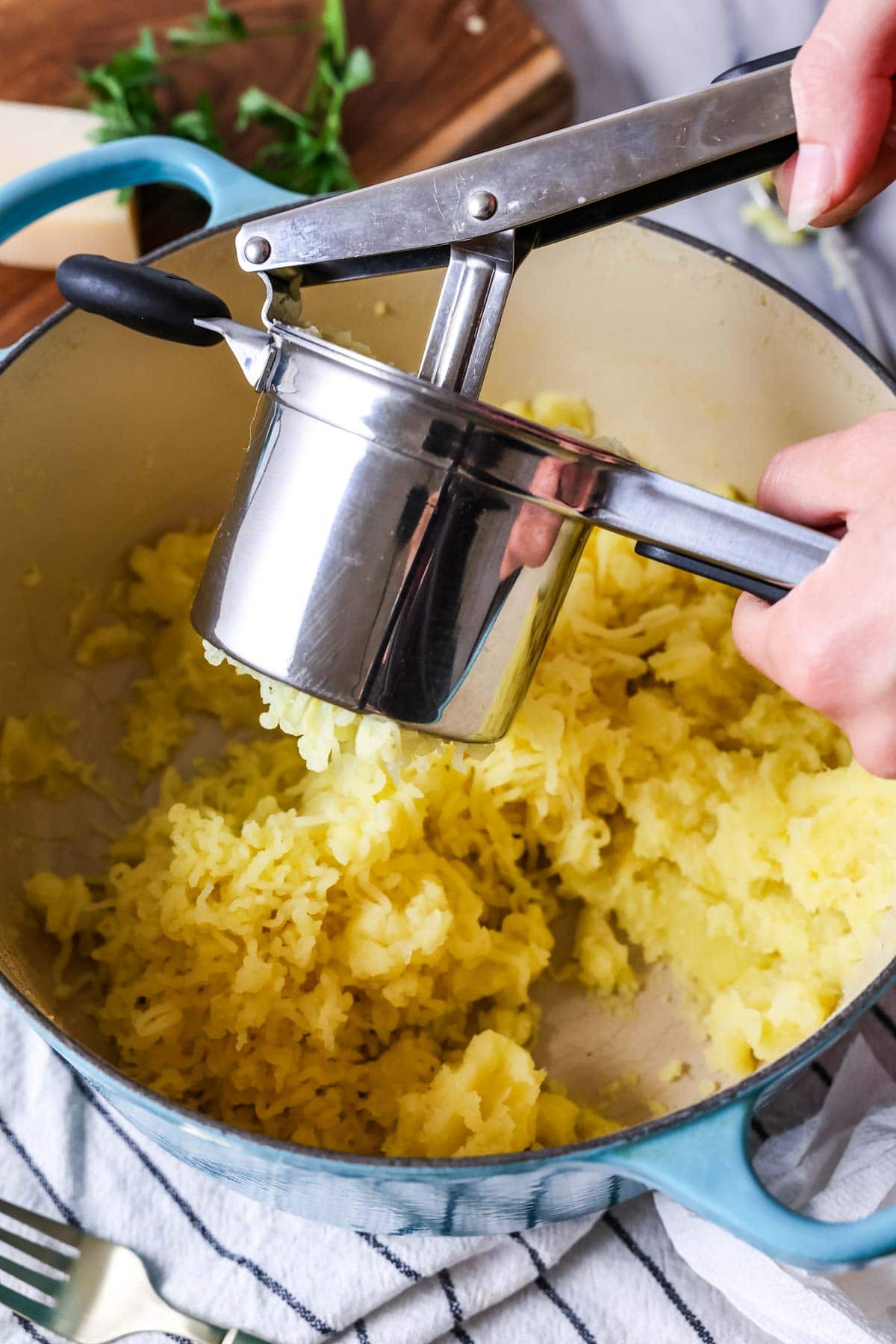
Step 2: Mash. Let the potatoes sit in the hot pot for a few minutes, this is key in ensuring the excess moisture cooks off and preventing watery potatoes! Then, rice (recommended!) or mash until smooth.
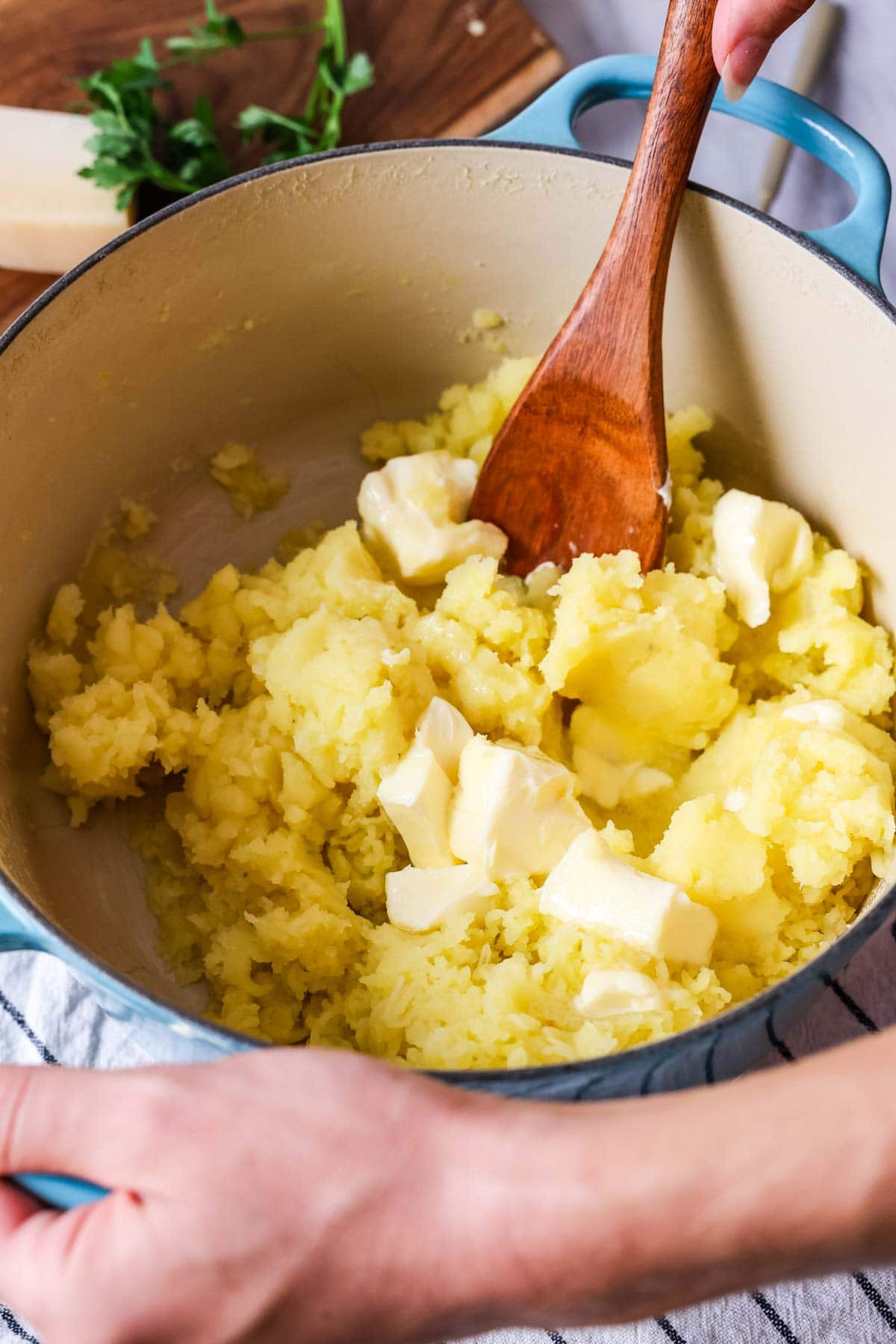
Step 3: Add softened butter. After mashing or ricing, stir in your softened butter pieces (not cold butter!) until fully melted and incorporated. Adding the butter after mashing but before the milk is added is one of my favorite sneaky tricks. The fat from the butter coats the potato starch before we add milk, helping ensure the creamiest possible texture. It’s a subtle changeup from adding it with the milk, but worth the time!
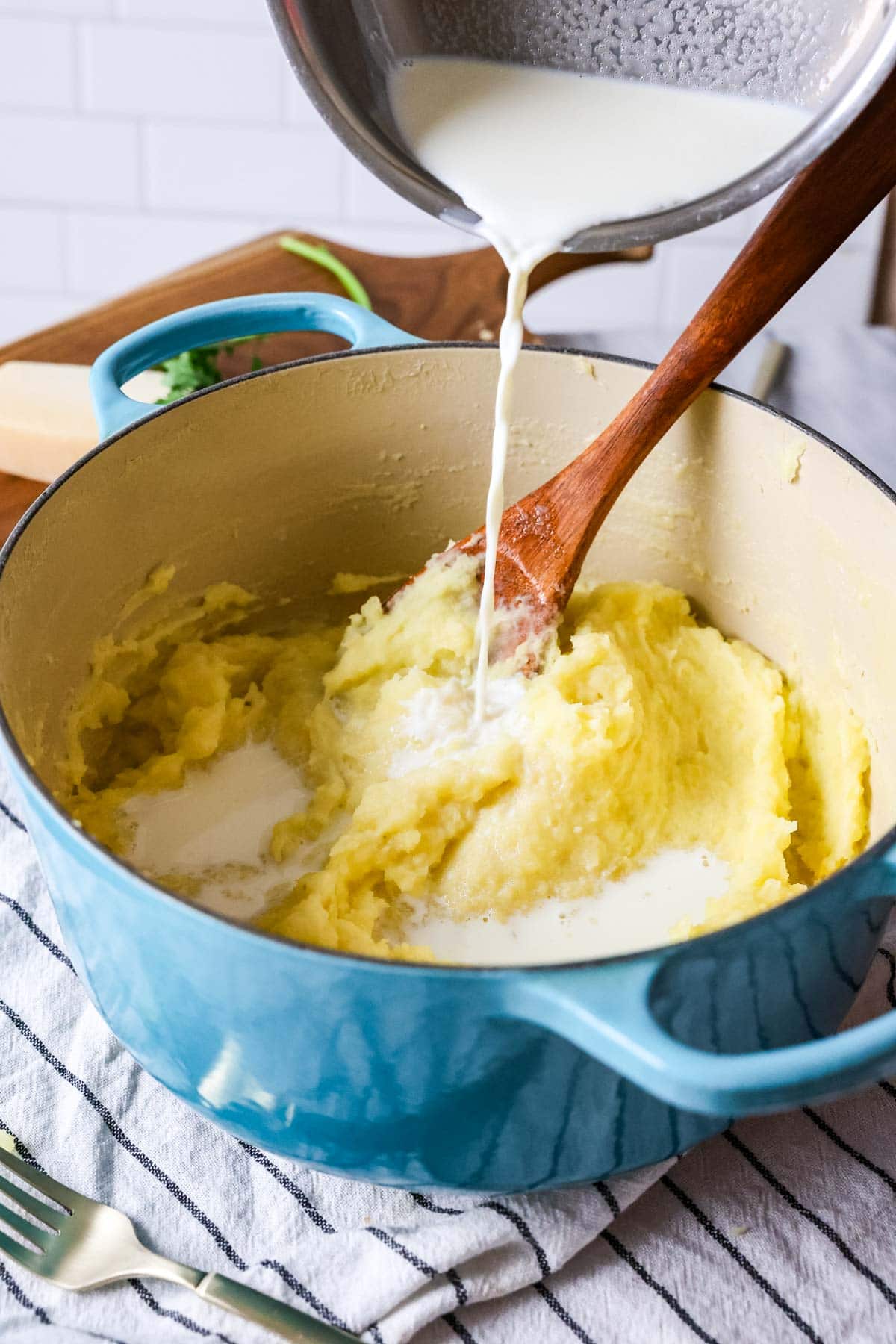
Step 4: Add the milk. Only once your butter is incorporated should you add in the warmed milk (and you can add the salt, and pepper here, too). Stir again until everything is combined. Taste-test to check for seasonings at this point.
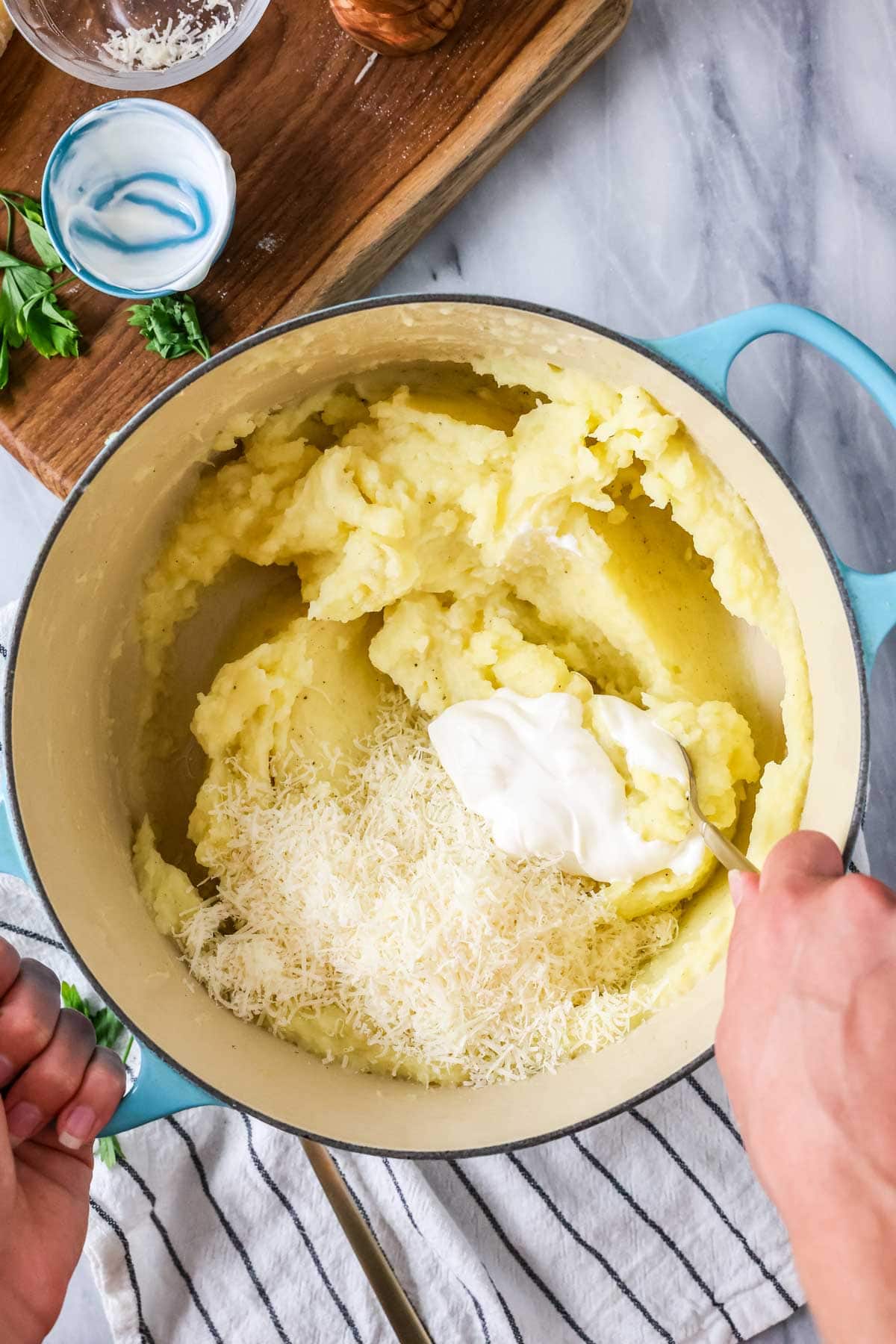
Step 5: Optional add-ins. If you’d like, you can stir in some sour cream, pressed garlic (for Versatile. Can easily transform into garlic mashed potatoes) and/or parmesan cheese before serving. Yum!
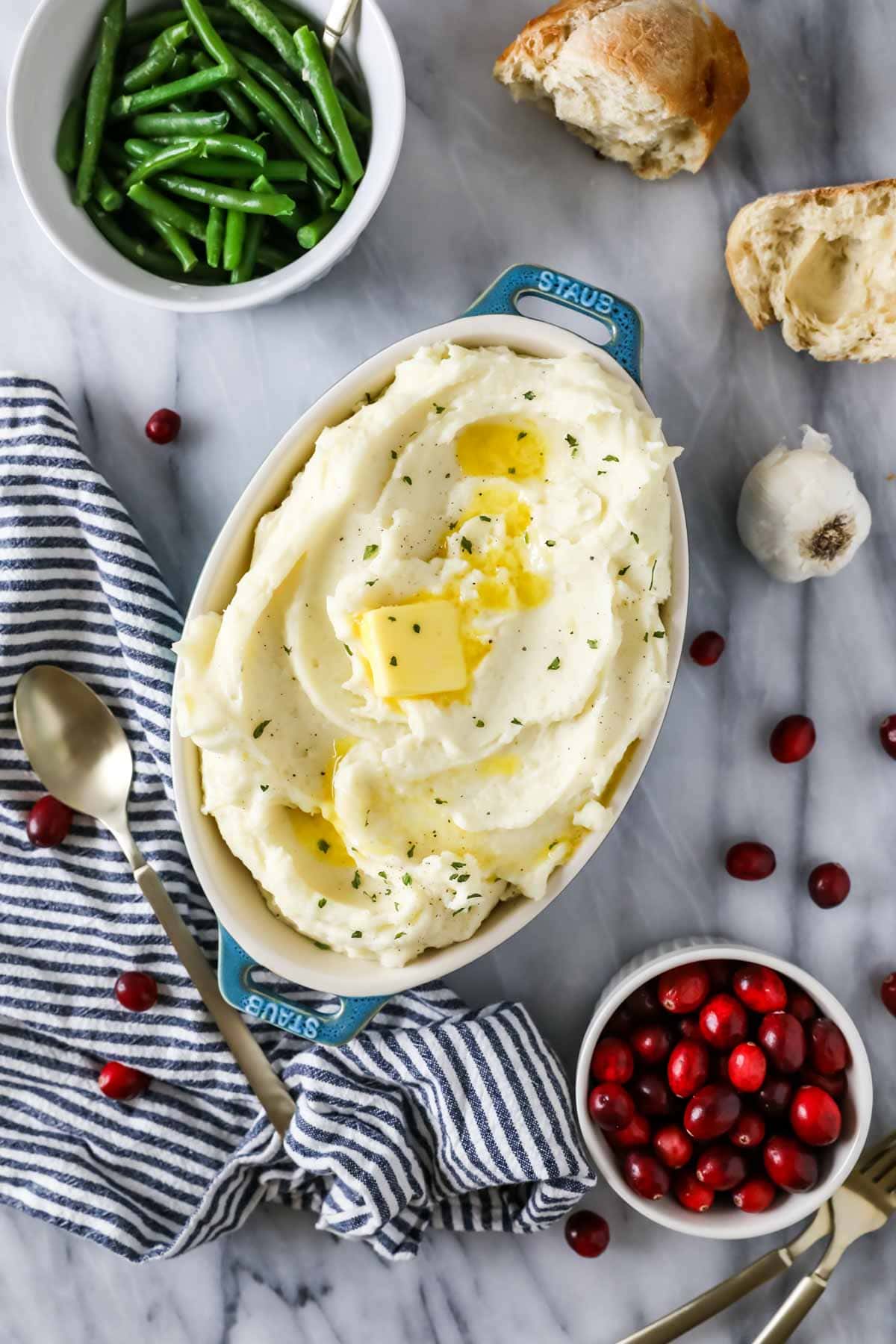
Step 6: Serve and enjoy! Serve your potatoes immediately while still warm. I include instructions for freezing and reheating below.
SAM’S TIP: Overcooking your potatoes (boiling to the point where they are falling apart) will make for watery results. Once they are overcooked, your potatoes will be nearly impossible to fix. You’re better off starting over if you over-boil them, so avoid this!
Frequently Asked Questions
Cream can make for wonderfully rich, creamy mashed potatoes, but I consistently prefer the lighter results made with good old whole milk. This way, you get a creamy texture without weighing the potatoes down. If you really feel called to use cream, I wouldn’t substitute more than half the milk called for.
For smooth(er) mashed potatoes, use peeled Yukon golds, rinse well, cook til tender, and use a potato ricer (this is the one I use, it breaks them down better than a regular masher).
Note that this still isn’t guaranteed to give you perfectly smooth results; you’d need to run them through a fine mesh sieve for that, which is a lot of trouble and can result in gluey potatoes. Our aim here was for the smoothest creamy mashed potatoes that are actually reasonable to make.
I prefer and recommend Yukon gold potatoes for their buttery flavor and smooth texture… and I honestly just love that golden hue, too! Russets will also work just fine and I find these potatoes yield more fluffy mashed potatoes but they’re also easier to accidentally over-mix/turn gluey).
Some mashed potato recipes recommend using a blend of the two; while this can be done, I don’t really recommend it as the potatoes don’t cook at the same rate. If you want to do this, your best bet would be to cook them in separate pots to make sure they’re each cooked properly before combining. Red potatoes would also work well here, but they’re a waxier potato and don’t usually yield the creamiest results of the bunch, but you don’t have to peel them!!
Yes, my mashed potatoes recipe actually works very well as a make-ahead dish. Prepare them as written, let cool slightly, and place in an airtight container to store (I recommend a piece of plastic or parchment against the surface of the potatoes to help minimize the risk of them drying out). Refrigerate them for up to 3 days.
To reheat, Transfer the leftovers to a pot or saucepan, add a splash of milk or cream, and warm on the stovetop over low heat, stirring occasionally, until warmed through. Sometimes I’ll add an extra pat of butter at the end to help restore it to its full creaminess.
How to make the best mashed potatoes recipe
Lackluster mashed potatoes are usually the result of a death by a thousand cuts. Most people skip the handful of simple steps that actually make for an incredible mash.
Start with the right potato. Use Yukon Gold for naturally creamy/buttery results. Their medium-starch level is ideal for a silky texture with a lower risk of gumminess.
Cut evenly and rinse well. Cut the potatoes into evenly-sized pieces, this helps ensure they cook evenly (too small and they’ll take on too much water, yielding watery/loose results; too large and they won’t cook evenly, yielding lumpy and not creamy mashed potatoes). Rinsing removes extra surface starch, which is the number one cause of gluey, pasty potatoes.
Dry them out (so important!) After the potatoes have boiled, drain them well then return them to the hot pot and let them sit for about 2 minutes, stirring a few times. This allows the excess moisture cook off; that excess water can make for watery, lumpy results rather than creamy mashed potatoes.
A ricer is ideal. A ricer presses the potatoes through small holes (you guessed it, the size of a grain of rice) for a super smooth mash, without overdoing it, like an electric mixer could. A mixer is risky and can make your potatoes gluey, so I don’t chance it!
Add softened butter first. Add cubed, softened/warm butter and stir it in until it’s completely incorporated into the potatoes. With this method, the fat from the butter coats the potato starches and keeps them silky and stable (at least that’s some of the science behind it, and the taste-testing results seemed to prove true!). Don’t add cold butter and don’t warm it with the milk (full disclosure: I’ve done both of those things in a time crunch, especially when I’m making my shepherd’s pie — they work, sure, and everyone eats the potatoes, but we’re talking about how to make the best mashed potatoes here).
Warm your milk. Warmed milk blends more evenly and absorbs more gently, minimizing your risk of over-mixing/over-working the starches.
Make sure you save any leftovers to make my potato pancakes!
If you love this recipe, check out my full list of Thanksgiving side dishes for even more comforting sides.
Enjoy!
More of my Favorite Side Dishes
Let’s bake together! Subscribe to my newsletter to be notified of all the newest recipes, and find my free recipe tutorials on YouTube 💜
The BEST Mashed Potatoes Recipe (Creamy and Delicious!)
My creamy mashed potatoes recipe is perfectly balanced to be fluffy, creamy, and yet still sturdy enough to hold a pool of gravy. Just 5 ingredients and only 25 minutes to make!
]]>]]>
Print
Pin
Rate
Cook ModePrevent your screen from going dark
Servings: 6 servings
Calories: 327kcal
Ingredients
Optional add-ins (add one or all of them!)
Instructions
Cut butter into 8 pieces and set out at room temperature so it can soften while you prepare the potatoes.
3 lbs (1.3 kg) gold potatoes
Peel potatoes (if desired) and cut into 1 ½” (4cm) pieces. Place in a colander or large mesh sieve and rinse under cold water for one minute.
Place potatoes in a large pot of cool water (make sure the potatoes are covered by at least ½” of water and that the pot is not more than ⅔ of the way full or it could overflow). Generously salt the water and turn stovetop heat to high. Bring to a boil, stirring occasionally.
While potatoes are cooking, heat milk in a microwave safe dish until warm (or heat over medium-low heat in a small saucepan.
1 cup (236 ml) whole milk
Boil potatoes until tender when pierced with a fork (about 10 minutes but time can vary).
Drain potatoes well and return to pot. Let them sit in the pot for about 2 minutes, stirring occasionally, this allows the steam to cook off excess water and will help keep your potatoes from being watery/grainy.
Mash potatoes with a masher or use a ricer (recommended) to make them nice and smooth.
Check that your butter is softened (if not, pop in the microwave for just a few seconds, it should be room temperature). Scatter the butter pieces over the potatoes and stir until butter is melted and completely incorporated. .
½ cup (113 g) salted butter
Drizzle warmed milk over the potatoes and add salt and pepper, stir until combined.
½ teaspoon table salt or fine sea salt, ⅛ teaspoon freshly cracked black pepper
If using any add-ins (I highly recommend the sour cream!), stir them in now until combined.
¼-⅓ cup (60 g) full-fat sour cream, ½ cup (50 g) freshly shredded parmesan cheese
Serve warm.
Notes
Milk
Whole milk is my preference, but use whatever you have on hand (plant-based milk works, too).
Add-ins
Add one or all of these add-ins for super flavorful, next-level mashed potatoes. You could also try substituting cheddar cheese for the parmesan.
Storing
Store in an airtight container in the refrigerator for up to 3 days.
Reheating
Place mashed potatoes in a saucepan on the stovetop, add a splash of milk or cream to loosen the potatoes and stir over low heat until warmed through (if needed, add additional splashes of milk/cream as-needed until the smooth creamy texture is restored). Stir in an extra pat of butter just before serving (optional).
Freezing
Allow potatoes to cool, cover tightly, and freeze for up to 5 months. Thaw overnight in the refrigerator or transfer to a saucepan and warm over low heat with a splash of milk or cream.
Nutrition
Serving: 1serving | Calories: 327kcal | Carbohydrates: 41g | Protein: 6g | Fat: 16g | Saturated Fat: 10g | Polyunsaturated Fat: 1g | Monounsaturated Fat: 4g | Trans Fat: 1g | Cholesterol: 44mg | Sodium: 220mg | Potassium: 1001mg | Fiber: 5g | Sugar: 3g | Vitamin A: 521IU | Vitamin C: 45mg | Calcium: 65mg | Iron: 2mg
Nutritional information is based on third-party calculations and should be considered an estimate only. Actual nutritional content will vary based upon brands used, measuring methods, cooking method, portion sizes, and more.