

Disclosure: This post may contain affiliate links, which means I may earn a commission if you click on the link and make a purchase.
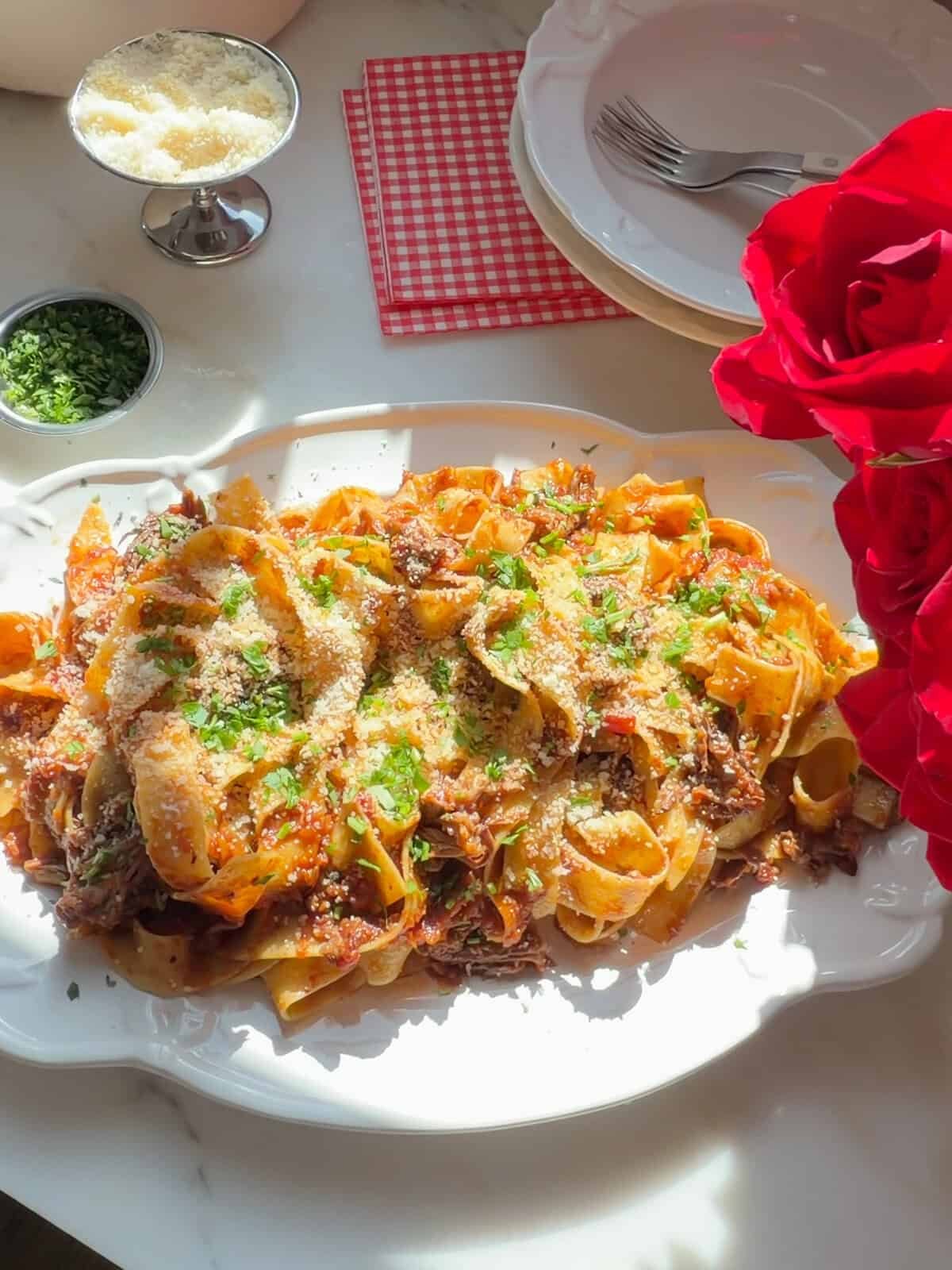
This Short Rib Ragu is deeply flavorful and impressive, but surprisingly low-maintenance. It’s mostly hands-off thanks to a long oven braise, making it ideal for entertaining or weekend cooking. Serve it over wide pasta with a simple side like my endive salad to balance things out.
Short rib ragu is the kind of recipe I make when I want something that feels special without being too fussy. I love that I can even prepare it days ahead because it really gets better over time. I prefer bone-in short ribs here because they deliver both body and flavor to the sauce as they braise, creating a ragu that tastes like it’s been tended all day. It’s such a great make-ahead option for dinner parties, date nights, or when you want something cozy on the table alongside my classic tiramisu and brownie pudding cookies.
Ingredients You’ll Need for Short Rib Ragu
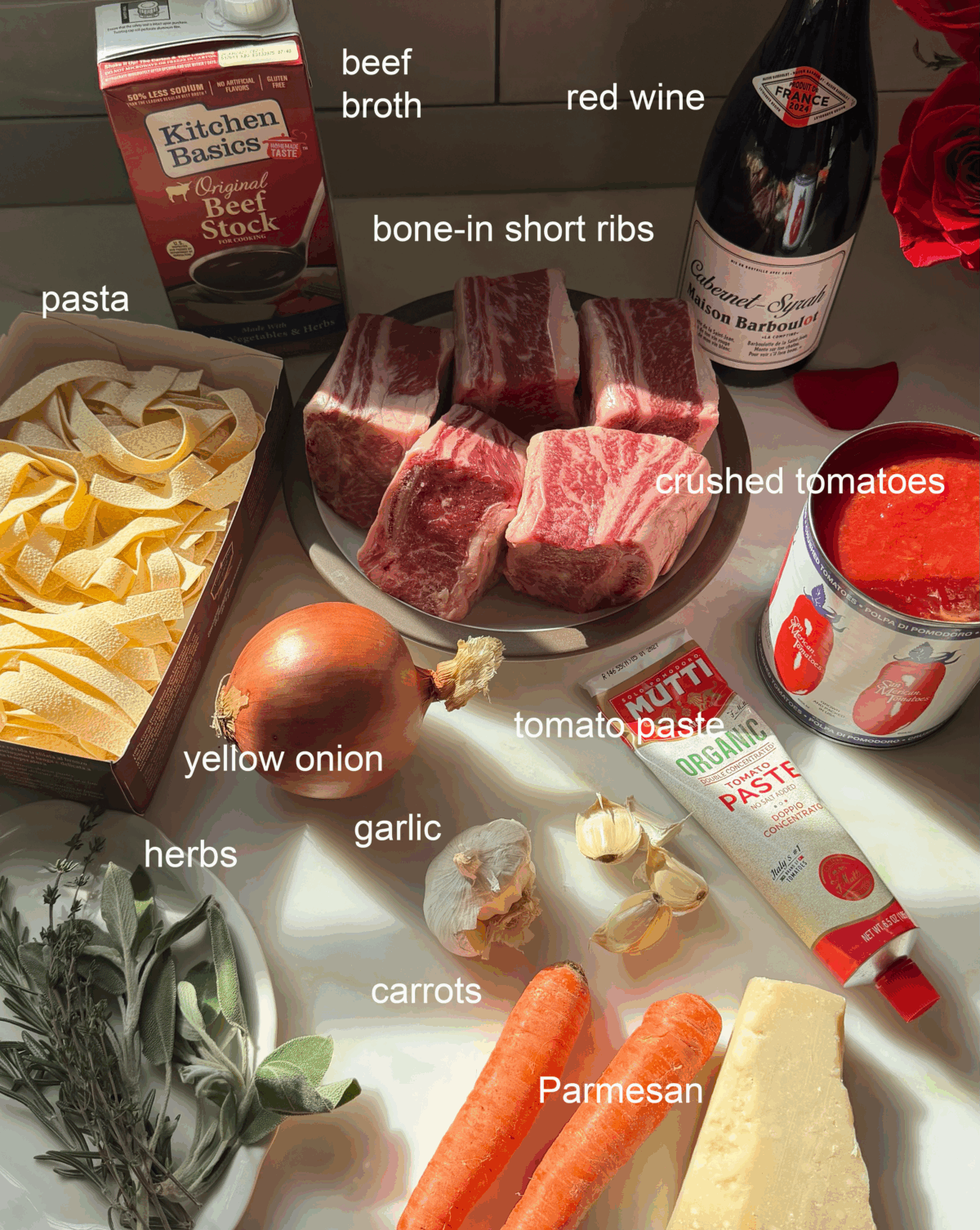
Bone-In Short Ribs – I prefer bone-in for the rich beef flavor and the fat, which gives the sauce body and a silky finish as it cooks low and slow.
Tomato Paste – Cooking the tomato paste briefly deepens its sweetness, helping the sauce taste more balanced.
Red Wine – The wine deglazes the pot and adds acidity, cutting through the richness of the beef.
Crushed Tomatoes – This is the base of our ragu. The tomatoes and the beef slow-cook together creating the most luxurious sauce.
Fresh Herbs (Thyme, Sage, Rosemary) – A small bundle infuses the ragu gently, adding an earthy flavor without overpowering the beef.
For the rest of the ingredients, please refer to the recipe index card below!
How to Make Short Rib Ragu
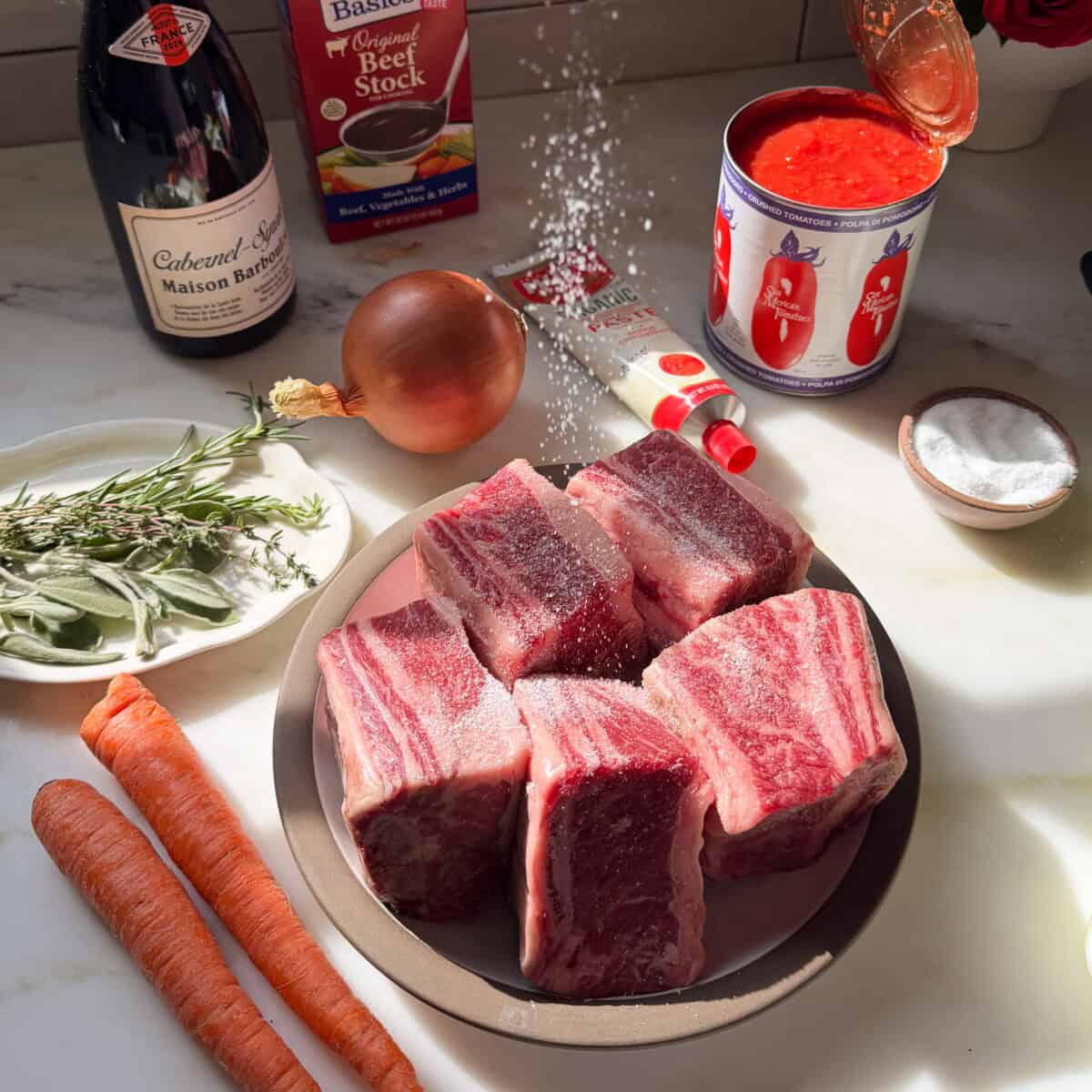
Season the short ribs. Pat the short ribs dry and season well with salt.
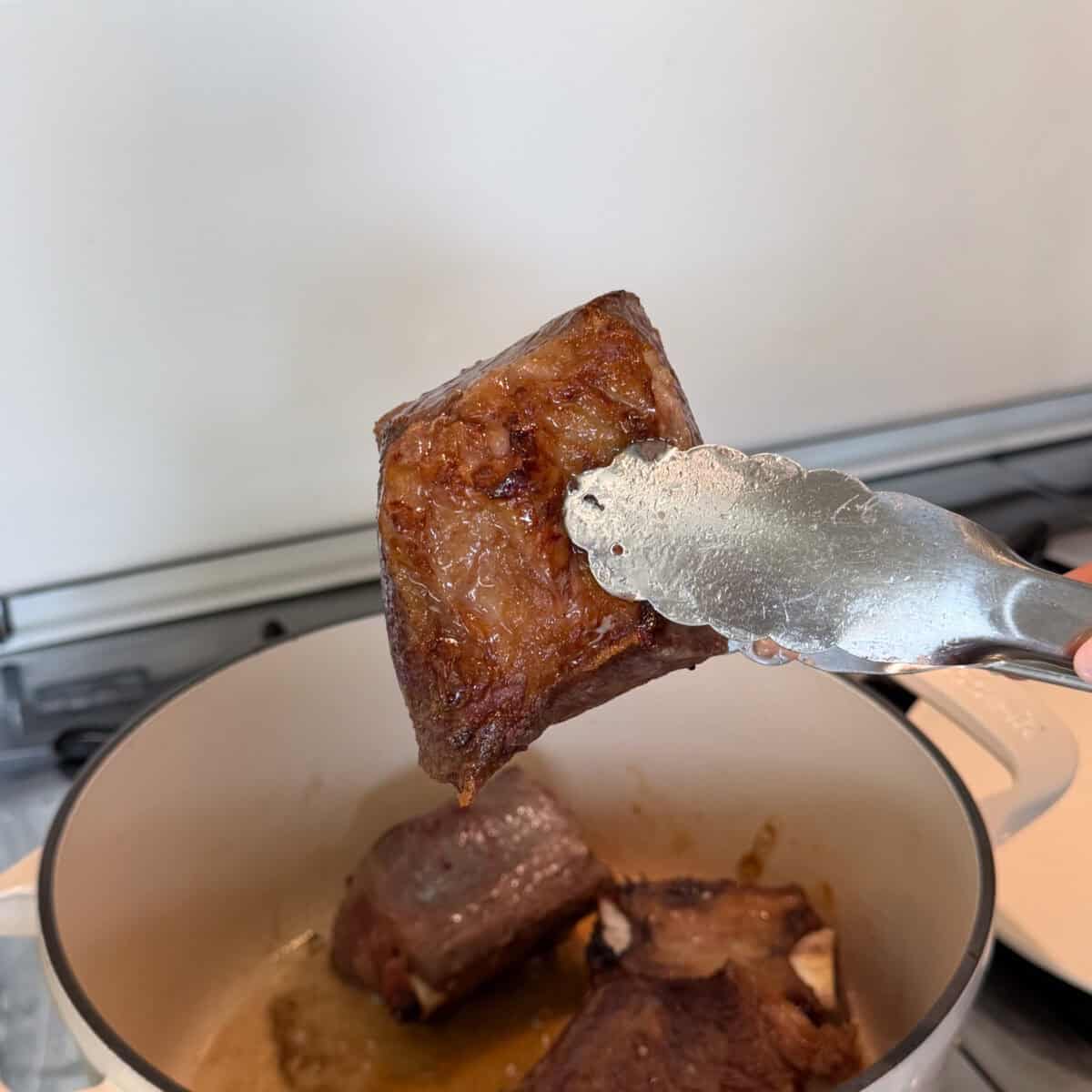
Sear the short ribs in a Dutch oven until deeply golden on all sides; this builds flavor right from the start.
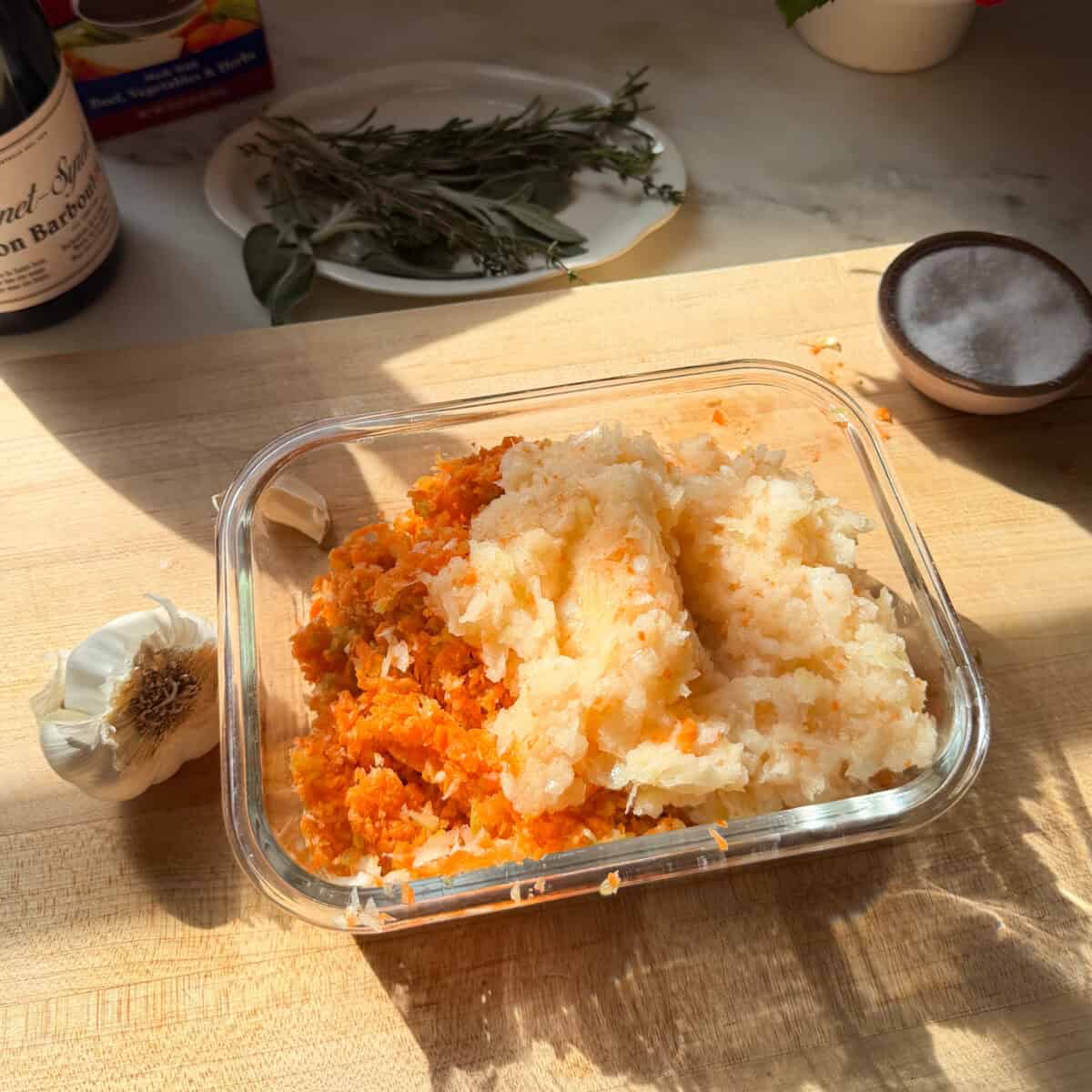
Cook the vegetable base. Pulse the onion, carrots, celery, and garlic into a fine paste, then cook it gently until softened and fragrant, about 3–5 minutes.
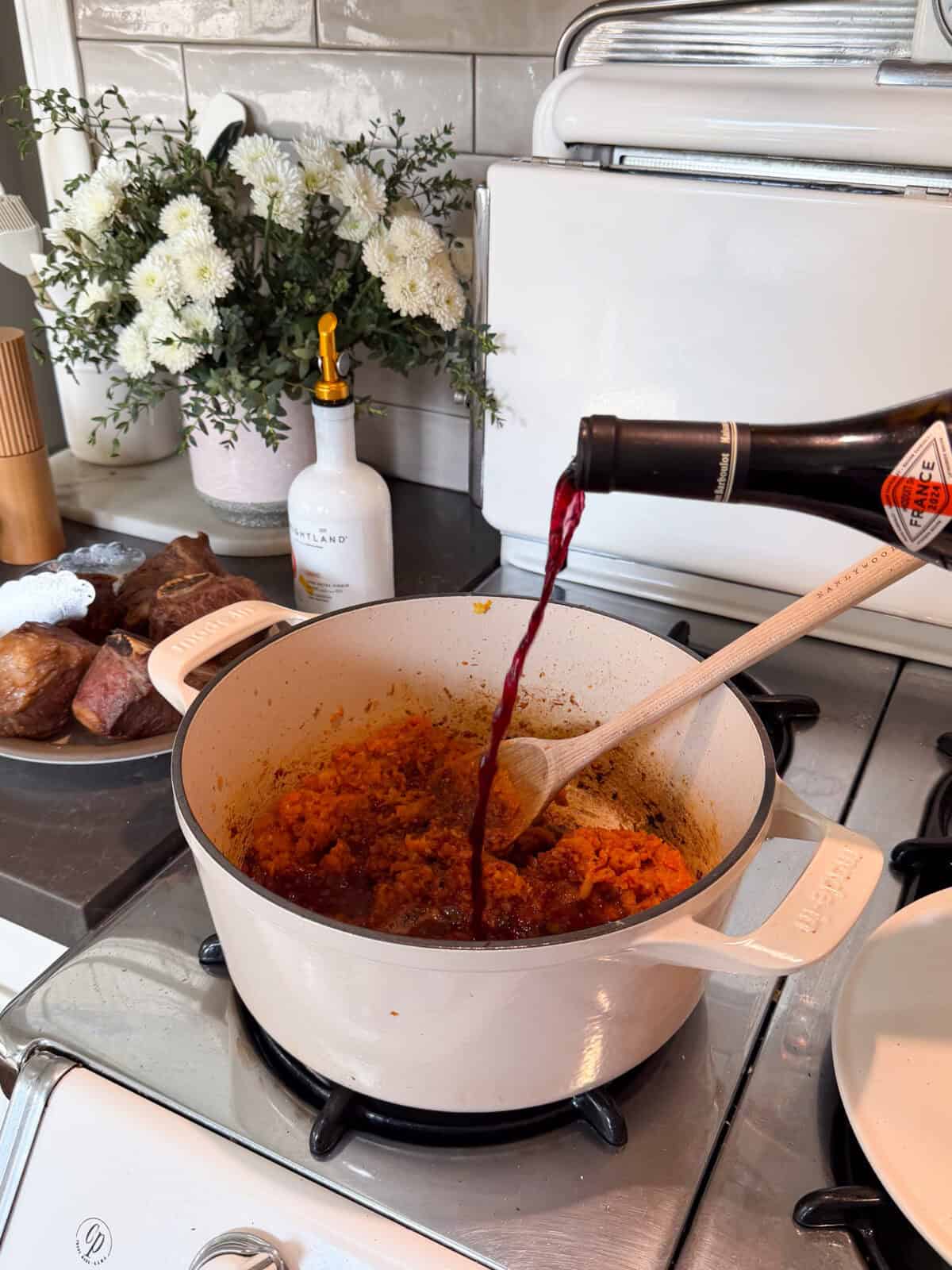
Stir in the tomato paste and cook for 1–2 minutes, until it darkens slightly and smells sweet rather than raw. Deglaze and build the sauce. Pour in the red wine, scraping up any browned bits from the bottom of the pot.
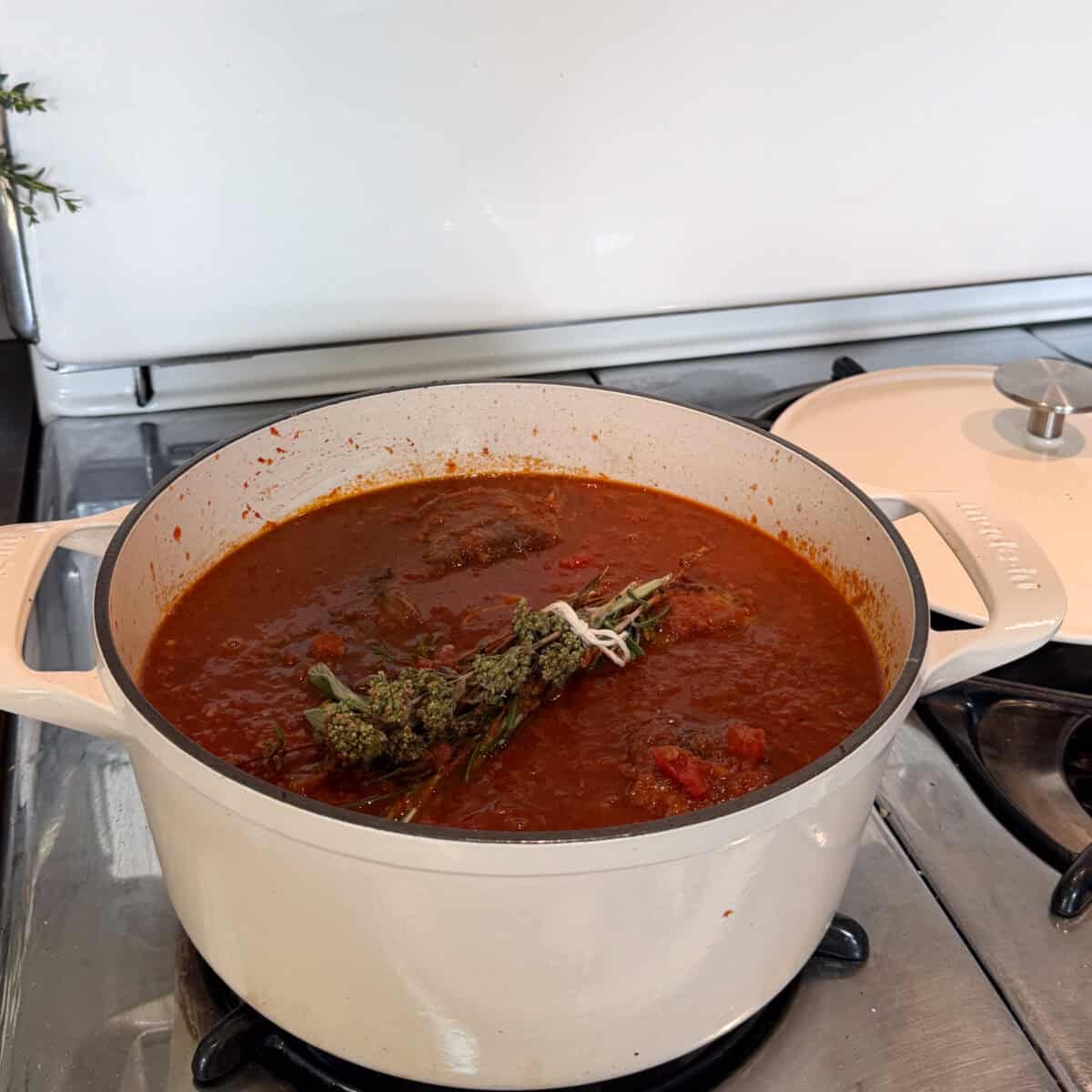
Add crushed tomatoes, beef broth, and herbs, tasting and adjusting salt. Braise in the oven at 350℉. Return the short ribs to the pot with the herb bundle, cover, and braise until the meat is fork-tender, about 2½–3 hours.
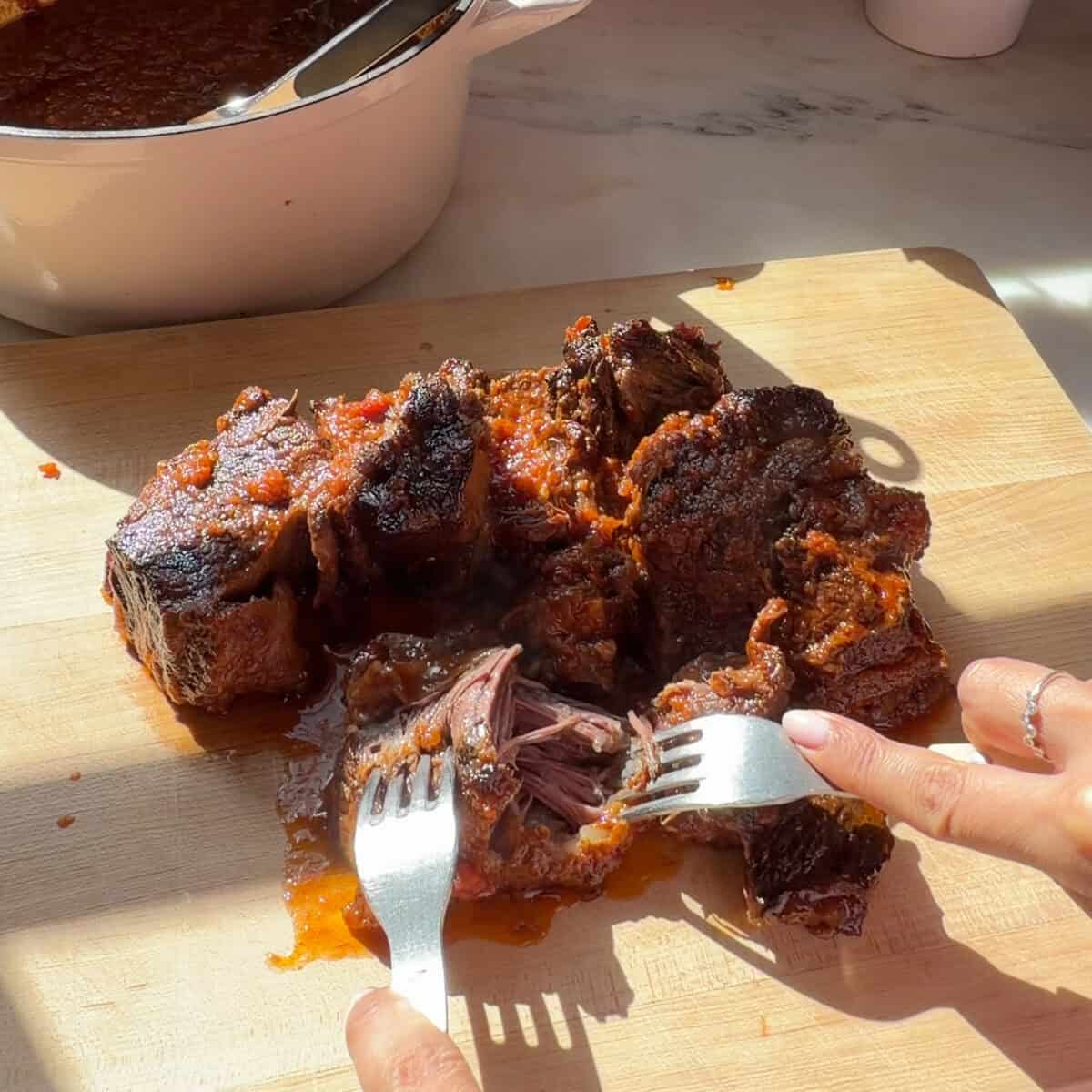
Shred the meat, skim excess fat from the sauce if needed, and stir the beef back in.
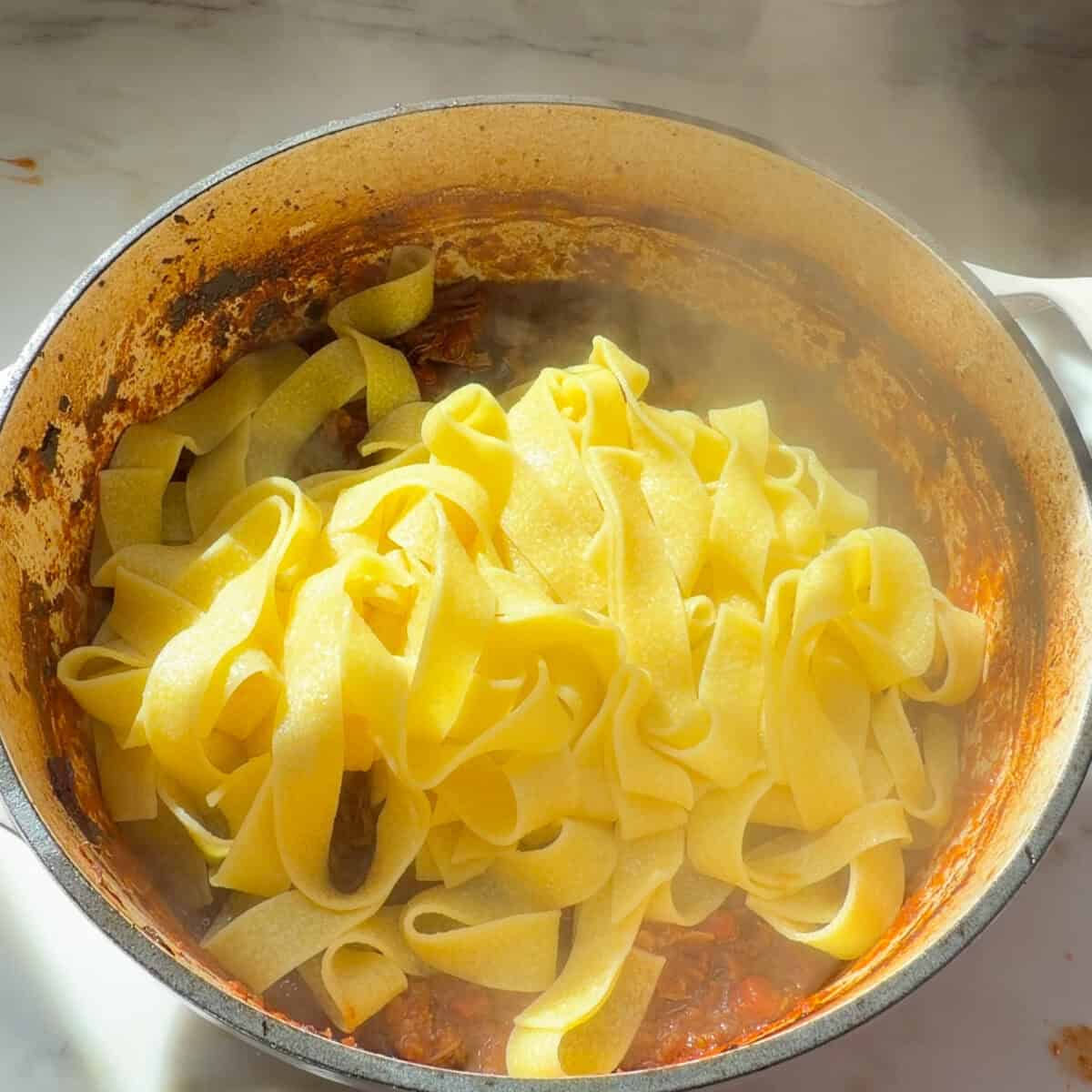
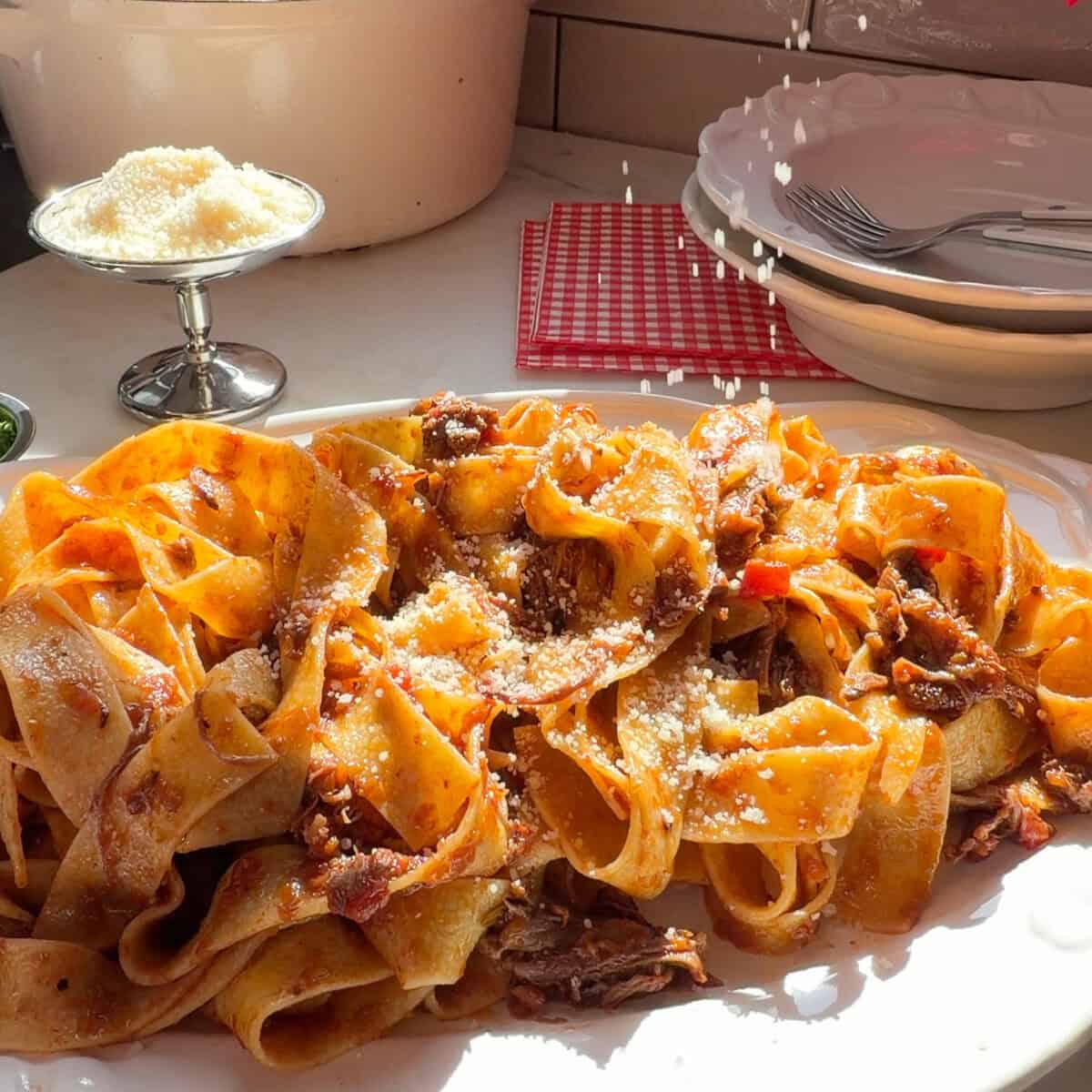
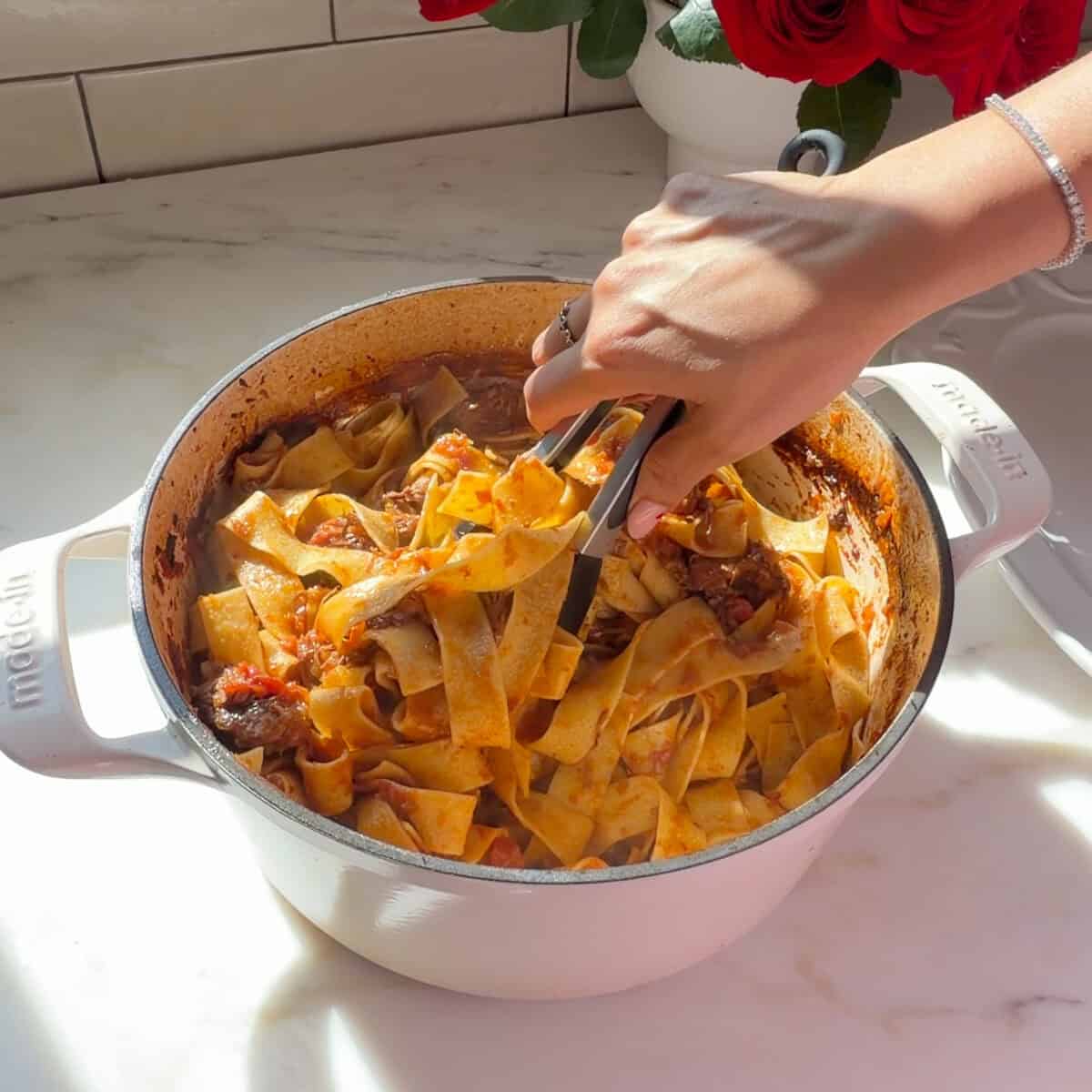
Toss with cooked pappardelle.
Garnish with parmesan and parsley. Serve warm.
Quick Tips for the Best Short Rib Ragu
No need to oil the pot when searing the meat; the fat from the short ribs will render out.
Don’t rush the sear. A deep brown crust on the short ribs translates directly to a richer, more complex sauce. If needed, sear in batches to avoid steaming the meat.
Use a Dutch oven with a tight-fitting lid. This keeps moisture in and ensures the ragu braises evenly without drying out.
Skim the fat at the end, not the beginning. Letting the sauce rest briefly makes excess fat easier to remove without sacrificing flavor.
Pasta options. Wide, flat noodles hold onto the sauce and shredded beef better than thinner pastas. My favorites are pappardelle, rigatoni, tagliatelle, or mafalde for this recipe.
No food processor? Finely mincing the vegetables by hand works just as well; the goal is a cohesive sauce, not visible chunks.
Make it alcohol-free. Swap the wine for additional beef broth plus a splash of balsamic vinegar for balance.
Make-Ahead, Storage & Reheating
The ragu can be made up to 2 days in advance. Cool completely, then refrigerate in an airtight container.
Store leftover ragu in the fridge for up to 4 days or freeze for up to 3 months.
Reheat gently on the stovetop over medium-low heat, adding a splash of broth or water to loosen the sauce if needed.
If you tried this Short Rib Ragu recipe or any other recipe on my website, please leave a 🌟 star rating and let me know how it went in the 📝 comments below. Thanks for visiting!
To Make the Ragu:
Preheat your oven to 350℉. Pat the short ribs dry and salt them generously on all sides.
To a large Dutch oven, set over medium heat, add the short ribs fat side down (to render the fat). And then, sear on all sides, until golden brown, 12-15 minutes. Feel free to do this in batches to avoid overcrowding the pan.
While the meat browns, prepare the vegetables. To a food processor, add the chopped yellow onion, carrots, celery, and garlic. Pulse until it resembles a paste. If you don’t have a food processor, you can simply finely mince everything.
Remove the short ribs from the pot and set aside. Turn the heat down to medium-low. If your pot seems dry, add a teaspoon or two of olive oil. Short ribs are pretty fatty, so there was a nice layer of fat in my pot for the vegetables. Add the minced vegetables along with 2 teaspoons of salt. Cook until softened, about 3-5 minutes.
Now, add in the tomato paste and mix. I like to cook this for about 1-2 minutes. Pour in the red wine and scrape the bottom of the pot, picking up any of those bits of flavor!
Mix in the crushed tomatoes and beef broth. Give the broth a taste and add more salt, if needed. Add the seared short ribs back to the pot, along with a bouquet of thyme, sage, rosemary, and oregano.
Cover with a lid and transfer to the oven to braise for 2 1/2-3 hours. I like to check on it at the two-hour mark to see how soft the meat is. Remove from the oven when the meat is fork-tender.
Let cool for about 10 minutes, discard the bouquet of herbs and transfer the short ribs to a cutting board. Shred the meat with two forks.
Skim some of the excess fat off the top of the sauce. Some short ribs can be super fatty, so I like to skim the sauce just in case. Add the shredded meat back to the sauce and toss together.
Quick Tips
No need to oil the pot when searing the meat; the fat from the short ribs will render out.
Don’t rush the sear. A deep brown crust on the short ribs translates directly to a richer, more complex sauce. If needed, sear in batches to avoid steaming the meat.
Use a Dutch oven with a tight-fitting lid. This keeps moisture in and ensures the ragu braises evenly without drying out.
Skim the fat at the end, not the beginning. Letting the sauce rest briefly makes excess fat easier to remove without sacrificing flavor.
Pasta options. Wide, flat noodles hold onto the sauce and shredded beef better than thinner pastas. My favorites are pappardelle, rigatoni, tagliatelle, or mafalde for this recipe.
No food processor? Finely mincing the vegetables by hand works just as well; the goal is a cohesive sauce, not visible chunks.
Make it alcohol-free. Swap the wine for additional beef broth plus a splash of balsamic vinegar for balance.
Make Ahead, Storage, & Reheating
The ragu can be made up to 2 days in advance. Cool completely, then refrigerate in an airtight container.
Store leftover ragu in the fridge for up to 4 days or freeze for up to 3 months.
Reheat gently on the stovetop over medium-low heat, adding a splash of broth or water to loosen the sauce if needed.
Calories: 1041kcal | Carbohydrates: 98g | Protein: 68g | Fat: 31g | Saturated Fat: 12g | Polyunsaturated Fat: 3g | Monounsaturated Fat: 12g | Trans Fat: 0.1g | Cholesterol: 242mg | Sodium: 2228mg | Potassium: 1941mg | Fiber: 8g | Sugar: 10g | Vitamin A: 10728IU | Vitamin C: 12mg | Calcium: 145mg | Iron: 10mg
Nutrition information is automatically calculated, so should only be used as an approximation.