
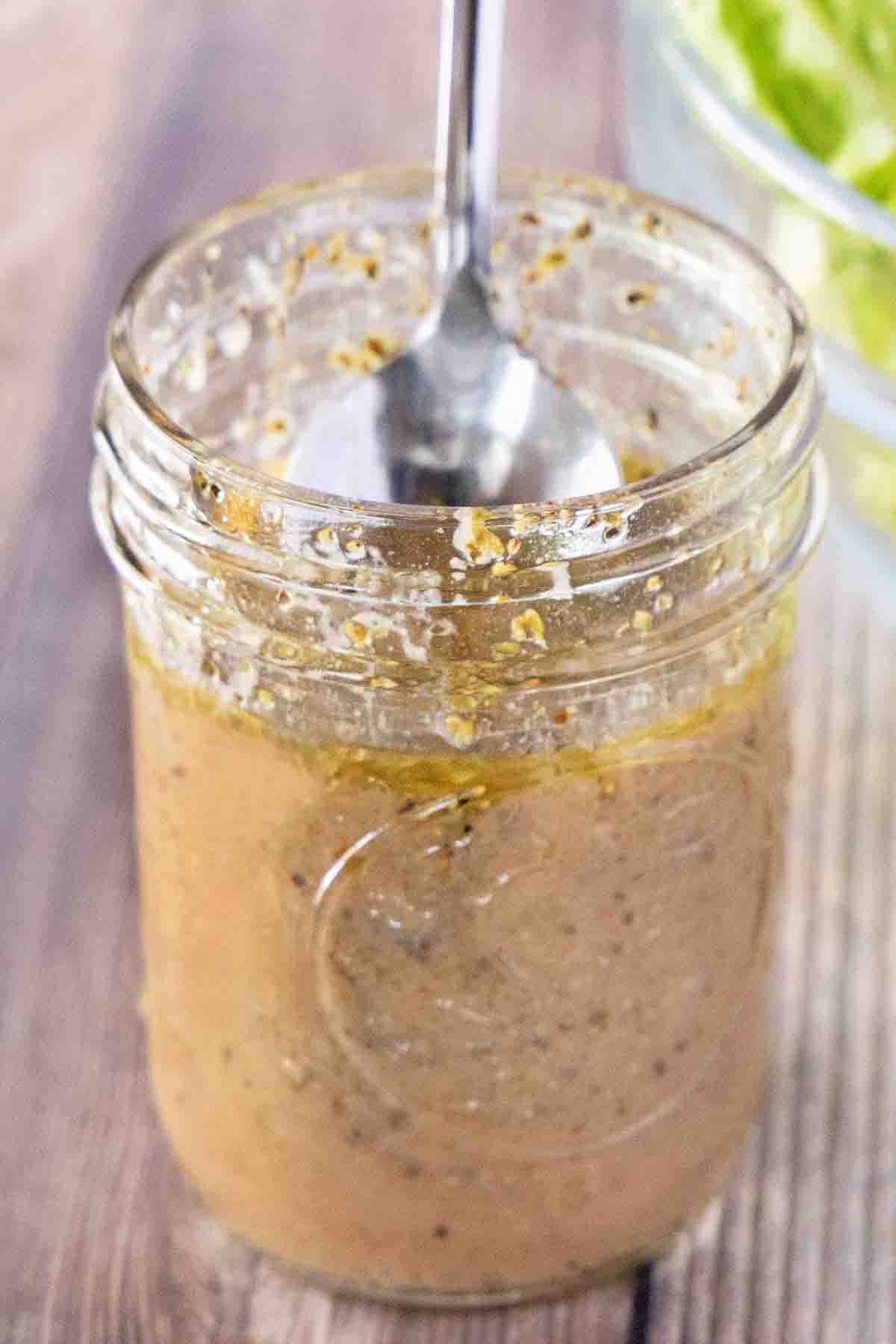

A good vinaigrette can make or break a salad, and our Red Wine Vinaigrette is one of the easiest dressings you’ll ever make.
With just a handful of ingredients: red wine vinegar, olive oil, Dijon mustard, garlic, and a touch of seasoning, you get a bright, tangy dressing that pulls everything together.

Vinaigrette traces its roots to French culinary tradition, where vinegar and oil were whisked together to dress delicate garden greens.
The word itself comes from “vinaigre,” meaning vinegar. Red wine vinegar became especially popular in regions rich in vineyards, where leftover wine was transformed into something bright and useful.

Our red wine vinaigrette recipe is a simple one that restaurant chefs rely on because it works on just about everything, from leafy green salads to roasted vegetables and even as a quick marinade for chicken.
Making your own salad dressings is easier than you think. Try our Italian dressing on your next salad or as a marinade. And if you’re looking for a salad to WOW your guests, or spice up your lunchtime, try our Grinder salad.
Table of Contents:
View more
Ingredients

Gather the ingredients to prepare our Red Wine Vinaigrette recipe. Culinary professionals call this the “Mise en Place,” which means “everythingin its Place.”
Setting up your ingredients not only speeds up the cooking process but also ensures you have all the necessary items on hand to make the recipe.
Recipe Variations
Honey Red Wine Vinaigrette – Add a teaspoon or two of honey for a touch of sweetness that beautifully balances the acidity.
Garlic Herb Vinaigrette – Mix in fresh herbs like oregano, thyme, or basil for a Mediterranean flavor.
Shallot Vinaigrette – Finely minced shallots add subtle sweetness and depth.
Balsamic Blend – Use half red wine vinegar and half balsamic vinegar for a richer flavor.
Lemon Red Wine Vinaigrette – Add a squeeze of fresh lemon juice for a brighter citrus note.
Creamy Vinaigrette – Add a few tablespoons of sour cream or plain Greek yogurt to the dressing to make it smooth and creamy.
How to Make Red Wine Vinaigrette
Follow my simple step-by-step instructions to learn how to make Red Wine Vinaigrette in your home kitchen.

Add the red wine vinegar, garlic, Dijon mustard, and olive oil to a medium mixing bowl.
Whisk together all ingredients until fully incorporated.
Add the seasonings to the mixture
Whisk all ingredients again until fully blended. Transfer to a glass jar for storage; I like to add a blender ball to fully mix it when shaking the jar.
Chef Tips
Use good olive oil: This is a simple recipe, so quality ingredients matter.
Balance the acidity: If the dressing tastes too sharp, add a pinch of sugar or honey.
Shake it in a jar: The easiest way to emulsify vinaigrette is to put everything in a mason jar and shake it.
Taste and adjust: Every vinegar is different, so adjust salt and oil to balance the flavor.
Let it sit for a few minutes: This allows the garlic and mustard to blend into the dressing.
A good vinaigrette isn’t complicated; it’s about balance. Too much vinegar and it’s harsh. Too much oil and it tastes flat. The classic 3-to-1 ratio of oil to vinegar is a great place to start, but don’t be afraid to tweak it to suit your taste.
One trick I learned in restaurant kitchens is to whisk the vinegar, mustard, garlic, and seasonings first, then slowly add the olive oil while whisking. That helps the dressing emulsify and stay blended longer.

Vinaigrette shouldn’t come from a bottle. It takes about five minutes to make, tastes better than store-bought, and you get to control the ingredients.
I promise, once you try our red wine vinaigrette you’ll never go back to the bottled version!
Serving Suggestions
Toss with mixed greens, tomatoes, and cucumbers for a classic house salad
Drizzle over roasted vegetables like asparagus or Brussels sprouts
Use it as a marinade for chicken or flank steak
Add to pasta salads or grain bowls
Spoon over sliced tomatoes with fresh basil
Drizzle over grilled chicken.
Use to finish grilled peach and arugula salad.
Drizzle over burrata with heirloom tomatoes.
How to Store
Store in a sealed jar in the refrigerator for up to 1 week. Shake the dressing well before using. Let it sit at room temperature for 10 minutes if the oil solidifies in the refrigerator.
*A sign that you have “real” olive oil is that it will solidify in the fridge.
Recipe FAQs
Separation is natural. Simply shake or whisk again before serving.
Add more olive oil or a touch of honey.
Yes. I find that the flavor improves after 30 minutes of resting.
More Recipes You’ll Love!

Red Wine Vinaigrette Recipe (Restaurant-Style Dressing)

Our homemade red wine vinaigrette recipe is bright, balanced, and easy to make with olive oil, red wine vinegar, Dijon mustard, and garlic.
]]>
Equipment
Medium mixing bowl
Glass jar (for storage)
Ingredients
.5x1x2x
Ingredients:
¼ cup extra virgin olive oil¼ cup red wine vinegar2 teaspoons Dijon mustard1 teaspoon garlic clove minced¼ teaspoon fine salt¼ teaspoon Italian seasoning⅛ teaspoon black pepper
Instructions
Instructions:
Add the red wine vinegar, garlic, Dijon mustard, and olive oil to a medium mixing bowl.
Whisk together all ingredients until fully incorporated.
Add the seasonings to the mixture
Whisk all ingredients again until fully blended. Transfer to a glass jar for storage; I like to add a blender ball to fully mix it when shaking the jar.
Notes
Honey Red Wine Vinaigrette – Add a teaspoon or two of honey for a touch of sweetness that beautifully balances the acidity.
Garlic Herb Vinaigrette – Mix in fresh herbs like oregano, thyme, or basil for a Mediterranean flavor.
Shallot Vinaigrette – Finely minced shallots add subtle sweetness and depth.
Balsamic Blend – Use half red wine vinegar and half balsamic vinegar for a richer flavor.
Lemon Red Wine Vinaigrette – Add a squeeze of fresh lemon juice for a brighter citrus note.
Creamy Vinaigrette – Add a few tablespoons of sour cream or plain Greek yogurt to the dressing to make it smooth and creamy.
Chef Tips
Use good olive oil: This is a simple recipe, so quality ingredients matter.
Balance the acidity: If the dressing tastes too sharp, add a pinch of sugar or honey.
Shake it in a jar: The easiest way to emulsify vinaigrette is to put everything in a mason jar and shake it.
Taste and adjust: Every vinegar is different, so adjust salt and oil to balance the flavor.
Let it sit for a few minutes: This allows the garlic and mustard to blend into the dressing.
A good vinaigrette isn’t complicated; it’s about balance. Too much vinegar and it’s harsh. Too much oil and it tastes flat. The classic 3-to-1 ratio of oil to vinegar is a great place to start, but don’t be afraid to tweak it to suit your taste.
One trick I learned in restaurant kitchens is to whisk the vinegar, mustard, garlic, and seasonings first, then slowly add the olive oil while whisking. That helps the dressing emulsify and stay blended longer.
Serving Suggestions
Toss with mixed greens, tomatoes, and cucumbers for a classic house salad
Drizzle over roasted vegetables like asparagus or Brussels sprouts
Use it as a marinade for chicken or flank steak
Add to pasta salads or grain bowls
Spoon over sliced tomatoes with fresh basil
Drizzle over grilled chicken.
Use to finish grilled peach and arugula salad.
Drizzle over burrata with heirloom tomatoes.
How to Store
Store in a sealed jar in the refrigerator for up to 1 week. Shake the dressing well before using. Let it sit at room temperature for 10 minutes if the oil solidifies in the refrigerator.
*A sign that you have “real” olive oil is that it will solidify in the fridge.
Recipe FAQs
Why did my vinaigrette separate?
Separation is natural. Simply shake or whisk again before serving.
How do I make it less acidic?
Add more olive oil or a touch of honey.
Can I make it ahead of time?
Yes. I find that the flavor improves after 30 minutes of resting.
Nutrition
Calories: 84kcalCarbohydrates: 0.4gProtein: 0.1gFat: 9gSaturated Fat: 1gPolyunsaturated Fat: 1gMonounsaturated Fat: 7gSodium: 116mgPotassium: 10mgFiber: 0.1gSugar: 0.03gVitamin A: 3IUVitamin C: 0.2mgCalcium: 4mgIron: 0.2mg