
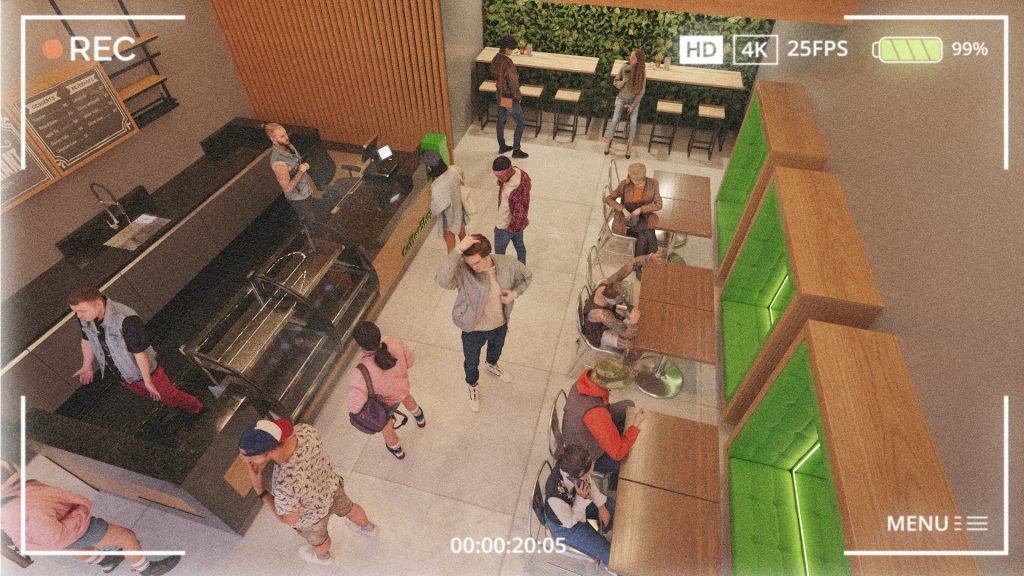

Incidents of robbery, threats to staff, and customer-on-customer altercations are rising across the restaurant sector. Whether you run a quick-service drive-thru or a full-service dining room, situations can escalate quickly and have lasting effects. Beyond immediate harm, a single high-profile incident can shake employee confidence, deter guests, and erode brand trust.
Safety is about more than preventing loss. After an incident, lingering safety concerns may have long-lasting effects. Employees may feel anxious returning to work, leading to workers compensation, absenteeism, or turnover. Replacing a trained team member is costly and time-consuming.
Guests may also feel unsafe and choose another option. Brand reputation can take a hit long after the scene is cleared. That impacts recruiting, sales, and community trust.
Practical steps can reduce risk, support staff, and reassure customers. Here’s how operators can respond with modern security practices and technology.
1. Make security visible—without making guests uneasy
Visible, well-communicated safety measures can deter problems and reassure customers and team members without creating a fortress-like feel.
Post clear signage that the premises are monitored. Signs set expectations and help de-escalate behavior at the door.
Improve lighting in parking lots, entrances, and drive-thru lanes to reduce blind spots and increase perceived safety.
Use body-worn cameras where risks are higher. In some markets, restaurants are equipping select associates—particularly those working late, outdoors, or handling cash—with body-worn cameras. When policies are clear and signage is posted, cameras can deter aggression and provide valuable evidence if needed.
2. Replace keys with controlled access
Traditional keys can be copied, lost, or shared. Expanding electronic access control inside the restaurant helps protect back-of-house spaces, including offices, IT closets, cash rooms, and coolers.
You can also establish automated rules to more efficiently grant and revoke credentials when staffing changes occur or set time-based access rules for deliveries or opening routines. If there are multiple unusual access attempts, like repeated access denials after hours, the systems can alert security teams or managers to respond if needed.
These controls reduce risk and create useful audit trails without adding friction to daily operations. They’ll also provide a tangible ROI versus the cost of replacing locks & keys at the unit.
3. Provide employees with tools to respond faster and more effectively
When seconds matter, your team needs a simple way to call for help and a clear plan to follow.
Install fixed and mobile options for panic buttons at the point-of-sale, drive-thru window, office, and other strategic areas. Tie activations to automatic workflows—such as alerting a manager, notifying a monitoring center, turning up lights, or bookmarking camera feeds for evidence.
De-escalation training is also important. Give employees scripts and steps that prioritize people over property. Consistent training reduces panic and supports better outcomes.
4. Unify your systems so information is seamless
Many restaurants operate with a patchwork of cameras, sensors, alarms, and point solutions. The result can be overwhelming. There are too many feeds and alerts and not enough clarity for operators.
A unified security platform brings video, access control, alarms, intercoms, and incident reporting together so teams see what matters and act quickly. Look for capabilities such as:
Policy-based workflows that streamline response when a panic alarm triggers or a door is forced.
Decision support that highlights the most relevant camera views and data points in the moment.
Machine-learning analytics to flag unusual activity and turn raw footage into useful insight.
Simple incident documentation that captures timelines, clips, and notes in one place.
The goal isn’t to replace human judgment—it’s to give your people the right context, fast.
5. Share evidence securely—and selectively
After an incident, restaurants sometimes hesitate to share video for fear it could leak publicly. That’s understandable, but withholding evidence can slow investigations and allow repeat offenders to strike again.
Use a secure digital evidence management system that lets you choose exactly what to share and with whom. Look for a system that includes permissions, encryption, and privacy by design while tracking the chain of custody for legal and compliance needs.
In some jurisdictions, restaurants also partner with law enforcement on policy-driven, time-bound access to select live camera views during emergencies.
6. Plan for the long term with open, flexible systems
Security isn’t a one-time purchase; it’s an evolving program. Protect your investment by choosing technology that will adapt as your needs change.
Favor open architecture systems rather than proprietary solutions that lock you into a single vendor. Then, start with priority risks and scale gradually—store by store, or capability by capability—so changes are manageable for teams.
Six Steps to Start Planning for a Security System Modernization
Assess risk hot spots: parking lots, drive-thru lanes, cash handling, opening/closing routines.
Prioritize quick wins: signage, lighting, panic buttons, and access control for sensitive rooms.
Create or refresh SOPs for de-escalation and incident reporting; train to them.
Unify critical systems so alarms, video, and access events tell a single story in real time.
Introduce body-worn cameras where appropriate, with clear policies and communications.
Set up secure evidence sharing to collaborate confidently with law enforcement when needed.
Safer restaurants keep teams longer, welcome guests back more often, and protect brand reputation when it matters most. By combining clear policies, staff training, and modern tools, operators can reduce risk today and build trust for the long term.