
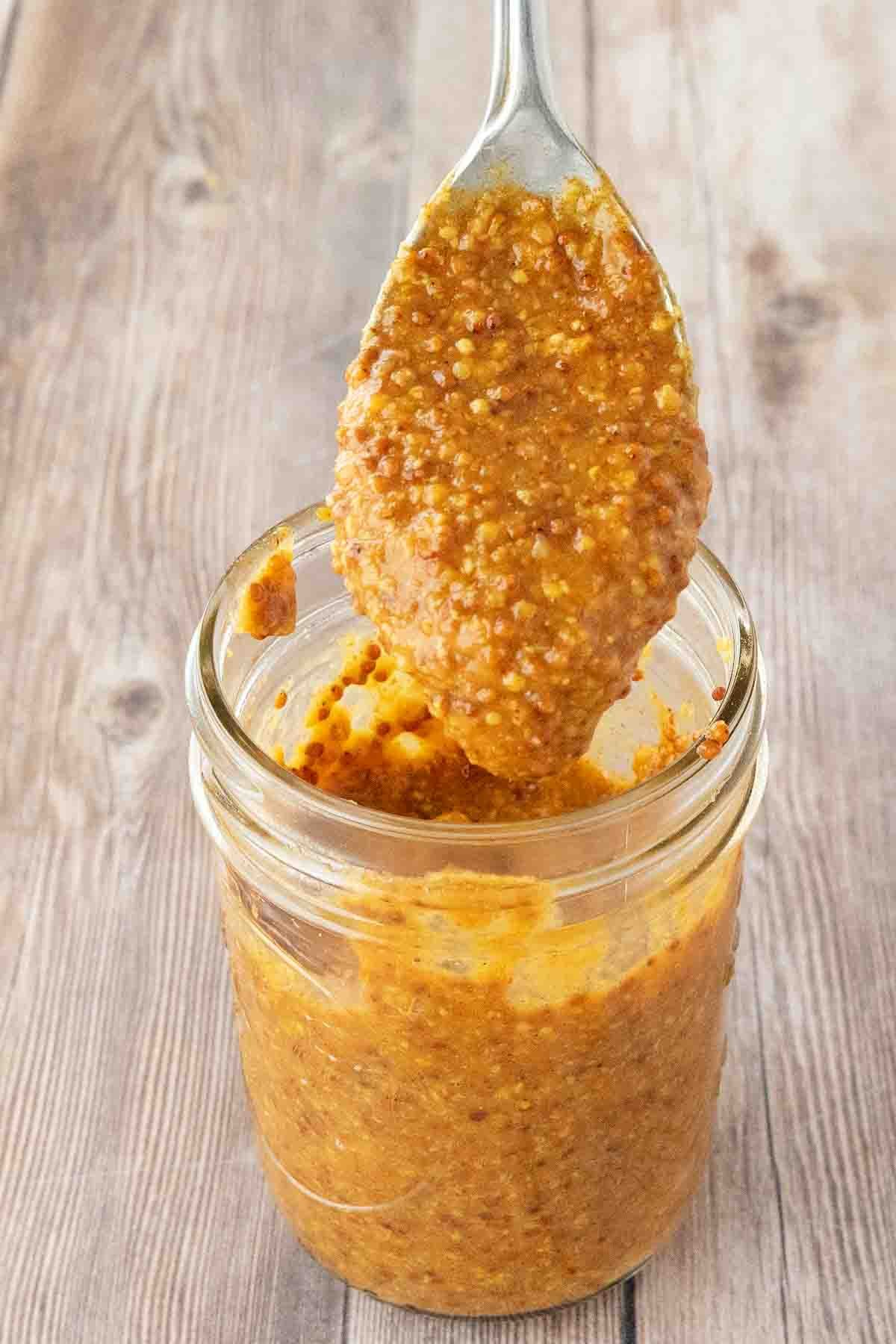

Our easy Creole mustard recipe is bold, tangy, and slightly spicy, delivering classic Louisiana flavor that will perk up everything it touches!
Using simple ingredients and the right balance of vinegar, heat, and whole-grain texture makes it the kind of condiment that instantly elevates sandwiches, marinades, sauces, and everyday cooking.

Creole mustard shines year-round, but it really earns its place during grilling season, holiday cooking, and football Sundays.
Rooted in Louisiana cuisine, it’s a staple in Creole and Cajun kitchens, known for its sharp vinegar bite, coarse texture, and savory heat.

Creole mustard originated in Louisiana and was heavily influenced by French and German mustard-making traditions. Unlike smooth yellow mustard, Creole mustard uses brown mustard seeds that are soaked rather than finely ground, resulting in a chunky texture and more pronounced flavor.
Add our Creole mustard to a charcuterie board. Its bold flavors complement a variety of items and are a nice contrast to sweeter flavors. If you love mustard, try our Carolina Gold BBQ Sauce.
Table of Contents:
View more
Ingredients

Gather the ingredients to prepare our Creole mustard recipe. Culinary professionals call this the “Mise en Place,” which means “everything in its Place.”
Setting up your ingredients not only speeds up the cooking process but also ensures you have all the necessary items on hand to make the recipe.
Recipe Variations
Bourbon Creole Mustard: Add a splash of bourbon for depth of flavor.
Herb-Forward: Add chopped fresh thyme or dill.
Spicier Version: Add a pinch of cayenne or cracked black pepper to the sauce.
Creole Dijonaise: Add a few spoonfuls of mayonnaise to mellow out the sauce. You can also add sour cream or Greek yogurt.
Garlic Creole Mustard: Add roasted garlic paste to the sauce.
How to Make Creole Mustard
Follow my simple step-by-step instructions to learn how to make Creole mustard in your home kitchen.

Add the stone-ground mustard, prepared horseradish, apple cider vinegar, garlic powder, onion powder, smoked paprika, and honey to a mixing bowl.

Whisk the ingredients to combine thoroughly.
Chef Tips
Let the mustard rest at least 24 hours before using. It’s worth the wait.
Vinegar mellows as it sits; don’t overcorrect early. Wait, taste, correct.
Balance the heat with acidity, not with sugar.

From po’ boys and sausages to vinaigrettes and pan sauces, Creole mustard delivers heat, tang, and texture that plain mustard can’t even come close to.
If your mustard doesn’t have texture, bite, and backbone, you’re seriously missing out. After one taste, you’ll understand what I mean.
Serving Suggestions
Slather on bratwurst, andouille sausage, kielbasa, and hot dogs.
Stir into potato salad or deviled eggs to liven up the flavor.
Whisk into vinaigrettes or remoulade.
Use as a binder for pork or chicken rubs. You’ll notice the difference.
Add to pan sauces for steak or chops.
Add to a charcuterie board.
How to Store
Store refrigerated in an airtight container for up to 4 weeks.
Recipe FAQs
It is a little spicy, but not so much that you won’t enjoy it. For a milder version, reduce the mustard and increase the honey.
No, it’s not. Dijon is smooth and refined; Creole mustard is coarse, bolder, and more acidic.
More Recipes You’ll Love!

Homemade Creole Mustard Recipe

Our Creole mustard is a bold, tangy whole-grain mustard made with brown mustard seeds, vinegar, and spices, delivering sharp heat with a Louisiana flavor.
]]>
Ingredients
.5x1x2x
Instructions
Add the stone ground mustard, prepared horseradish, apple cider vinegar, garlic powder, onion powder, smoked paprika, and honey to a mixing bowl.
Whisk the ingredients to fully combine.
Notes
Bourbon Creole Mustard: Add a splash of bourbon for depth of flavor.
Herb-Forward: Add chopped fresh thyme or dill.
Spicier Version: Add a pinch of cayenne or cracked black pepper to the sauce.
Creole Dijonaise: Add a few spoonfuls of mayonnaise to mellow out the sauce. You can also add sour cream or Greek yogurt.
Garlic Creole Mustard: Add roasted garlic paste to the sauce.
Chef Tips
Let the mustard rest at least 24 hours before using. It’s worth the wait.
Vinegar mellows as it sits; don’t overcorrect early. Wait, taste, correct.
Balance the heat with acidity, not with sugar.
Serving Suggestions
Slather on bratwurst, andouille sausage, kielbasa, and hot dogs.
Stir into potato salad or deviled eggs to liven up the flavor.
Whisk into vinaigrettes or remoulade.
Use as a binder for pork or chicken rubs. You’ll notice the difference.
Add to pan sauces for steak or chops.
Add to a charcuterie board.
How to Store
Store refrigerated in an airtight container for up to 4 weeks.
Recipe FAQs
Does Creole mustard have a spicy flavor?
It is a little spicy, but not so much that you won’t enjoy it. For a milder version, reduce the mustard and increase the honey.
Is Creole mustard the same as Dijon?
No, it’s not. Dijon is smooth and refined; Creole mustard is coarse, bolder, and more acidic.
Nutrition
Calories: 34kcalCarbohydrates: 6gProtein: 1gFat: 1gSaturated Fat: 0.1gPolyunsaturated Fat: 0.2gMonounsaturated Fat: 1gTrans Fat: 0.003gSodium: 233mgPotassium: 48mgFiber: 1gSugar: 5gVitamin A: 97IUVitamin C: 0.4mgCalcium: 17mgIron: 0.4mg