
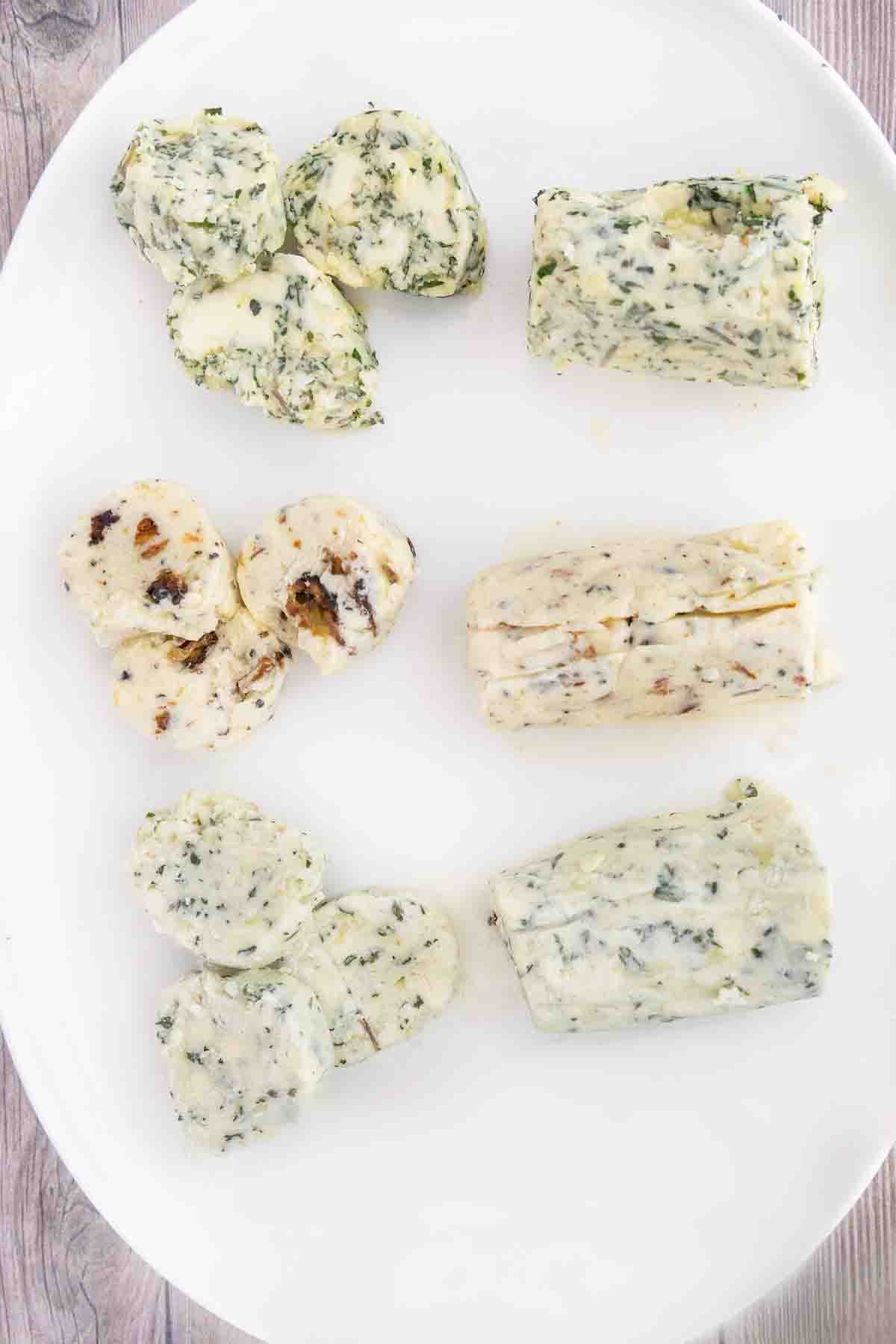

There’s nothing fancy about compound butter. But don’t let that fool you, because it’s one of the simplest ways to make food taste as it came out of a restaurant kitchen.
A slice melting over a steak, tucked under chicken skin before roasting, or smeared over warm bread? That’s how you take good food and make it unforgettable. And the best part? It takes five minutes to make and is easily adaptable to make any flavor you like.

With just a few ingredients and a little mixing, you can transform plain butter into something bold, flavorful, and restaurant-worthy.
Compound butter has roots in classic French cooking, where “beurre composé” was used to finish meats and vegetables with richness and flavor.

Our easy compound butter recipes include three of my favorites: roasted garlic butter, bleu cheese butter, and herb butter. They’re extremely versatile and can be used with steaks, seafood, vegetables, breads, pasta, and rice.
If you love compound butters, try our Cowboy Butter recipe. Its bold flavors and a slight spicy kick make it the perfect complement to our Grilled Ribeye Steak and Flank Steak.
Table of Contents:
View more
Ingredients

Gather the ingredients to prepare our herb compound butter recipe. Culinary professionals call this the “Mise en Place,” which means “everything in its Place.”
Setting up your ingredients not only speeds up the cooking process but also ensures you have all the necessary items on hand to make the recipe.
Use your favorite herbs to make our herb compound butter. It’s an easy way to add big flavor to steaks, chicken, seafood, and vegetables.

Our rich, bold bleu cheese compound butter melts perfectly over steaks and burgers, delivering restaurant-style flavor in minutes.

Our roasted garlic compound butter is creamy, savory, and packed with deep garlic flavor, perfect for bread, roasted vegetables, and grilled meats.
Recipe Variations
Steakhouse Butter – Parsley, garlic, cracked black pepper, Worcestershire.
Lemon Herb Butter – Lemon zest, thyme, parsley.
Sundried Tomato Butter – Mix minced sundried tomatoes into the butter with sea salt. and parsley.
Spicy Herb Butter – Add red pepper flakes or cayenne.
Mediterranean Butter – Oregano, basil, lemon zest.
Herb & Shallot Butter – Minced shallots sautéed until translucent.
Anchovy Herb Butter – A touch of anchovy paste for umami depth.
Browned Butter Herb Blend – Lightly brown butter first, cool, then mix
Finishing Salt Butter – Fold in flaky sea salt for texture contrast.
How to Make Compound Butter
Follow my simple step-by-step instructions to learn how to make compound butter in your home kitchen.
For this recipe, we are showing the steps for our herb compound butter. Follow the same steps to make our roasted garlic butter and blue cheese butter.

Add the softened butter, garlic, Dijon mustard, thyme, rosemary, and parsley to a mixing bowl.
Using a rubber spatula or wooden spoon, mix the ingredients until fully combined.
Once mixed, dump the butter onto parchment paper.
Using parchment paper, roll it into a tube or cylinder to make slicing and serving easier.
You can skip rolling the butter and serve it in a small bowl. Allow 30 minutes for the butter to rest and the flavors to meld before serving.
Chef Tips
Use room temperature butter, not melted.
Whip butter for a lighter texture.
Add a teaspoon of olive oil for silkier spreadability.
Use cultured butter for a deeper flavor
Finely chop herbs; big pieces look sloppy and don’t distribute evenly.
Season more aggressively than you think. Butter mutes flavor once chilled.
Taste before rolling, the butter should have a bold taste
Roll tightly in plastic wrap to ensure clean slices, and chill fully before slicing.
Finish with flaky sea salt for contrast.
Beat butter with a paddle attachment for ultra-smooth texture.
Compound butter isn’t a garnish; it’s a strategy. A slice melting over hot protein creates an instant sauce. That’s why restaurants use it. It adds shine, richness, and layered flavor without extra pans. If you’re not finishing grilled meat with compound butter, you’re leaving flavor on the table.

If you’re looking for the easiest way to elevate dinner without adding extra work, our compound butter recipes are just what you’re looking for.
This is one of those chef moves that makes you look like you know exactly what you’re doing, and that’s because you do. Make this once, and you’ll use it forever
Serving Suggestions
Spread on warm, crusty bread, dinner rolls, cornbread, or focaccia.
Finish risotto with it instead of plain butter for layered herb flavor.
Place a thick slice over grilled ribeye or drop a slice onto a steak while it rests. Let the resting juices blend with the butter and create an instant pan sauce. Let it melt naturally.
Tuck under the skin of a whole chicken before roasting for built-in flavor.
Melt over roasted vegetables, such as carrots, green beans, asparagus, and potatoes.
Finish pan-seared salmon or shrimp with a pat right before serving.
Stir into hot rice, mashed potatoes, or pasta for instant richness.
Melt and drizzle over baked oysters or clams for a classic steakhouse vibe.
How to Store
Store well wrapped or in an airtight container for up to 5 days. in an airtight container. Freeze in small coins for portion control for up to 3 months. Allow to thaw overnight or grate frozen butter over hot foods for faster melting.
Recipe FAQs
Compound butter is a mixture of softened butter with various seasonings and aromatics to complement any meal.
You should use unsalted butter so you can control the seasoning to suit your taste preferences.
Yes, you can, but use one-third the amount. Fresh herbs will give a brighter flavor and better color.
High-quality unsalted butter. European-style butter offers a richer flavor due to its higher butterfat content.
More Recipes You’ll Love!

Herb Compound Butter Recipes

Compound butter is my secret weapon. Use it and taste the difference. Same steak, same bread, completely different experience. They’re easy to make, giving you endless possibilities, and zero stress in the kitchen.
]]>
Ingredients
.5x1x2x
Herb Compound Butter
½ cup butter softened (8 Tablespoons = 1 stick)2 tablespoons fresh garlic minced1 tablespoon Dijon mustard1 tablespoon fresh thyme1 tablespoon fresh rosemary1 tablespoon fresh parsley
Bleu Cheese Compound Butter
½ cup butter softened (8 Tablespoons = 1 stick)1 tablespoon fresh garlic minced½ cup bleu cheese crumbles1 tablespoon fresh thyme
Roasted Garlic Compound Butter
½ cup butter (8 Tablespoons = 1 stick)8 cloves fresh garlic roasted1 teaspoon sea salt½ teaspoon coarse black pepper
Instructions
Herb Compound Butter
Add the butter, garlic, Dijon mustard, thyme, rosemary, and parsley to a mixing bowl.
Using a rubber spatula or wooden spoon, mix the ingredients until fully combined.
When fully combined, transfer the mixture onto parchment paper and roll it into a tube or cylinder to make slicing and serving easier.
You can skip rolling the butter and serve it in a small bowl. Allow 30 minutes for the butter to rest and the flavors to meld before serving.
Bleu Cheese Compound Butter
Add the butter, garlic, bleu cheese crumbles, and fresh thyme to a bowl.
Using a rubber spatula or wooden spoon, mix the ingredients until fully combined.
When fully combined, transfer the mixture onto parchment paper and roll it into a tube or cylinder to make slicing and serving easier.
Roasted Garlic Compound Butter
Add the butter, sea salt, and black pepper to a mixing bowl, then squeeze the roasted garlic into the bowl.
Using a rubber spatula or wooden spoon, mix the ingredients until fully combined.
When fully combined, transfer the mixture onto parchment paper and roll it into a tube or cylinder to make slicing and serving easier.
Notes
Steakhouse Butter – Parsley, garlic, cracked black pepper, Worcestershire.
Lemon Herb Butter – Lemon zest, thyme, parsley.
Sundried Tomato Butter – Mix minced sundried tomatoes into the butter with sea salt. and parsley.
Spicy Herb Butter – Add red pepper flakes or cayenne.
Mediterranean Butter – Oregano, basil, lemon zest.
Herb & Shallot Butter – Minced shallots sautéed until translucent.
Anchovy Herb Butter – A touch of anchovy paste for umami depth.
Browned Butter Herb Blend – Lightly brown butter first, cool, then mix
Finishing Salt Butter – Fold in flaky sea salt for texture contrast.
Chef Tips
Use room temperature butter, not melted.
Whip butter for a lighter texture.
Add a teaspoon of olive oil for silkier spreadability.
Use cultured butter for a deeper flavor
Finely chop herbs; big pieces look sloppy and don’t distribute evenly.
Season more aggressively than you think. Butter mutes flavor once chilled.
Taste before rolling, the butter should have a bold taste
Roll tightly in plastic wrap to ensure clean slices, and chill fully before slicing.
Finish with flaky sea salt for contrast.
Beat butter with a paddle attachment for ultra-smooth texture.
Compound butter isn’t a garnish; it’s a strategy. A slice melting over hot protein creates an instant sauce. That’s why restaurants use it. It adds shine, richness, and layered flavor without extra pans. If you’re not finishing grilled meat with compound butter, you’re leaving flavor on the table.
Serving Suggestions
Spread on warm, crusty bread, dinner rolls, cornbread, or focaccia.
Finish risotto with it instead of plain butter for layered herb flavor.
Place a thick slice over grilled ribeye or drop a slice onto a steak while it rests. Let the resting juices blend with the butter and create an instant pan sauce. Let it melt naturally.
Tuck under the skin of a whole chicken before roasting for built-in flavor.
Melt over roasted vegetables, such as carrots, green beans, asparagus, and potatoes.
Finish pan-seared salmon or shrimp with a pat right before serving.
Stir into hot rice, mashed potatoes, or pasta for instant richness.
Melt and drizzle over baked oysters or clams for a classic steakhouse vibe.
How to Store
Store well wrapped or in an airtight container for up to 5 days. in an airtight container. Freeze in small coins for portion control for up to 3 months. Allow to thaw overnight or grate frozen butter over hot foods for faster melting.
Recipe FAQs
What is compound butter?
Compound butter is a mixture of softened butter with various seasonings and aromatics to complement any meal.
Should the butter be salted or unsalted to make compound butter?
You should use unsalted butter so you can control the seasoning to suit your taste preference.
Can I use dried herbs instead of fresh?
Yes, you can, but use one-third the amount. Fresh herbs will give a brighter flavor and better color.
What is the best butter to use?
High-quality unsalted butter. European-style butter offers a richer flavor due to its higher butterfat content.
Nutrition
Calories: 116kcalCarbohydrates: 1gProtein: 1gFat: 12gSaturated Fat: 8gPolyunsaturated Fat: 0.5gMonounsaturated Fat: 3gTrans Fat: 0.5gCholesterol: 33mgSodium: 138mgPotassium: 25mgFiber: 0.2gSugar: 0.1gVitamin A: 421IUVitamin C: 2mgCalcium: 25mgIron: 0.2mg