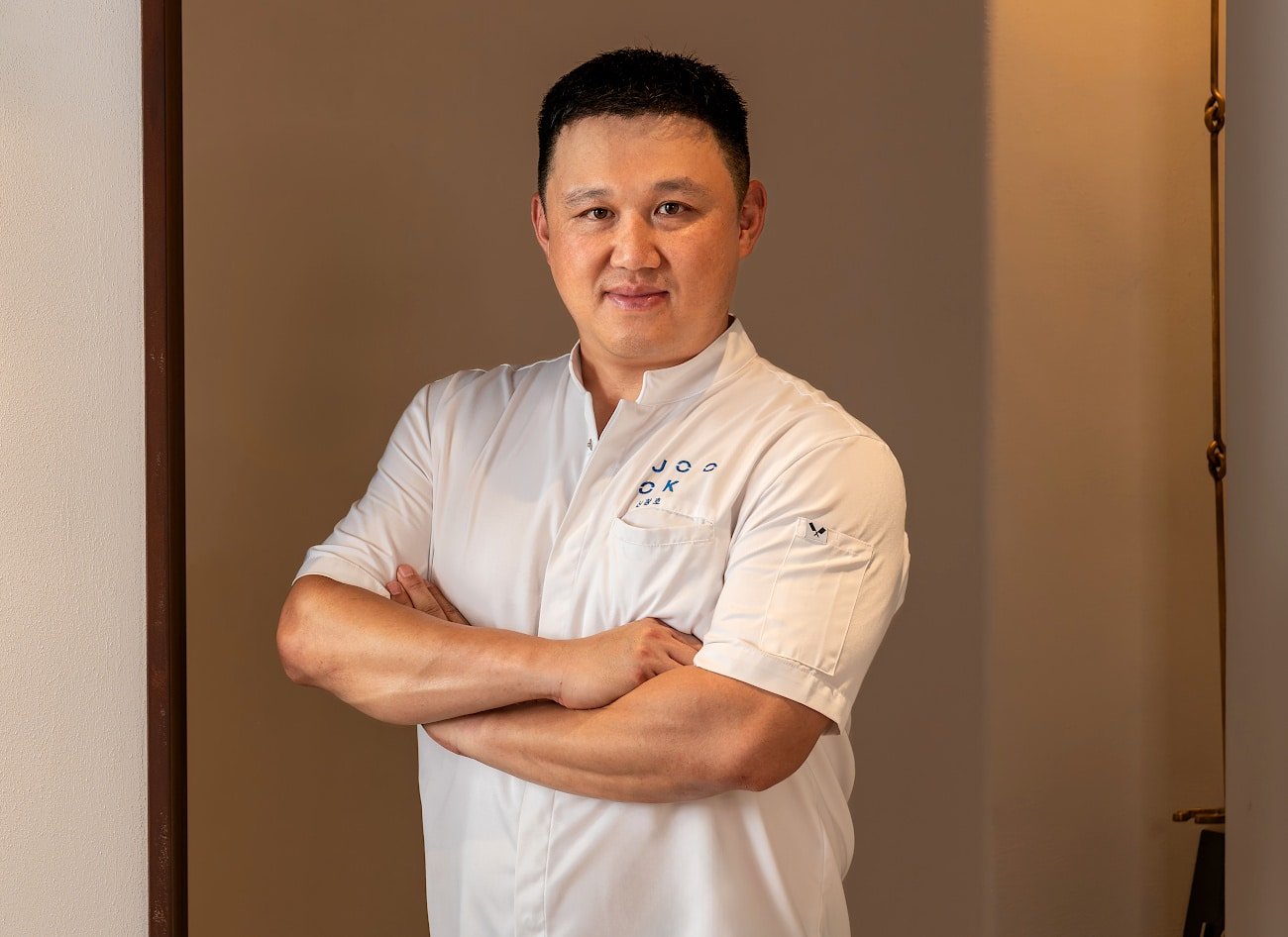

Chef Shin Chang-ho built his reputation at the pinnacle of Seoul’s fine-dining scene, earning two Michelin stars for his refined and deeply personal interpretation of Korean cuisine at Joo Ok in Seoul. At a time when many chefs would consolidate their success, he chose instead to step away from comfort and certainty. In the midst of global uncertainty, and while leading one of Korea’s most celebrated restaurants, Chef Shin made the bold decision to relocate to New York and begin again.
In this Chef’s Pencil interview, he reflects on why he made the move, how the transition reshaped his approach to cooking, and what it means to carry Korean culinary traditions into one of the world’s most competitive dining cities. He also discusses the rapid evolution of Joo Ok in New York, which earned its second Michelin star in November 2025, along with his creative process, commitment to fermentation and farming, and long-term vision for building a cultural bridge between Seoul and New York.
1. You’ve been recognized as one of the most innovative Korean chefs. Can you share a bit about your journey into cooking and what inspired you to pursue a career in the kitchen?
Around my second year of high school, like many others, I began thinking seriously about my future. I wondered, “What can I dedicate my life to instead of pursuing a college degree?” I asked myself, “What can I do well? What can I continue doing without losing interest?”
Cooking came naturally to mind. I enjoyed watching cooking programs, and I liked helping my mother prepare meals at home.
There wasn’t a dramatic turning point. I simply felt comfortable in the kitchen, and I enjoyed being there. So naturally, I chose cooking as my path.
2. Joo Ok means “abundant house” in Korean. What was your vision when you first opened the restaurant, and how has it evolved?
When I first opened Joo Ok, I did not have a grand vision. I simply hoped that guests would enjoy the food and have a pleasant experience. I wanted to create dishes that did not exist elsewhere — something that was truly my own.
Over time, my perspective expanded. Now, I feel a responsibility not only as an individual chef, but also to represent Korean cuisine and culture properly.
That is why we ferment jang and grow vegetables at our Hudson Valley farm. Joo Ok is becoming a space that carries Korean traditions and culture.
3. You ran a highly successful two-star Michelin restaurant in Seoul, yet you relocated to New York. What was the main driver behind that decision?
During the pandemic, I was forced to pause after years of constant movement. That time became a period of reflection.
New York was not just a relocation. It was a reset.
I began to feel that if I did not find new motivation, I might stop growing. When the opportunity to enter the New York market appeared, I chose it as a challenge to awaken myself again.
New York was not just a relocation. It was a reset.

4. It’s been a full year since Joo Ok opened in New York. How does the transition feel now—and what surprised you most compared to your expectations on day one?
When I first arrived, everything felt unfamiliar. Ingredients that looked similar tasted subtly — and sometimes significantly — different.
Through this process, I let go of complacency and became a student again. Adapting to table-turn restaurant culture also required adjustment.
The past year has been about recalibrating myself within a new system, new ingredients, and a different rhythm of city life.
5. When you build the NYC tasting, what narrative arc are you aiming for—from the opening bite to the final savory/sweet notes?
When constructing a menu, I follow four principles: use Korean jang, use seasonal and healthy ingredients, do not copy others, and create food that benefits the body.
The meal begins with a vinegar drink we ferment ourselves. It represents balance rather than intensity, and restraint rather than display.
From there, farm vegetables and fermentation unfold into a harmonious progression.
6. What’s one dish on your menu right now that you feel best represents Joo Ok’s philosophy — and why?
The dish that best represents Joo Ok is “Perilla Oil.”
In Korea, my mother-in-law grew perilla seeds and pressed oil for our kitchen. Continuing that spirit, we now grow perilla at our Hudson Valley farm.
The dish combines soy sauce fermented in Korea and perilla oil pressed from our harvest. The remaining seed meal is composted and returned to the soil.
It represents a cycle: fermentation, cultivation, and renewal.

7. Beyond taste, plating and presentation at Joo Ok are striking. How important is the visual element to your storytelling as a chef?
I am less interested in decorative plating and more focused on revealing the essence of the ingredient.
For me, visual elements are not for display, but a way to clarify taste and story.
The ingredient must stand at the center. If guests can subtly sense Korea through color, balance, or texture, that is enough.
For me, visual elements are not for display, but a way to clarify taste and story.
8. You’ve said you’re re-engineering recipes because local produce behaves differently. What’s one course that evolved the most after sourcing in New York?
Our pheasant dumpling evolved significantly in New York.
I learned that assuming you know an ingredient leads to mistakes.
The pheasant here produced a deep broth but lacked fat and tenderness. We adjusted the filling with duck fat and foie gras to restore balance. Onions were sharper than expected, so we rinsed them to soften their intensity.
I learned that assuming you know an ingredient leads to mistakes. Tasting and adapting each time is essential.

9. Your welcome ritual sets a calm tone before guests even sit down. What emotions are you trying to cue before the first bite?
Even I feel slight tension when entering a fine dining restaurant.
At Joo Ok, guests first pause in a space inspired by the traditional daecheongmaru, where they drink fermented vinegar and converse briefly.
I hope it becomes a moment to set down the day and breathe comfortably before the first bite.
10. What hospitality detail in the room or service do you obsess over that most diners never notice?
Consistency is what I focus on most.
Temperature, timing between courses, plate placement, and service rhythm must remain precise.
If guests feel comfortable without noticing why, then the system is working.
11. For home cooks exploring Korean flavors: one technique (no special gear) that instantly elevates a weeknight plate.
The difference between freshly harvested vegetables and older produce is significant.
With good ingredients and properly fermented soy sauce or doenjang, anyone can create a healthy and beautiful dish.
12. How do the fine-dining scenes of Seoul and New York differ—on creativity, pacing, and what diners consider “value”?
Both cities are driven by creativity and dedication.
New York diners tend to be more expressive and openly supportive of chefs, while Seoul dining often feels quieter and more concentrated. I continue to learn from both.
13. Looking back at Seoul, what are 3–5 non-fine-dining dishes you think every visitor should try there—and where would you point them?
Sundae-guk – Nongmin Baekam Sundae
Miro Sikdang
Han Sung Kalguksu
The true taste of Seoul lives in its everyday restaurants.
14. Looking ahead, what’s a creative goal for the next year—something New York guests haven’t seen from you yet?
I want to grow more Korean greens such as shepherd’s purse and Korean spinach in New York soil.
I also plan to ferment jang using local beans and sunlight, and collaborate with Korean artisans to share deeper aspects of Korean cuisine and culture.
Visually sharing our vinegar fermentation process with guests is another goal. Joo Ok is evolving into a space where Korean time continues in New York.

Chef Shin Chang-ho | Instagram
Joo Ok | Instagram
22 W 32nd St, 16th floor, New York City, NY 10001