
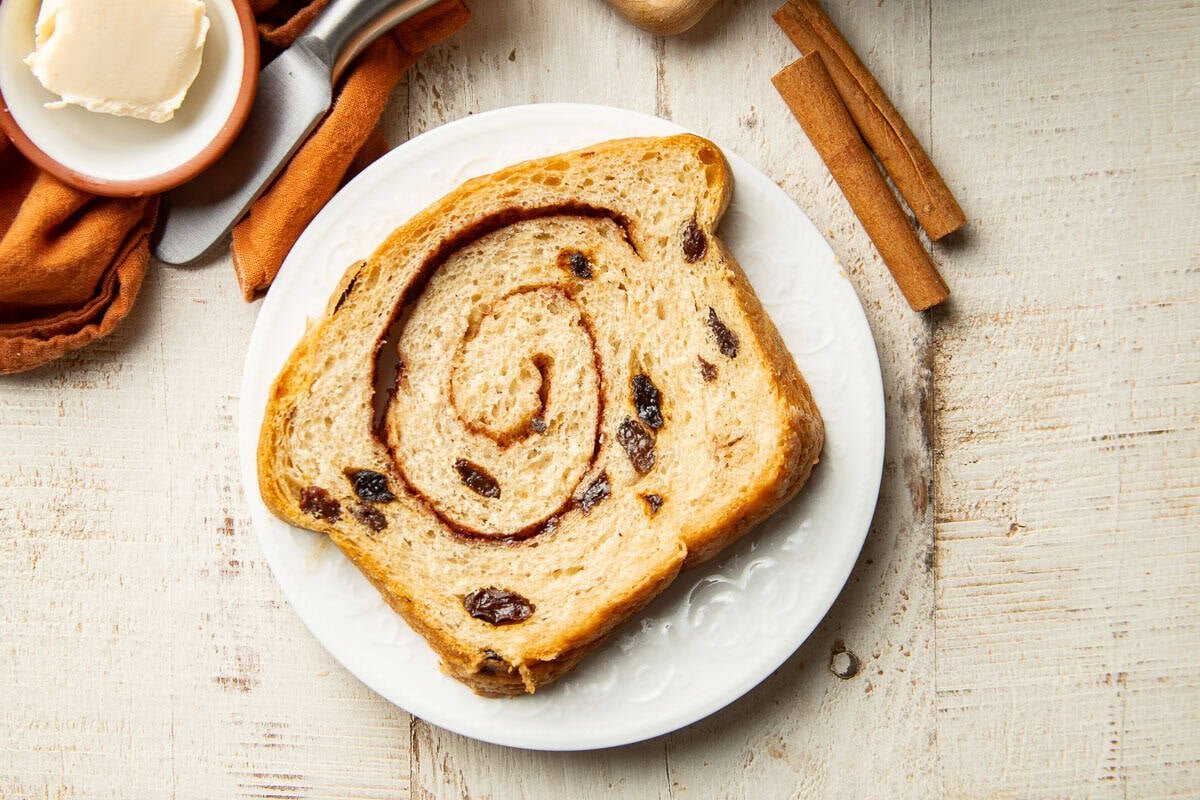

My homemade vegan cinnamon raisin bread tastes just like it came from your favorite bakery! This bread is soft, fluffy, and packed with sweet cinnamon swirls and juicy raisins. It’s cozy, comforting, and perfect for breakfast, snacking, or toasting.
Homemade cinnamon raisin bread was my ultimate comfort food growing up. All toasted with melty butter… SO GOOD. My mom made the best cinnamon raisin bread ever — so much better than the stuff you could get at the store, and better than any other homemade version too, thanks to her very generous cinnamon sugar swirl.
]]>Jump to:
My cinnamon raisin bread is adapted from my homemade vegan bread recipe, but it also takes the best elements from Mom’s version: a hefty dose of juicy raisins and lots of sweet cinnamon sugar filling. It’s super fluffy and just sweet enough. I love enjoying a slice warm, or better yet, lightly toasted with melty vegan butter. It also makes an amazing vegan French toast and vegan bread pudding.
Ingredients You’ll Need
Below you’ll find a list of ingredients in this recipe, with notes and substitutions. Scroll all the way to the bottom of the post to see the full recipe, including the amount of each ingredient.
Raisins. I typically use black raisins, but golden raisins also work.
Non-dairy milk. You can make this recipe with pretty much any type of non-dairy milk you’d normally drink, such as soy, almond, or oat milk. Read my guide to dairy-free milks if you need help choosing.
Active dry yeast.
Sugar. We’re using organic sugar to keep the recipe vegan. Conventional sugar is often bleached using animal bone char.
Vegan butter. Most grocery stores carry this in the refrigerator case, near the regular butter.
Salt.
Flour. We’re using all-purpose wheat flour, also known as white flour. I haven’t tested the recipe with other varieties, so I can’t say if they’ll work.
Cinnamon.
Cornstarch.
How It’s Made
The following is a detailed photo tutorial on how to make this dish. Scroll all the way down if you’d like to skip right to the recipe!

Step 1: Soak the raisins. Place them into a small bowl and submerge them in warm water. Let them soak for a few minutes. This helps plump them up and prevents them from robbing your dough of moisture.

Step 2: Activate the yeast. Warm up your non-dairy milk to between 100°F and 110°F, then whisk in sugar and yeast. Let the mixture sit for five to ten minutes. It should get frothy.
Tip: If your milk doesn’t froth after ten minutes, it means your yeast is probably dead. Check the expiration date and check the temperature of your milk, since milk that’s too hot will kill the yeast. Then start over with a new packet of yeast.

Step 3: Add butter, raisins, and salt. Make sure your melted butter has cooled, then whisk it into the milk mixture. Add the salt as well, and drain and add the raisins.

Step 4: Add the flour. Stir it in, adding a bit at a time, until you’ve added all of your flour and formed a dough.

Step 5: Knead the dough. Turn it onto a lightly floured surface, then knead it for five to eight minutes. The dough will feel elastic, and the surface will have smoothed out when you’re done.

Step 6: Proof the dough. Roll it into a ball and place it into an oiled bowl. Cover it with a damp towel and let it rise in a warm location for an hour or two, until it has approximately doubled in size.
Tip: The exact amount of time your dough needs to rise will depend on temperature. Keeping it in a warmer spot will speed things up.

Steps 7 & 8: Make the filling and prepare the pan. Whisk or stir sugar, cinnamon, and cornstarch together in a small bowl. Now grease a nine by five inch loaf pan.

Step 9: Prepare the dough. Roll it out into a large rectangle. Brush the top with melted butter, then sprinkle it with the cinnamon sugar mixture.
Tip: The cornstarch helps prevent the filling from oozing during baking, but it’s not a crucial ingredient, so feel free to skip it if you don’t have any on hand.

Step 10: Shape the loaf. Roll the dough up into a log, starting with one of the shorter sides. Place it into your prepared loaf pan.

Step 11: Second proof. Cover the pan with a damp towel, and let it rise in a warm spot for another thirty to sixty minutes, until it puffs over the top of the pan.
Steps 12 & 13: Bake. Bake your bread for thirty five to forty minutes in a preheated oven, until the top is golden and the internal temperature is 190°F to 200°F.
Step 14: Let it cool. Place the pan on a cooling rack. Let it cool in the pan at least until it’s cool enough to touch. After that, you can remove it and transfer the loaf directly to the rack to finish cooling, if you’d like.

Step 15: Slice and enjoy. Your homemade raisin bread is ready to slice and serve. Top it with some vegan butter and dig in!
Variations
Raisin nut bread. Add a half cup of chopped walnuts or pecans along with the raisins, in step 3.
Pumpkin spiced raisin bread. Replace half of the cinnamon in the filling with pumpkin spice.
Add citrusy flavor. Add the zest of an orange to the liquid mixture in step 3.
Swap out the raisins. Try another type of dried fruit like cherries, cranberries, or black currants.

Frequently Asked Questions
I don’t recommend it. Yeast breads are too finicky for a simple swap like gluten-free flour. If you have a slightly sweet gluten-free yeast dough recipe you like, try making it with the fillings from this recipe.
If your dough didn’t rise, it’s possible your yeast was dead. Did it froth in step 2? If not, it was probably dead. The other likely culprit is temperature. If your kitchen is cool, it can take a very long time for dough to rise. Try placing it in the oven using the bread proof setting if you have one, or if you don’t, with the oven off and the light on.
Your raisin bread will stay fresh in an airtight container or sealed bag at room temperature for two or three days, or in the freezer for about three months. I like to slice my loaf, then place the slices into a freezer bag and into the freezer, separated by sheets of parchment paper. They can be warmed up in the microwave or toaster.
It sure is, just like every other recipe on this site!
More Vegan Yeast Breads
Like this recipe? If so, please stop back and leave me a review and rating below if you try it! Also be sure to follow me on Facebook, Pinterest or Instagram, or subscribe to my newsletter for more recipes like this one!
📖 Recipe

Print
Pin
]]>
Bakery-Style Cinnamon Raisin Bread
My homemade vegan cinnamon raisin bread tastes just like it came from your favorite bakery! This bread is soft, fluffy, and packed with sweet cinnamon swirls and juicy raisins. It’s cozy, comforting, and perfect for breakfast, snacking, or toasting.
Ingredients
For the Dough
¾ cup raisins1 ⅓ cups unflavored and unsweetened non-dairy milk, heated to 100-110°F1 (0.25 ounce/7 gram) packet active dry yeast2 tablespoons organic granulated sugar2 tablespoons vegan butter, melted and cooled¾ teaspoon salt3 ½ cups all-purpose flour, plus more for kneading and rolling
For the Filling
¼ cup organic granulated sugar1 tablespoon ground cinnamon1 teaspoon cornstarch2 tablespoons vegan butter, melted
Instructions
Place the raisins into a medium bowl and cover them with warm water. Let them soak for 10 minutes. You can move on to the next step in the meantime.
Whisk the milk, yeast, and sugar together in a large mixing bowl. Set it aside for 5 to 10 minutes. The mixture should become frothy (Note 1).
Whisk the melted butter and salt into the milk mixture, then drain the raisins and add them to the mixture as well.
Begin stirring in the flour, adding it in three or four increments and stirring until all of the flour has been added and a dough has formed. You can work the last bits in with your hands if needed.
Lightly sprinkle a work surface with flour. Turn the dough onto the surface and knead it until it becomes smooth and elastic, 5 to 8 minutes.
Lightly oil the inside of a large mixing bowl. Roll the dough into a ball and place it in the bowl. Cover the bowl with a damp kitchen towel, then place it in a warm location and let it rise for 1 to 2 hours, until doubled in size (Note 2).
Once the dough has risen, stir or whisk the sugar, cinnamon, and cornstarch together in a small bowl.
Grease the inside of a 9 x 5 inch loaf pan.
Lightly sprinkle a work surface and rolling pin with flour. Punch the dough down, then turn it onto the work surface. Roll the dough into an approximately 8 x 14 inch rectangle. Brush the top of the dough with the melted butter, then sprinkle it with the cinnamon sugar.
Roll the dough into a log, starting with a short side. Place the log, seam side down, into the prepared loaf pan, gently tucking the ends under.
Cover the loaf pan with a damp kitchen towel, then place the pan in a warm location. Let it rise again for 30 to 60 minutes, until puffy but not yet doubled in size.
Preheat the oven to 350°F (Note 3).
Once the oven has fully heated, bake the bread for 35 to 40 minutes, until the top is golden brown and the internal temperature is 190°F to 200°F.
Place the pan on a cooling rack and let the loaf cool completely. Once it’s cool enough to handle, you can remove the loaf from the pan and transfer it directly to the rack to accelerate cooling.
Once cool, slice and serve.
Notes
The time needed for your dough to double will depend on the temperature. If your oven has a bread proof setting, use it. My dough takes one hour to rise using this setting. Alternatively, try placing the bowl in the oven with the light on.
Make sure to take the loaf pan out first if it was in there to rise.
Nutrition
Serving: 1slice (1/12 of recipe) | Calories: 219kcal | Carbohydrates: 42g | Protein: 4g | Fat: 4g | Saturated Fat: 1g | Polyunsaturated Fat: 1g | Monounsaturated Fat: 1g | Trans Fat: 0.02g | Sodium: 215mg | Potassium: 124mg | Fiber: 2g | Sugar: 6g | Vitamin A: 180IU | Vitamin C: 1mg | Calcium: 48mg | Iron: 2mg