
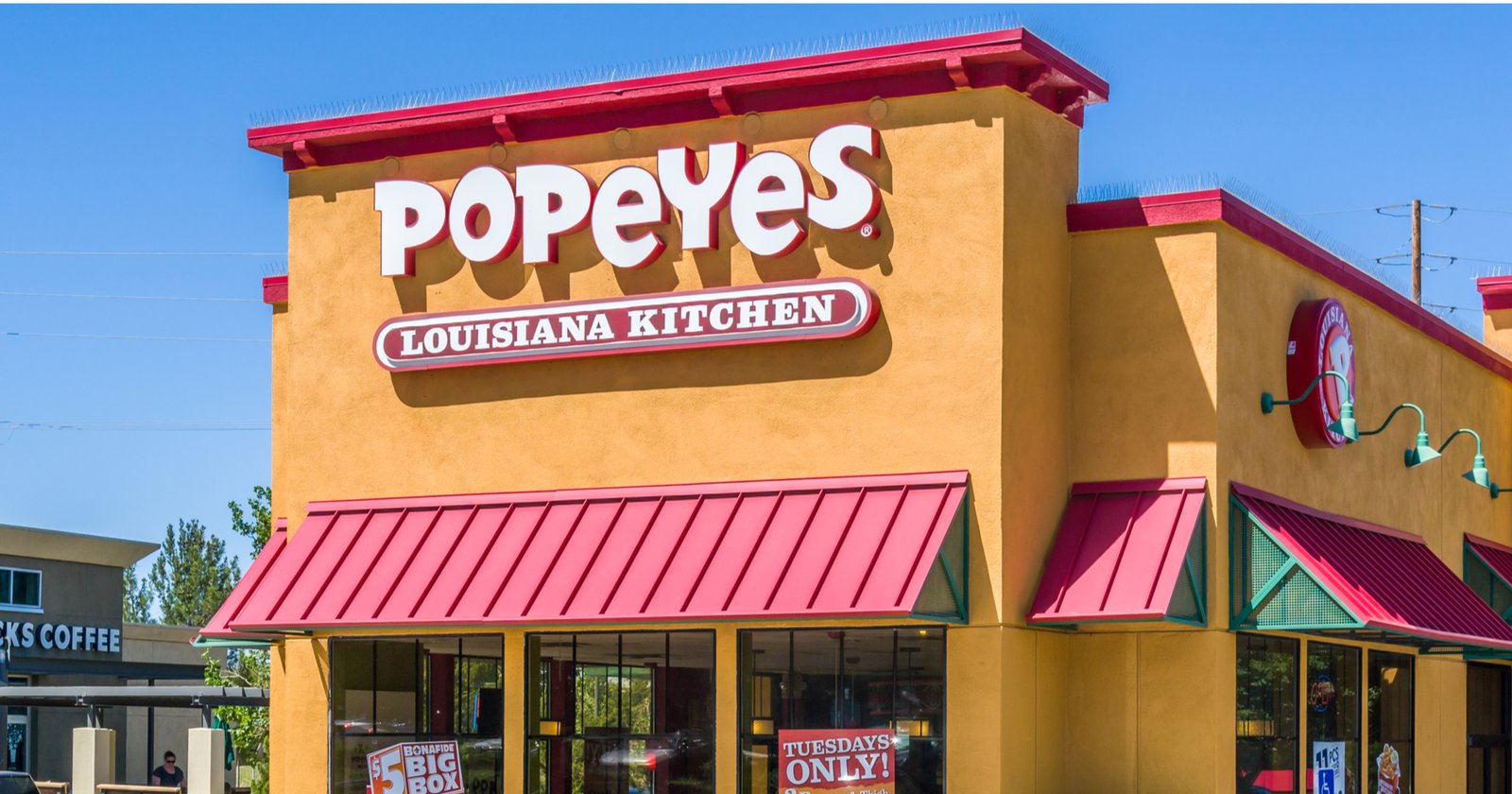

A Popeyes franchisee bankruptcy shows, again, the danger of excessive debt. | Photo: Shutterstock.

This is from the weekly restaurant finance newsletter The Bottom Line. To get this in your inbox every Monday morning, click here.
We wrote earlier this month about the bankruptcy filing of the big Popeyes franchisee Sailormen. The filing is a crucial test for the chicken chain and its new management team, which is trying to improve results.
But it’s also another lesson in the importance of franchisee financials. Operators that take on too much debt don’t just put their own companies in danger from the excess risk, they can threaten the reputation of the brand itself.
The franchisee in this case borrowed a lot of money when restaurant profits hit a post-pandemic peak in 2021, then watched those profits take a big hit when costs soared and interest rates were increased. It’s the type of risky bet that a lot of private-equity firms will take.
NPC International, the giant Pizza Hut franchisee, played with the debt fire and lost. It is now defunct and the pizza chain just has not been the same ever since.
Debt is a necessary ingredient in the restaurant business, which has enormous capital cost needs. So it’s not like companies can avoid it. But a lot of franchises use debt too aggressively, which leaves them with little room for error if things go wrong. And franchisors could help by keeping some of their own cost demands down while focusing on profitability.
Ensuring that franchisees maintain good debt levels is crucial because when these debt problems emerge the brand gets bad publicity and an operator that potentially cuts corners in a desperate bid to pay its bills. Nothing quite generates operations issues like financial challenges.
This week’s financial news
Limits on immigration will have some real negative consequences for the restaurant industry.
The economy remains uncertain, but a lot of restaurant executives are certain their plans will work.
Nathan’s Famous has a new owner in Smithfield Foods.
A family office bought Mr. Gatti’s Pizza.
If you’ve noticed that a lot of restaurant chains closed a bunch of locations last year, it’s because a lot of restaurant chains closed locations last year.
Man, cobranding will just not die.
Biglari Holdings’ stock has soared over the past year so naturally the company is selling more stock to raise funds. Maybe the CEO could part with some of the corporate-acquired stock he’s holding.
Five Guys, Shake Shack and Steak n Shake have all had pretty good sales years in 2025 despite an otherwise difficult market.
Charlie Morrison does not want to mess up a good thing. You can also see what I think about the prospect of a Jersey Mike’s IPO.
Texas is no sure thing when it comes to restaurant growth. Just ask Portillo’s.
Number of the week
The U.S. population will grow a lot more slowly over the next five years, particularly among people who are working age. That’s going to make growth that much harder.
Quote of the week
“We’re not going to change anything. There’s no need to change it. We’ve had 20 consecutive years of same-store sales growth. We’re opening 300 units a year on average over the last five years. Why would we modify that?” -Jersey Mike’s CEO Charlie Morrison on why he has no big plans to do anything different.
On the blog
I wrote about immigration, Charlie Morrison, closing restaurants, Popeyes and companies that should go public. Check out all my blog posts on The Bottom Line.
On the podcasts
On A Deeper Dive I spoke with Jen Meyers about consumer views on value. On The Week in Restaurants we talked about our IPO ideas, Popeyes and burgers.
For questions, comments or story ideas, send me an email at jonathan.maze@informa.com. And follow me on Twitter at @jonathanmaze. And also LinkedIn. And TikTok.